



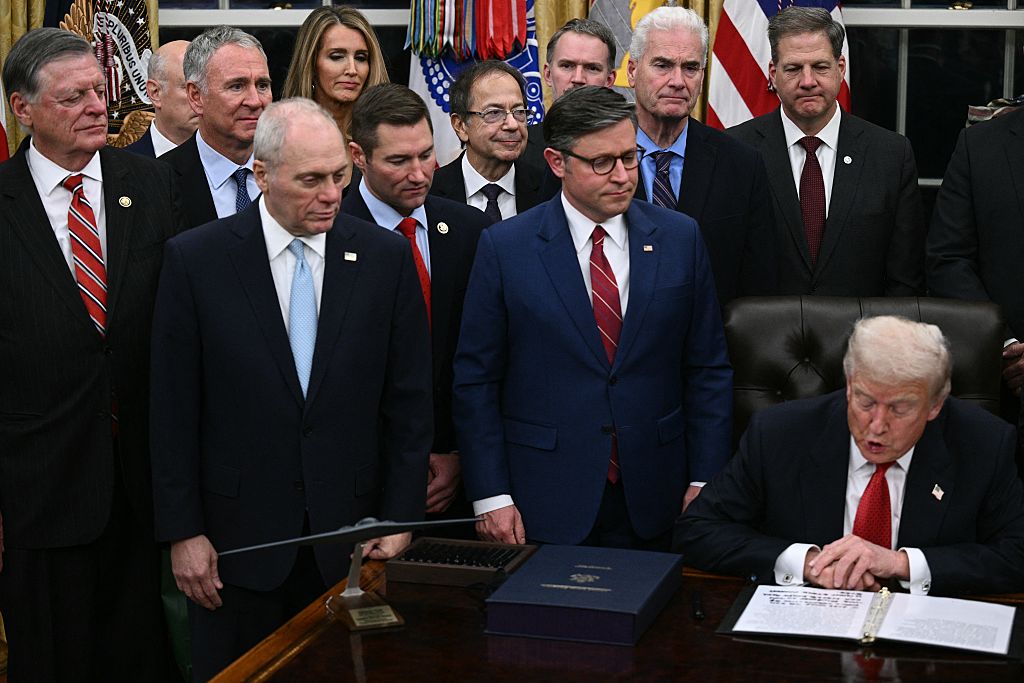
After Republicans suffered major setbacks in Georgia, New Jersey, Pennsylvania, and Virginia, party leaders remain unwavering, insisting their policies, message, and President Donald Trump’s leadership are not to blame.
They contend the real problem is Democrats and the media, who Trump argues are distorting the concerns of voters struggling with rising costs and economic uncertainty, according to The Associated Press.
Senior GOP strategists have settled on a straightforward strategy: with the midterms approaching, Republican candidates shouldn’t distance themselves from the president. Instead, they should lean in, fully embrace him, and amplify what they describe as his key accomplishments.
“Republicans are entering next year more unified behind President Trump than ever before,” RNC spokesperson Kiersten Pels said. “The party is fully aligned behind his America First agenda and the results he’s delivering for the American people. President Trump’s policies are popular, he drives turnout, and standing with him is the strongest path to victory.”
However, Trump’s approval rating is similar to former Presidents Barack Obama and George W. Bush at this point in their second terms — and both oversaw significant midterm losses for their parties.
Inside the White House, aides have begun steering the message toward affordability. Trump’s second term has been defined by trade wars, an immigration crackdown, deploying National Guard troops to cities, and the longest government shutdown in U.S. history.
Since Election Day, he has shifted to talking more about consumer costs, even slashing tariffs on beef and other commodities. But his core message remains that the economy is stronger — and prices lower — than the media reports.
Economic concerns dominated voter priorities this month, and some Republican strategists worry Trump’s approach could deepen the party’s challenges in 2026.
Doug Heye argues Republicans must show empathy for voters’ financial struggles, something he says is difficult when “the president takes a nonmetaphorical wrecking ball to portions of the White House.” He warned that candidates “cannot afford to be distracted,” noting that Virginia’s recent elections proved voters tune out campaigns that aren’t focused on their concerns.
Not all Republican candidates are fully echoing Trump’s message. Rep. Elise Stefanik, now running for governor in New York, says the top issue in her district is affordability — not cultural battles. “Every conversation with voters is about the high taxes and spending, the unaffordability,” she said.
While she declined to criticize Trump’s policies, she shifted her focus to ousting Democratic Gov. Kathy Hochul. Stefanik also sidestepped whether she would support Trump sending the National Guard to New York City, saying it “wouldn’t need to happen if there was a Republican governor.”
Meanwhile, the RNC is circulating talking points dismissing the GOP’s recent election losses as the result of Democratic advantages in some states.
The memo ignores losses in Georgia and Pennsylvania while overstating Trump’s popularity — claims echoed widely in conservative media. However, AP polling shows that Trump’s approval rating is not higher than Obama’s or Bush’s at this stage.
Still, Republican messaging is locked in place: stand with Trump, stay on message, and insist that the recent losses were not about him. As the RNC put it, the elections “were not a referendum on President Trump, Republicans in Congress, or the MAGA Agenda.” To win in 2026, they argue, the solution is simple: ensure that “Make America Great Again” voters turn out.












