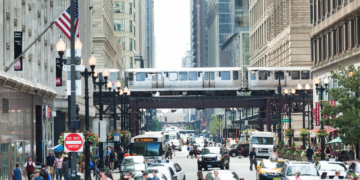




Chicago homeowners are voicing frustration over climbing property tax bills, saying they see little return on their payments.
According to Fox News, in the West Side neighborhood of Lawndale, residents told ABC7 Chicago that higher taxes have yet to translate into visible improvements on their streets.
Community leaders and the Lawndale Christian Development Corporation organized a gathering at a local church, calling it a “property tax bonfire,” to discuss residents’ concerns about where their money is going.
“There’s been a divestment in this community for the most part, but it seems like now that people have found an interest in reclaiming the neighborhood, now it’s like we’re being taxed for prosperity,” resident Milton Clayton said.
Thomas Worthy, another resident, said his mid-November tax bill was $977 higher than last year.
“The tax increase is tied to a TIF that I have no idea why,” Worthy said. “It’s collecting money from our neighbors and our streets, but we’re not being notified for why it’s in the bill.”
A TIF, or tax increment financing, is a funding tool that uses the increase in property tax revenue within a designated area to fund local redevelopment and infrastructure projects, according to the City of Chicago.
Worthy also questioned the allocation of funds. “We don’t have the schools we need. It’s economics that are not here, but we’re being charged to pay for economics in other people’s communities,” he said.
The Illinois Policy Institute, a nonpartisan research organization, found that more than half of a Chicago homeowner’s property tax bill goes to Chicago Public Schools.
The state’s property tax rate is the second-highest in the U.S., at 2.07% of a property’s value, more than double the national average. Cook County ranks among the nation’s 100 most expensive counties for property taxes.
Mayor Brandon Johnson has faced criticism for proposing to redirect a record $1 billion from 68 of the city’s 108 TIF districts to balance his $16 billion 2026 budget. Supporters say the move would strengthen city finances and increase school funding, while some aldermen worry it could delay long-promised neighborhood improvements.
Cook County Treasurer Maria Pappas reminded residents that payment plans are available for up to 13 months. “You do not have to pay your bill on Dec. 15,” she said at a Chicago Rainbow PUSH Coalition event. “Let me tell you why. We went to Springfield last year and set up a payment plan.”