



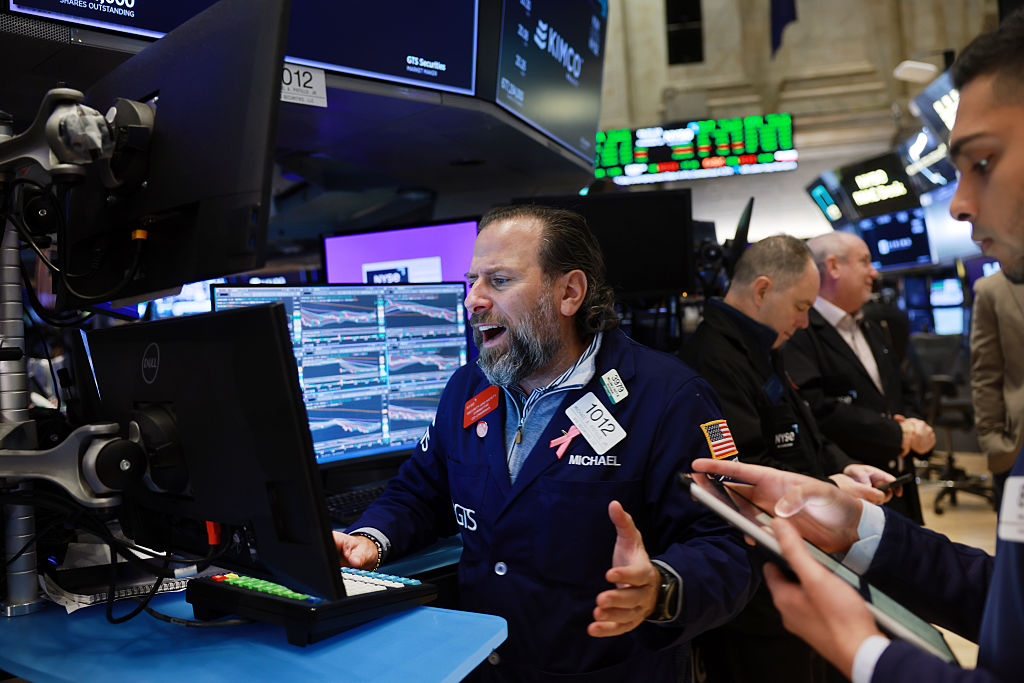
U.S. stocks fluctuated again on Friday, but the swings were more restrained than the sharp moves seen in recent weeks.
According to The Associated Press, by late morning, the S&P 500 was up 0.1% after shifting between modest gains and losses. The Dow Jones Industrial Average rose 217 points, or 0.5%, while the Nasdaq composite slipped 0.2%.
Investors found some reassurance in comments from John Williams, president of the Federal Reserve Bank of New York.
Speaking at a conference in Chile, Williams said he sees “room for a further adjustment” to interest rates. Markets moved higher immediately after the remarks, which some analysts interpreted as a signal he may support another rate cut in December.
Expectations for lower rates have helped push stocks to record levels in recent months. But not all Federal Reserve officials agree that a cut is appropriate, pointing to inflation that remains higher than policymakers would like.
The public disagreement inside the Fed has contributed to recent volatility, along with questions about whether high-flying stocks tied to artificial intelligence and cryptocurrencies have become overvalued.
The market’s turbulence peaked on Thursday. Stocks initially jumped after Nvidia attempted to calm concerns about a potential AI bubble, but the broader market quickly fell for its biggest swing since April, when President Donald Trump rattled investors with his “Liberation Day” tariffs.
Even after its strong earnings report, Nvidia remained volatile on Friday. The stock fell 2.8% after opening higher. Palantir Technologies also reversed early gains and ended down 4.1%.
Bitcoin mirrored the uncertainty, dropping briefly below $81,000 before recovering to around $83,000. The cryptocurrency has fallen sharply from its high near $125,000 last month and is now back to levels last seen in April amid tariff-driven turmoil.
Despite the choppiness, most stocks rose. Smaller moves among the majority of companies were overshadowed again by the outsized influence of Big Tech. “When the largest companies drive most of the losses, the market can look weaker than it really is,” said Brian Jacobsen, chief economist at Annex Wealth Management.
Retailers provided pockets of strength. Gap climbed 5.1% after reporting better-than-expected quarterly earnings. CEO Richard Dickson said sales improved across Old Navy, Gap, and Banana Republic. Ross Stores jumped 6.5% after topping profit expectations and raising its holiday sales outlook.
Homebuilders also gained as hopes for lower interest rates improved. D.R. Horton rose 6%, PulteGroup added 5.3%, and Lennar climbed 5.1%.
Treasury yields declined following Williams’s speech. The yield on the 10-year Treasury slipped to 4.06% from 4.10% on Thursday. Market expectations for a December rate cut jumped to 75%, compared with 39% just a day earlier, according to CME Group.
Yields dipped further after the University of Michigan reported a slight improvement in consumers’ inflation expectations. Lower expectations could give the Fed more room to ease rates, since rising inflation expectations can amplify price pressures.
Global markets were mixed. European indexes were mostly steady, while Asian markets fell sharply after Wall Street’s sudden reversal. Japan’s Nikkei 225 dropped 2.4%, and South Korea’s Kospi slid 3.8% — two of the steepest losses in the region.