



Iran’s ruling clerics are facing a crisis unlike any they have confronted in generations, according to Secretary of State Marco Rubio, who warned lawmakers that the Islamic Republic is buckling under economic collapse and mounting public anger.
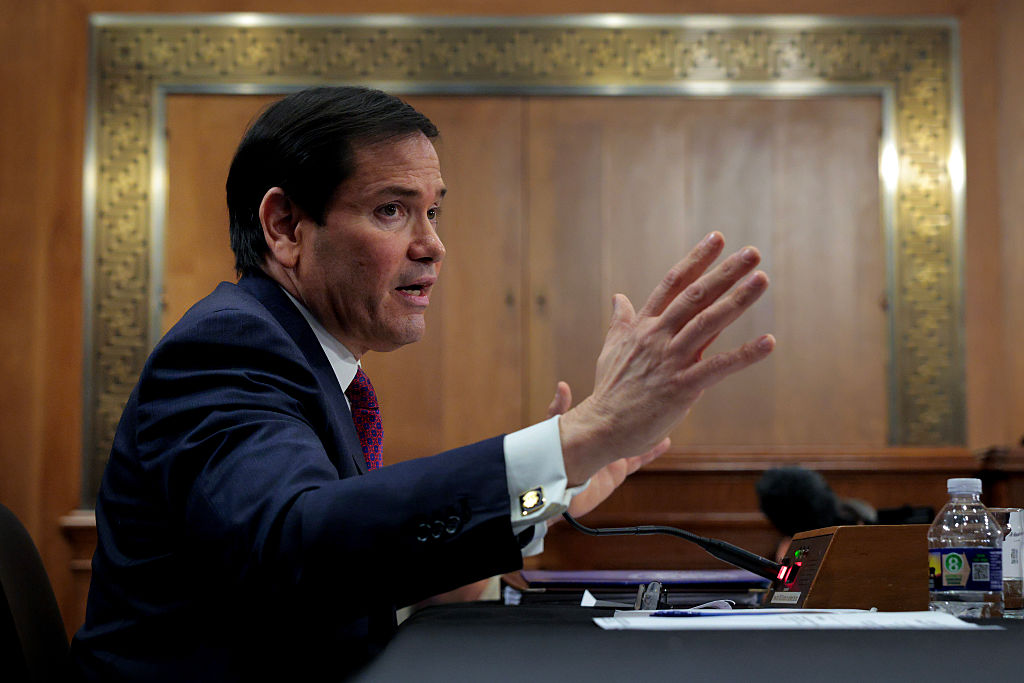
According to the New York Post, while testifying Wednesday before the Senate Foreign Relations Committee, Rubio said Iran’s leaders are losing their grip as ordinary citizens increasingly turn against the regime for prioritizing weapons programs and foreign militant groups over basic needs at home.
“The core problem they face,” Rubio told senators, “unlike the protests you saw in the past on some other topics, [Iran’s leaders] don’t have a way to address the core complaints of the protesters, which is that their economy is in collapse.”
Rubio said the roots of that collapse are self-inflicted.
“The reason why their economy is in collapse is because they spend all their money and all their resources building weapons and sponsoring terrorist groups around the world, instead of reinvesting it back into their society — and as a result of taking on massive global sanctions, which has isolated their economy and their country,” he said.
President Donald Trump has sought to capitalize on what officials see as Tehran’s vulnerability.
On Jan. 13, Trump announced sweeping penalties, including 25% tariffs on any country that continues doing business with Iran, after the regime killed thousands of protesters despite warnings from Washington.
“The new sanctions imposed on the Iranian regime are further proof that President Trump has a wide array of options at his disposal to address the situation in Iran,” a White House official said.
Rubio said demonstrators inside Iran are no longer rallying around narrow political grievances, but are instead demanding basic accountability from their leaders.
Protesters have simply been calling on the regime to “start caring about them,” he said.
That assessment aligns with classified briefings Trump has reportedly received, which concluded Iran is weaker now than at any point since the 1979 Islamic Revolution, even though mass protests have eased in recent weeks.
Demonstrations erupted across nearly every major Iranian city last month and were among the largest in decades. Human Rights Activists News Agency reported at least 6,126 confirmed deaths tied to the unrest, with another 17,091 fatalities under investigation. The same group said authorities detained more than 41,000 people.
Other estimates are even grimmer. Two senior Iranian health officials told Time magazine that more than 30,000 people may have been killed in just two days in early January.
Supreme Leader Ayatollah Ali Khamenei allegedly issued shoot-to-kill orders to suppress the unrest.
Trump warned on Jan. 2 that if the regime “violently kills peaceful protesters, which is their custom, the United States of America will come to their rescue.”
While no military action has been taken, Trump confirmed Wednesday that a U.S. naval “armada,” led by the aircraft carrier USS Abraham Lincoln, has been positioned near Iran.
Rubio said the deployment is necessary after Iran rebuilt its missile stockpiles following last year’s conflict with Israel.
“We have 30 to 40,000 American troops stationed across eight or nine facilities in that region,” he said. “All are within the reach … of an array of thousands of Iranian one-way UAVs and Iranian short-range ballistic missiles.”
He added, “I think it’s wise and prudent to have a force posture within the region that could respond.”
A White House official said Trump hopes diplomacy will prevail but has warned Iran to strike a deal “before it is too late.”
Iran’s government dismissed the show of force, with its U.N. mission reminding Washington of past U.S. wars in the Middle East and warning that Tehran would respond forcefully if provoked.
Rubio cautioned senators that even if the current regime collapses, what follows remains deeply uncertain.
“No one knows who would take over,” he said, noting that real power ultimately rests with the supreme leader and the Islamic Revolutionary Guard Corps.












