



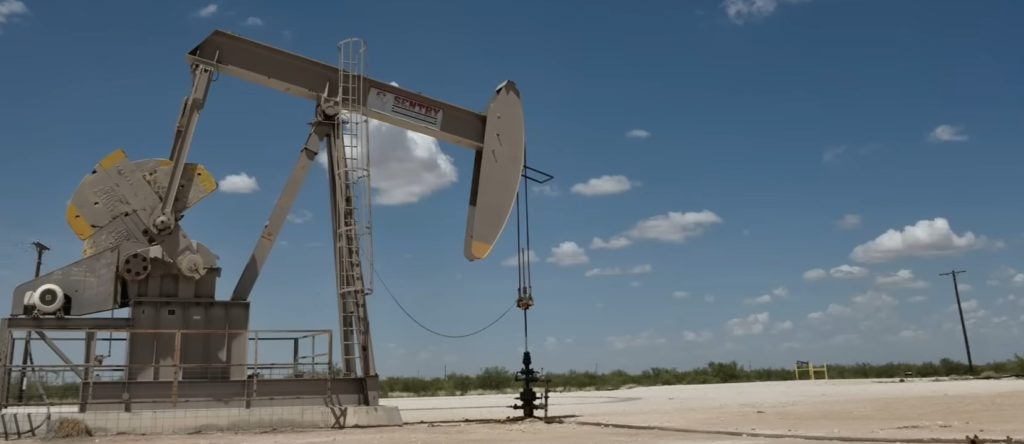

Venezuelan oil has been refined by one of the largest U.S. refineries operated by Chevron in Pascagoula, Miss. since the 1990s. That refinery may get the opportunity to process even more Venezuelan oil courtesy of the recently assumed guardianship of the Venezuelan oil industry by President Donald Trump.
But instead of appreciating the economic activity that tends to improve the health and standard of living of local communities, green activists have enlisted the New York Times to attack the facility as a health threat.
In her video story, “Chevron’s Oil Deals in Venezuela Could Worsen Pollution in Mississippi,” reporter Hiroko Tabuchi claimed, “Studies have found that exposure to pollutants from refineries can lead to acute short-term health effects like irritation, shortness of breath, even nausea.” Then she ominously added: “And in the long-term, they’ve been linked to cancer.”
As Tabuchi said this, the video showed the cover page of a 2025 study published in a journal called Environment Research Letters about detecting air pollution and its effects in Pascagoula.
But the video didn’t mention any other studies. Just the one, which doesn’t actually link refinery emissions to cancer. We’ll get to its claims later, but let’s first address the scariest claim made by Tabuchi, the one about cancer.
There is a published study that looked for a relationship between cancer and refinery workers, including at Pascagoula. Among 2,382 workers who worked at the Pascagoula refinery from 1963-1993, the workers had more than 30 percent less cancer than expected in the general population.
Bear in mind that these workers had much higher exposure to refinery emissions than local residents, then and now. Also, most of those exposures occurred before federal and state occupational and environmental regulations had been implemented. If refinery emissions caused cancer, one would have expected those cancers to show up already in the data. But they haven’t.
If you look at the most recent government report of cancer incidence in Jackson County, Miss. – where the Pascagoula refinery is located – there is no upward trend in the most recent five-year cancer rate.
There is simply no basis for scaring the public about cancer caused by refinery emissions.
What about the claims of irritation, shortness of breath and nausea?
The study that Tabuchi spotlighted is an activist-conducted study in which residents from a fence-line community next to the refinery made self-reported health claims. The claims were not verified by the researchers who were busy trying to measure air quality. But as the study authors reported about their air quality measurements, they wasted their time: “Uncalibrated data… is difficult to contextualize because it lacks inherent quantitative monitoring.
While the New York Times reports that a group of locals called Cherokee Concerned Citizens (CCC) is concerned about the refinery’s increased processing, the story is more complex.
CCC is also involved in the discredited and so-called “environmental justice” movement. It collaborates with several national green groups including Earthjustice, Anthropocene Alliance, and Buy-In Community Planning, which is actually an organization looking to have the residents bought out by companies like Chevron. Finally, CCC has been around since 2013 agitating against local industrial facilities.
Tabuchi mentioned none of this background in her video. As it turns out, her story attempting to blame Trump’s actions with respect to Venezuela was just a news hook for promoting a baseless, stale green agenda.
Steve Milloy is a biostatistician and lawyer. He posts on X at @JunkScience.
The views and opinions expressed in this commentary are those of the author and do not reflect the official position of the Daily Caller News Foundation.
(Featured Image Media Credit: Screen Capture/PBS NewsHour)
All content created by the Daily Caller News Foundation, an independent and nonpartisan newswire service, is available without charge to any legitimate news publisher that can provide a large audience. All republished articles must include our logo, our reporter’s byline and their DCNF affiliation. For any questions about our guidelines or partnering with us, please contact [email protected].