



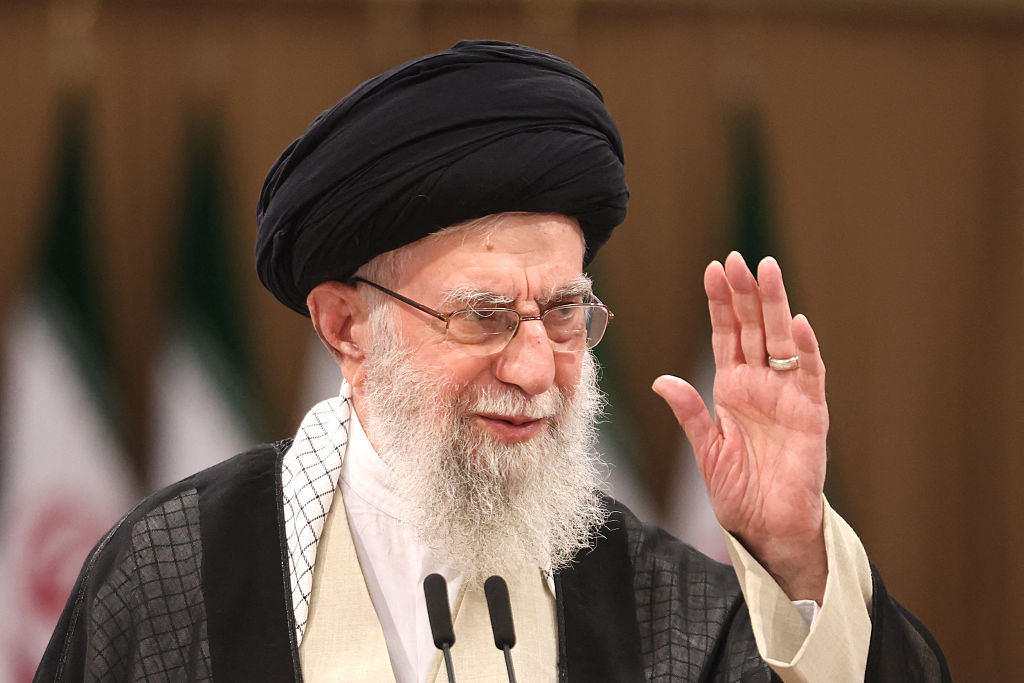
Iran’s long-ruling supreme leader has died following an Israeli strike on Tehran that reduced his compound to rubble, according to a senior Israeli official, bringing an abrupt end to more than three decades at the apex of the Islamic Republic.
According to Fox News, Ayatollah Ali Khamenei led Iran since 1989, shaping the country’s political and security apparatus while presiding over repeated confrontations with the United States and Israel and crackdowns on domestic dissent.
“Khamenei was the contemporary Middle East’s longest-serving autocrat. He did not get to be that way by being a gambler. Khamenei was an ideologue, but one who ruthlessly pursued the preservation and protection of his ideology, often taking two steps forward and one step back,” Behnam Ben Taleblu said.
“Khamenei’s worldview was shaped by his militant anti-Americanism and antisemitism, which first manifested itself in his protests against the Shah of Iran,” he added.
Born in 1939 in Mashhad, Khamenei emerged from the revolutionary movement that toppled Mohammad Reza Pahlavi in 1979.
A close ally of Ayatollah Ruhollah Khomeini, he later served as president from 1981 to 1989, then assumed the supreme leadership after Khomeini’s death.
Over decades, he consolidated authority across Iran’s political, military, and religious institutions. Analysts and rights groups say executions marked his rule, strict social controls, and forceful responses to protests.
“Ayatollah Ali Khamenei’s rule has been marked by unrelenting brutality and repression, both within Iran and beyond its borders,” said Lisa Daftari, editor-in-chief of The Foreign Desk.
Major unrest in 2009 over disputed elections and nationwide demonstrations in 2022 after the death of Mahsa Amini, who died in the custody of Iran’s morality police after having been arrested for not wearing the hijab in public, were both suppressed.
Further protests in early 2026 were also met with a heavy security response.
Regionally, Khamenei invested heavily in allied militias and armed groups, including support for Hamas, Hezbollah, and Houthis, using them to project Iranian influence beyond its borders.
In recent years, Israeli military pressure weakened parts of that network and eliminated several senior Iranian figures.
Despite that, analysts say his most enduring legacy may be the institutional system he built inside Iran. Research described the Bayt, the Office of the Supreme Leader, as a parallel structure embedded across the state.
“It is the hidden nerve center of the regime in Iran … it operates as a state within a state,” said Kasra Aarabi, a director at United Against Nuclear Iran.
“Even if he is eliminated, the Bayt as an institution enables the Supreme Leader to function,” he added. “Think of the Supreme Leader as an institution rather than just a single individual.”
Aarabi warned that removing Khamenei alone would not dismantle the system he created, arguing that the broader apparatus would need to be addressed.
“Unlike Khomeini, the founding father of the Islamic Republic, Khamenei institutionalized his power. Today, the Islamic Republic is more a product of Khamenei than Khomeini,” said Benham Ben Taleblu, Iran program senior director and senior fellow at the Foundation for the Defense of Democracies, a non-profit D.C. thinktank based in D.C.