




I have served nearly 30 years in the Army National Guard, including a combat tour during Operation Iraqi Freedom. If there is something that every service member who has ever served in a theater of combat knows, it is that hesitation costs lives. Delay can embolden the enemy. Decisive action saves lives. That premise holds true for the President of the United States.
President Donald Trump acted within his constitutional authority when he ordered strikes on Iranian military targets to eliminate Iran’s capacity to threaten American interests worldwide. This was not a reckless move. It was the type of action a Commander-in-Chief is expected to take in the face of imminent danger.
When a genuine threat to the United States exists, the Commander in Chief must be able to act. Article II of the Constitution vests the President with the responsibility to respond to threats that do not follow a legislative calendar. In crises like these, the President must be free to act swiftly, unencumbered by procedural delay, to protect American forces and interests.
The Framers deliberately split war powers between branches: Article I gives Congress the authority to declare war, but the founders also recognized the need for a decisive executive able to respond to sudden attacks or threats. Alexander Hamilton, in Federalist No. 70, stressed the value of a strong, energetic executive — not for aggression, but for the capacity to make hard decisions when American lives are at risk. That balance between congressional authority and executive responsibility is central to effective national defense.
The War Powers Act of 1973 sought to constrain the president’s authority for a limited period. It limited the President’s engagement in military actions to instances where the Armed Forces are “introduced into hostilities, or in situations where imminent involvement in hostilities is clearly indicated by the circumstances.” The problem is that we live in an era where non-conventional warfare is the norm. Our enemy no longer wears a uniform. They operate through shadow proxy groups that attack us and our allies relentlessly. They engage in drone and cyber-attacks. They now seek the same objectives but do so under the zone of conventional military engagement. We live in a time where “imminent hostilities” confront us every day, yet we are never at “war.”
For decades, Iranian leaders have understood this. Their supreme leader presided over internal repression, imprisoned Americans, fomented hatred abroad, and used their oil revenues to sponsor terror. Iranian-backed groups have attacked U.S. and Israeli interests for decades. Iran’s pursuit of a nuclear weapon has been a clear, existential threat to regional stability and to our allies. This was not rhetorical posturing; it was a real threat and an intent to wage war against the free world.
Under this Administration, Iran’s leaders misread our resolve. After four years of Biden’s weak leadership, they expected debate and inaction from the United States. During this time, they armed proxies and issued statements while they prepared attacks. President Trump proved them dead wrong. By removing the ayatollah and degrading command nodes that enabled attacks on American interests, the President restored a fundamental rule of deterrence: threaten American lives, and you will face consequences.
Weakness invites aggression; strength deters it. I have seen how quickly conflict can spiral when adversaries believe there are no consequences. I have watched smoke fill the sky after insurgents tested American resolve. They miscalculated then. Iran miscalculated now.
Presidents of both parties have deployed forces without prior congressional declarations when confronting urgent threats. The Supreme Court has long recognized a President’s authority to defend the nation against surprise attacks and to protect American lives. The laws and customs of war likewise permit the President to use force in defense of the nation when faced with imminent attack.
The Constitution balances power; it does not immobilize it. Some critics insist the President must obtain prior congressional approval for every military action, but the Constitution, federal law, and this new age of unconventional warfare do not require waiting until U.S. forces have been struck abroad.
Peace through strength is not a catchy bumper sticker slogan or wishful thinking; it is a tested doctrine. Decisive action at the right moment can prevent a larger war later. It can protect service members from being drawn into a widening conflict and save innocent lives.
President Trump fulfilled his duty as Commander in Chief under Article II. His aim was to protect American service members and to make clear that the United States will not be threatened with impunity. By acting, he demonstrated American strength and resolve. I stand with President Trump, and I stand for an America that will never hesitate to defend its people.
Alan Wilson is South Carolina’s Attorney General, serving since 2011. A career prosecutor and combat veteran of Operation Iraqi Freedom, Wilson has spent his career fighting violent crime, drug trafficking, human trafficking, and government overreach while defending the rule of law and the Constitution.
The views and opinions expressed in this commentary are those of the author and do not reflect the official position of the Daily Caller News Foundation.
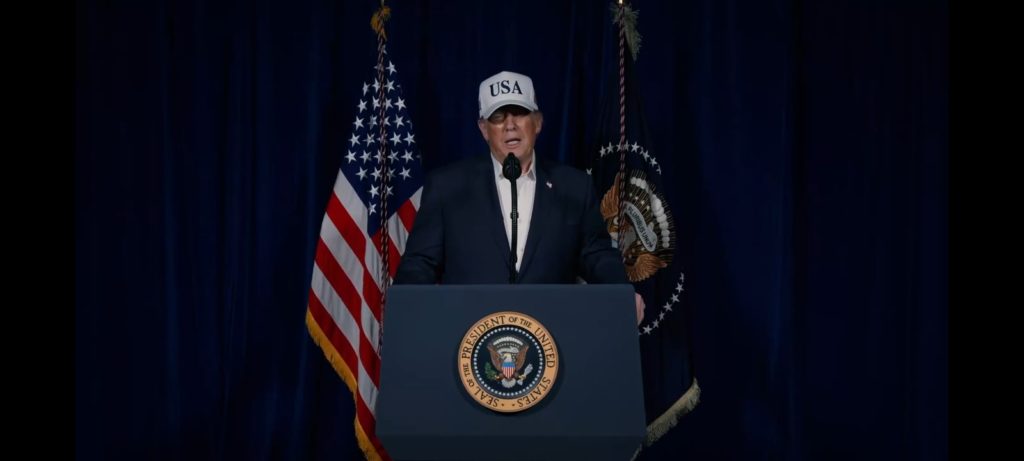
(Featured Image Media Credit: Screenshot/Truth Social/@realdonaldtrump)
All content created by the Daily Caller News Foundation, an independent and nonpartisan newswire service, is available without charge to any legitimate news publisher that can provide a large audience. All republished articles must include our logo, our reporter’s byline and their DCNF affiliation. For any questions about our guidelines or partnering with us, please contact [email protected].