
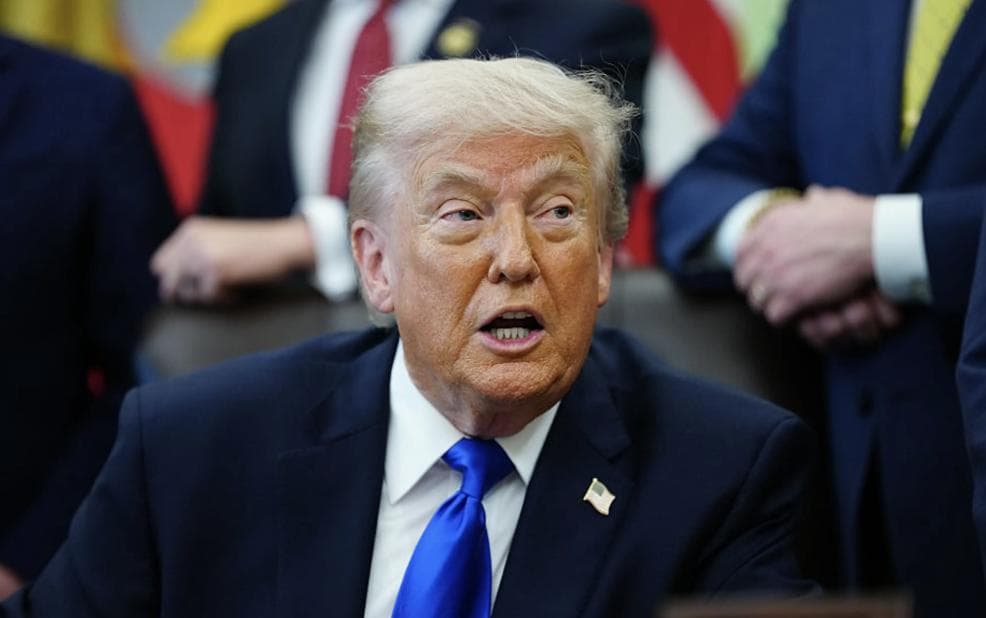
President Trump on Wednesday unveiled a sweeping new counterterrorism strategy that administration officials say is designed to aggressively target threats both inside the United States and abroad. The plan places major emphasis on combating drug cartels, Islamist terrorist organizations, and politically motivated extremist groups operating domestically.
Sebastian Gorka, deputy assistant to the president, described the new strategy during a White House press call as an “America First counterterrorism” framework focused on preventing attacks before they can reach American soil. According to Gorka, the 16-page blueprint prioritizes rapid response, stronger enforcement tools, and expanded authority to dismantle terror-linked organizations and criminal networks.
One of the strategy’s central pillars is what Gorka referred to as the “Donroe Doctrine,” which places the “neutralization of hemispheric terror threats” at the forefront of national security priorities. Under that doctrine, transnational drug cartels are being treated as a direct terror threat to the United States.
The administration plans to expand the use of Foreign Terrorist Organization designations against cartel groups in an effort to disrupt financing, logistics, and operations connected to narcotics trafficking and organized violence. Officials argue that cartels have evolved beyond criminal enterprises and now operate with capabilities that threaten regional stability and American communities.
The strategy also broadens the government’s focus on domestic extremism. Gorka specifically pointed to violent political organizations and anarchist groups, including Antifa, which the administration has labeled a domestic terror organization. He said the White House intends to crack down on individuals or movements promoting anti-American violence, regardless of political affiliation.
“We will not permit politically motivated violence in the United States from either side of the aisle,” Gorka said during the briefing.
Administration officials framed the new policy as a major shift from the Biden administration’s approach to counterterrorism. Gorka criticized previous federal investigations involving traditional Christian groups and Catholic communities, arguing the government had focused resources on the wrong targets while larger threats continued to grow.
International terrorism remains another key focus of the strategy. Gorka identified several Islamist extremist organizations considered top priorities for US counterterrorism operations, including al Qaeda, al Qaeda in the Arabian Peninsula (AQAP), ISIS, and ISIS-K in Afghanistan.
He emphasized the administration’s commitment to maintaining a rapid-strike capability against terrorists plotting attacks on Americans. According to Gorka, the US now possesses the intelligence and operational capacity to quickly eliminate threats around the world.
“If we know where you are, if you’re plotting to kill Americans, within 72 hours we can kill you or arrest you,” he said.
The strategy also highlights growing concerns over online radicalization. Officials warned that terrorist organizations increasingly rely on social media and digital propaganda to inspire lone-wolf attacks instead of operating large physical training camps.
“They don’t need to bring you to the Middle East anymore,” Gorka said. “They want you to act where you are.”
Another major component of the plan involves preventing terrorist groups from acquiring weapons of mass destruction, including nuclear and radiological devices. Gorka described that possibility as the most dangerous threat facing the United States.
The administration plans to use financial sanctions, intelligence operations, and law enforcement coordination across federal agencies to carry out the strategy’s objectives. While many of the details regarding implementation remain unclear, Gorka suggested the administration intends to move aggressively.
“This is where the fun begins,” he said when asked about how the strategy would be put into action.
Officials described the document as a practical roadmap centered on identifying threats quickly, cutting off their resources, and neutralizing them before attacks can occur.
“Whether it is cartels, jihadists, or violent extremists,” Gorka said, “we will take them on head-on.”