



In a stunning and coordinated operation, President Donald Trump and Israel have effectively decapitated the Iranian regime. Key political figures are dead. Military commanders have been eliminated. Ballistic missile capabilities have been severely degraded. The command-and-control structure that once directed proxy militias and terror networks across the Middle East is now in ruins.
For decades, Iran stood as the world’s largest state sponsor of terrorism. Its fingerprints were on attacks stretching from the Middle East to beyond. Its nuclear ambitions loomed over global security debates. Now, much of that infrastructure lies buried beneath the aftermath of Operation Epic Fury.
The regime is reeling. Its future is uncertain. Its power has been dramatically reduced.
And in Washington, Democrats are furious.
Almost immediately, criticism erupted from the left. Claims of “forever war” surfaced. Accusations that the strikes were “illegal” quickly followed. Some lawmakers began invoking the War Powers Resolution, suggesting Congress had been sidelined.
But critics of that argument point to recent history.
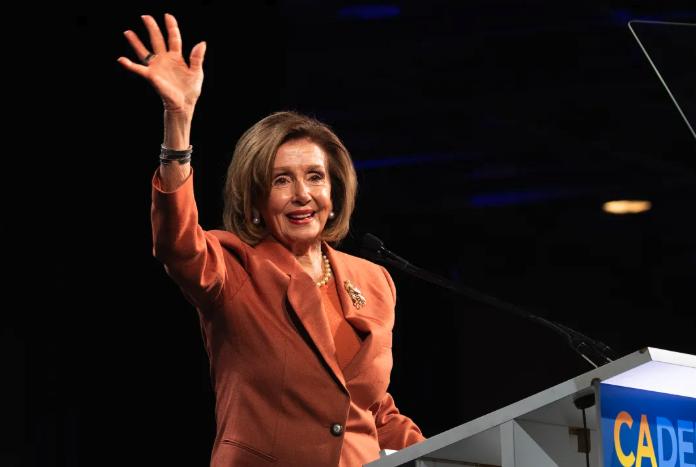
When then-President Barack Obama ordered airstrikes in Libya to assist rebels in toppling Muammar Gaddafi, congressional authorization was not secured in advance. At the time, top Democrats defended the executive authority to act. Former House Speaker Nancy Pelosi’s past remarks — arguing that the president could conduct limited military operations without explicit approval — are now being widely circulated as debate over Trump’s actions intensifies.
FLASHBACK
Reporter: “You’re saying that [Obama] did not need authorization initially and still doesn’t need authorization [to strike] Libya?”
Pelosi: “Yes.”
Should presidents require War Powers Resolution approval for military strikes?Rules for thee, not for me … according to Democrats.pic.twitter.com/G3RVjRwRPH
— Townhall.com (@townhallcom) March 2, 2026

Supporters of the current strikes argue the president acted within his constitutional authority as commander-in-chief, particularly given the long-standing hostilities between the U.S. and Iran and Tehran’s documented involvement in destabilizing activities across the region.
Meanwhile, warnings about an extended military entanglement are being dismissed by some national security analysts who contend this was a targeted operation aimed at dismantling leadership and weapons capabilities — not launching a ground invasion or prolonged occupation.
On Capitol Hill, efforts to advance a War Powers Resolution face steep odds. Even if introduced in the House, it would likely encounter significant resistance in the Senate. Legal scholars remain divided on whether such a measure could meaningfully constrain executive military authority in this context.
What is clear is this: the geopolitical landscape has shifted dramatically.
Iran’s top leadership is gone. Its missile infrastructure has been hit hard. Its nuclear program has suffered a major setback. The ripple effects across the Middle East are only beginning to unfold.
The post Here’s What Nancy Pelosi Said When Asked If A President Needs A War Powers Resolution To Strike Another Country appeared first on Red Right Patriot.