


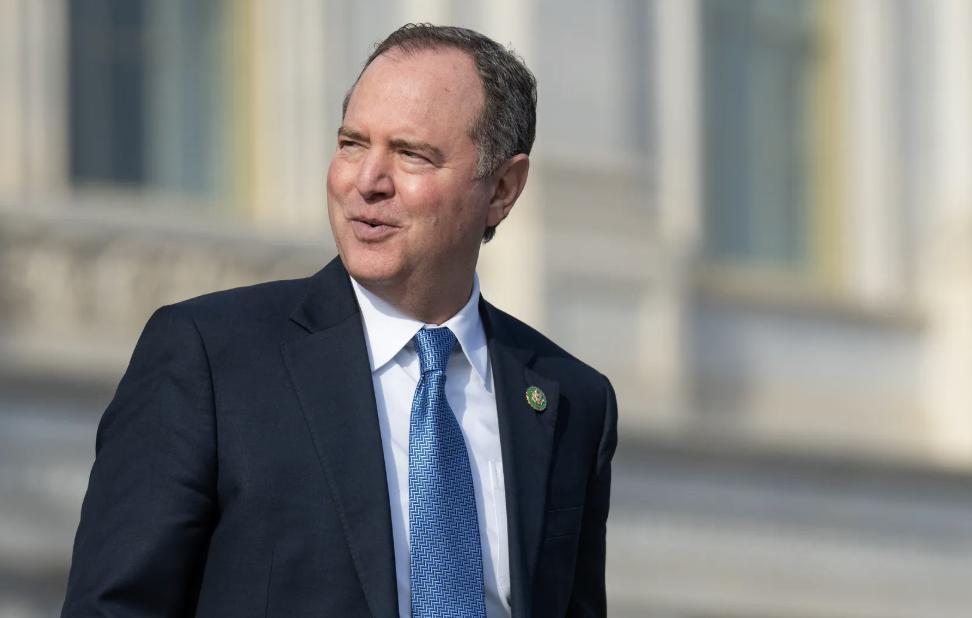
President Donald Trump’s military actions in Iran have ignited fierce debate in Washington, but a moment on HBO’s Real Time with Bill Maher exposed what critics say is a glaring double standard within the Democratic Party.
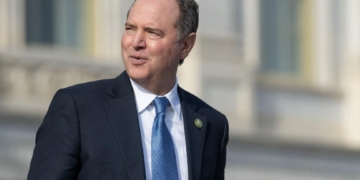
During Friday’s broadcast, Democratic California Sen. Adam Schiff joined Maher for a wide-ranging discussion covering everything from the Epstein files to the growing tensions between the United States and Iran. But it was a brief exchange about presidential war powers that quickly turned into a revealing moment.
Maher read a statement defending presidential authority to use military force.
“The president has the constitutional authority to direct the use of military force because he could reasonably determine that such use of force was in the national interest,” Maher said. “That’s too vague for you?”
Schiff didn’t hesitate.
“Totally vague,” he replied dismissively.
For a moment, the exchange sounded like a familiar Democratic critique of Trump-era military actions. But Maher had a twist ready.
The host then revealed the statement Schiff had just criticized wasn’t from Trump’s administration at all. It was issued by former President Barack Obama’s administration when the United States launched military operations in Libya in 2011.
The revelation immediately put Schiff on the defensive.
Instead of addressing the contradiction directly, Schiff pivoted to a different example involving Obama and Syria.
Adam Schiff falls right into Bill Maher’s trap as he criticizes a statement he thought was from Trump but was actually from Obama.
MAHER: “This statement from the administration: ‘The president had the constitutional authority to direct the use of military force because he could… pic.twitter.com/5jg3wpdAQZ
— The Vigilant Fox
(@VigilantFox) March 7, 2026
Should presidential war powers be more restricted by Congress?
 (@VigilantFox)
 “Well, Obama made the argument initially that he could go into Syria without authorization,” Schiff said. “I and many others pushed back on that argument.”
Schiff argued that Obama ultimately chose not to strike the Assad regime after determining he might lose a vote in Congress.
“Ultimately, he did not go forward with going after Assad, even though Assad was gassing his own people, because he thought he might lose the vote in Congress,” Schiff said. “But I respect the fact that was important to him.”
The exchange quickly caught attention online because it highlighted a broader constitutional debate that has simmered for decades: the balance of power between the presidency and Congress when it comes to military action.
Under Article I, Section 8, Clause 11 of the Constitution, Congress holds the authority to declare war. Critics have long argued that modern presidents from both parties have stretched executive power by launching military operations without explicit congressional approval.
The Cato Institute made that argument during the Libya intervention in 2011, noting that Libya did not pose a direct threat to the United States and therefore did not meet the constitutional standard for unilateral military action by the president.
Congress even voted on the issue later that year. In June 2011, lawmakers considered a War Powers Resolution that would have forced the withdrawal of U.S. forces from Libya.
Adam Schiff, who was serving as a member of the House of Representatives at the time, voted against the resolution — effectively supporting continued U.S. military involvement.
That vote is now resurfacing as critics question whether outrage over presidential war powers changes depending on who occupies the Oval Office.
For viewers watching Maher’s exchange with Schiff, the moment underscored a political reality that continues to shape Washington’s debates over war, authority, and constitutional limits.
The post Bill Maher Interviews Adam Schiff And It Doesn’t Go Well For Schiff appeared first on Red Right Patriot.