



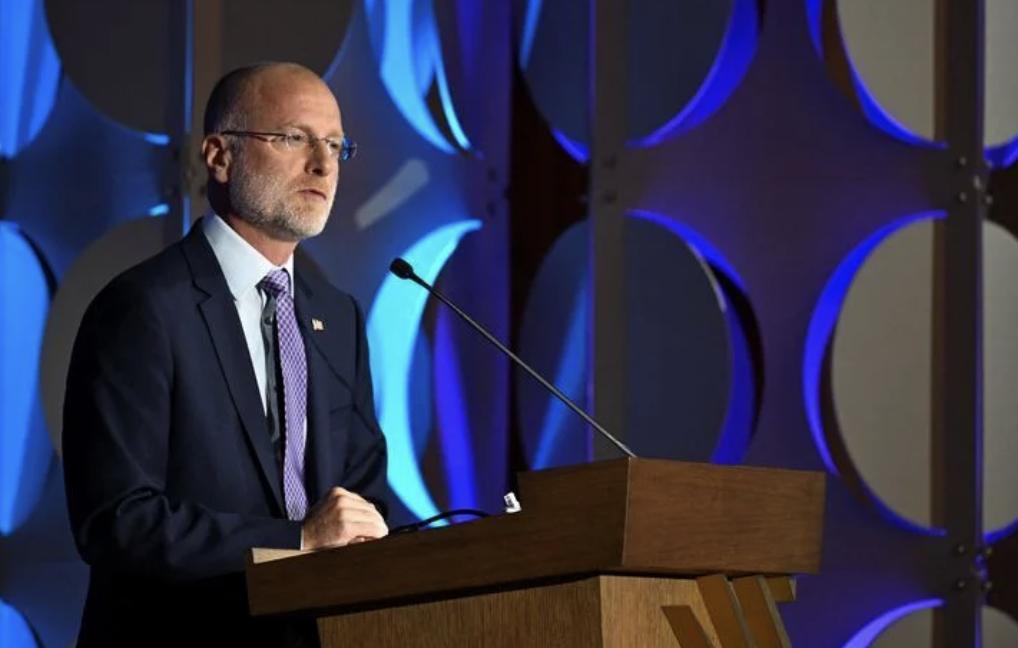
A sharp warning from the Federal Communications Commission is sending shockwaves through the media world after FCC Chair Brendan Carr publicly cautioned broadcasters to change their approach to reporting or risk serious consequences when their licenses come up for renewal.
Carr issued the warning Saturday in a post on X, responding directly to criticism from President Donald Trump over recent media coverage of developments tied to the war in Iran. Carr’s message was blunt: broadcasters that continue pushing what he described as “hoaxes and news distortions” could face regulatory trouble.
“Broadcasters that are running hoaxes and news distortions — also known as the fake news — have a chance now to correct course before their license renewals come up,” Carr wrote. “The law is clear. Broadcasters must operate in the public interest, and they will lose their licenses if they do not.”
The statement quickly ignited debate across political and media circles, especially as Carr tied the issue directly to collapsing public confidence in traditional media outlets.
“And frankly, changing course is in their own business interests since trust in legacy media has now fallen to an all-time low of just 9% and their ratings are disasters,” Carr added.
The controversy began after Trump blasted several major newspapers over coverage involving tanker aircraft reportedly hit during a strike near a Saudi Arabian airport. Headlines suggested the aircraft had been “struck” or “destroyed,” claims Trump said were misleading.
In a post on Truth Social, the president argued that the reports exaggerated the situation and misled readers about the actual damage.
Broadcasters that are running hoaxes and news distortions – also known as the fake news – have a chance now to correct course before their license renewals come up.
The law is clear. Broadcasters must operate in the public interest, and they will lose their licenses if they… https://t.co/7bBgnsbalw
— Brendan Carr (@BrendanCarrFCC) March 14, 2026
Should broadcasters change their reporting to maintain licenses?
“Yet again, an intentionally misleading headline by the Fake News Media about the five tanker planes that were supposedly struck down at an Airport in Saudi Arabia, and of no further use,” Trump wrote. “In actuality, the Base was hit a few days ago, but the planes were not ‘struck’ or ‘destroyed.’ Four of the five had virtually no damage, and are already back in service.”
According to Trump, only one aircraft sustained moderate damage and is expected to return to operation soon. “None were destroyed, or close to that, as the Fake News said in headlines,” he added.
Carr’s remarks also appeared to touch on a separate controversy involving CBS and late-night host Stephen Colbert. The network faced backlash after Colbert interviewed Democratic Texas Senate candidate James Talarico but did not air the interview on television. The segment eventually appeared online.
CBS said it never blocked the interview but noted the show needed to offer equal time to Talarico’s opponent at the time, Rep. Jasmine Crockett of Texas. Crockett later blamed CBS and Colbert for not offering that equal time, while Talarico pointed the finger at Trump and the FCC.
Despite the dispute, Talarico went on to defeat Crockett in the Democratic primary after raising millions of dollars following the high-profile interview.
Carr framed the broader issue as a crisis of trust between Americans and major news organizations.
“When a political candidate is able to win a landslide election victory in the face of hoaxes and distortions, there is something very wrong,” Carr wrote. “It means the public has lost faith and confidence in the media. And we can’t allow that to happen.”
With broadcast license renewals looming for many networks in the coming years, Carr’s warning signals that the FCC may be preparing to scrutinize whether major outlets are meeting their legal obligation to operate in the public interest.