



A senior Iranian military voice who had been publicly defying Western pressure is now dead following a wave of coordinated strikes.
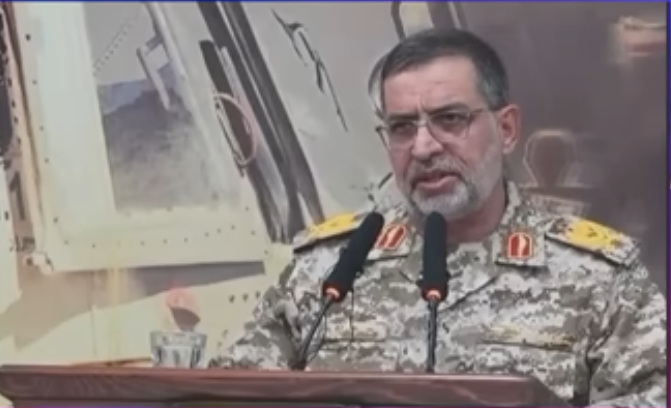
Per the New York Post, Ali Mohammad Naini, a spokesperson for Iran’s Islamic Revolutionary Guard Corps, was killed in attacks carried out by the United States and Israel, Iranian state television announced on Friday.
Naini, who also served as the agency’s deputy of public relations, was targeted just days after Israeli operations eliminated other top figures tied to the regime, including Ali Larijani and Gholamreza Soleimani.
His death came shortly after he publicly insisted that Iran’s military capabilities remained intact despite ongoing bombardments by U.S. forces under Operation Epic Fury.
“These people expect the war to continue until the enemy is completely exhausted,” Naini said. “This war must end when the shadow of war is lifted from the country.”
His comments were a direct rebuttal to remarks made by Israeli Prime Minister Benjamin Netanyahu, who claimed Iran had lost its ability to enrich uranium and produce ballistic missiles.
“We are continuing to crush these capabilities. We will crush them to dust, to ashes,” Netanyahu said during a press conference Thursday.
Earlier in the week, Naini had also pushed back on claims that Iran’s naval forces had been decimated, issuing a warning directed at President Donald Trump.
“The Strait of Hormuz is completely under the management of the IRGC navy and Iran has complete sovereignty,” he said. “Doesn’t Trump say that he destroyed the Iranian navy? So if he dares, he can send his ships into the Persian Gulf region.”
Meanwhile, U.S. officials have painted a different picture of the conflict’s toll on Iran’s military.
Adm. Brad Cooper, commander of U.S. Central Command, said more than 100 Iranian naval vessels had been destroyed in recent operations. He also cautioned that military action could continue, warning that U.S. forces “aren’t done.”
Newly released footage from the Pentagon shows strikes targeting Iranian vessels near the Strait of Hormuz, a critical passage for global oil shipments connecting the Persian Gulf to surrounding waters.
The Trump administration has reportedly weighed the possibility of deploying ground forces to secure the area, while urging allies to take a more active role in keeping the waterway open.
Leaders from several countries, including France, Germany, Italy, Japan, the Netherlands and the United Kingdom, have also criticized Tehran over what they described as attempts to disrupt commercial shipping through the strait.
The situation remains fluid as tensions continue to rise.