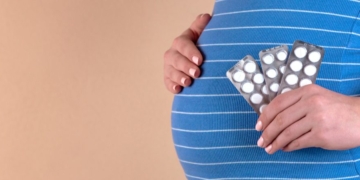






Women coerced into taking the abortion pill are calling out a major federally-funded domestic violence support group for backing a policy that enabled their abuse.
Despite acknowledging abusive men sometimes use the easily accessible pill to force women to kill their unborn babies, the National Domestic Violence Hotline and Legal Voice is opposing Louisiana’s challenge to relaxed U.S. Food and Drug Administration (FDA) rules that allow anyone to obtain mifepristone through the mail.
“Ultimately, the solution to reproductive coercion is to address the underlying dynamics of abuse and coercion, not to take away or limit medication that is necessary to many survivors’ reproductive freedom, health, and safety,” the organization wrote in its February amicus brief, which argues reinstating in-person dispensing requirements for the abortion pill “would harm survivors.”
Rosalie Markezich, a co-plaintiff on Louisiana’s lawsuit, told the Daily Caller News Foundation that the group’s argument is “confusing” because the FDA’s policy directly enabled her boyfriend to coerce her into taking the pill.
Though she did not want an abortion, Markezich “took abortion drugs that her boyfriend obtained via the U.S. Postal Service from a doctor in California” because she felt “trapped and terrified,” according to the lawsuit.
“If there was an in-person doctor’s visit when I was going through my situation, I would have been able to at least have one scapegoat to go to, and tell them, I do not want an abortion,” she told the DCNF. “I’m getting coerced into this. I need help. But I did not have that opportunity.”
Abusers can already be prosecuted for other offenses in Louisiana and “will find other ways to interfere with their partners’ pregnancies if telemedicine is no longer available,” the hotline argues.
“Just as stories of pregnant people having their birth control sabotaged, being raped, or being blocked from accessing health care are horrific, so too are stories of pregnant people being forced or tricked into taking mifepristone,” the brief continues. “We must take these incidents seriously and recognize that broadly ending patients’ ability to obtain mifepristone through telemedicine is neither a proportionate nor effective response to intimate partner violence.”
The hotline, which received nearly $25 million in total contributions and grants during the 2024 fiscal year, largely relies on taxpayer funds. The organization has pulled in more than $105 million from the Department of Health and Human Services (HHS) since 2020, including $17.5 million in 2025.
Markezich said she wants to help protect women and “speak for the women who have been hurt from this.”
“A lot of women don’t feel empowered enough to share their story,” she said. “They may feel embarrassed or shameful, and so they don’t put that information out there, and so others don’t know.”
The National Domestic Violence Hotline and Legal Voice did not respond to a request for comment.
While it has not gone as far as endorsing the Biden-era decision to roll back safety requirements, the Trump administration is trying to stop cases from moving forward.
Trump’s Department of Justice (DOJ) has asked to pause Louisiana’s lawsuit until the FDA finishes its review of mifepristone, which it has not given a timeline for completing. The administration also motioned to pause or dismiss a lawsuit brought by Missouri, Idaho and Kansas seeking to reinstate safety standards like the in-person dispensing requirement.
Rosalie Markezich, who is suing the FDA alongside Louisiana to end mail-order abortions, shares her story of being coerced into taking the pill by her ex-boyfriend.
.@HawleyMO is introducing a bill that would strip FDA approval for mifepristone. pic.twitter.com/q4E0Q35IUg
Should laws require in-person consultations before obtaining abortion pills?— Katelynn Richardson (@katesrichardson) March 11, 2026
‘No Safeguard’
More than 60% of those who had abortions reported feeling pressured in some way, according to a 2023 survey of 1,000 women by the Charlotte Lozier Institute.
It’s surprising to see a domestic violence organization come down on the side makes it “easy for the person that was going to force the abortion,” Mary J. Browning, legal advisor for The Justice Foundation’s Operation Outcry, said.
The Justice Foundation detailed stories of women who were injured by their abortions, including some who were coerced, in an amicus brief filed in support of Louisiana.
“It does seem to me like a completely strange position for an entity that says they are there to protect women, to come out and say not having these protections is better for them,” Browning told the DCNF, adding their logic was “not consistent with what the experience that I know of people that I’ve worked with.”
Five online abortion providers supplied pills for “future use” without a doctor verifying key eligibility requirements during a DCNF investigation in June.
The groups supplied instructions for taking the pill weeks after the 10 week period the FDA approved it for use, though taking it later presents higher risk of complications like hemorrhage or infection.
One in ten women who take the abortion pill will experience a “serious adverse event,” a number “at least 22 times as high” as the drug label claims, according to an April 2025 study of insurance data by the Ethics and Public Policy Center (EPPC).
“You’re not actually verifying that these pills are even going to a woman, first of all, you know, you’re not able to do any type of screening,” Jessica Williams, a nurse whose ex-husband pushed her to take mifepristone obtained from an online provider, told the DCNF. “Are they being pressured? Are they safe at home? Is this actually what they want and their decision? Are they being pressured and coerced like I was?”
Amid their divorce, Williams’ ex-husband pressured her to have an abortion after she became pregnant by another man. She successfully completed abortion pill reversal after taking first pill, and her daughter is now 3 years old, she told the DCNF.
In the past year, there have been several reported cases of men tricking their partners into taking the abortion pill.
One lawsuit against a major online abortion provider, Aid Access, alleges a Texas man murdered a woman’s unborn child by “secretly dissolving abortion pills into a hot beverage that he had prepared.” Text messages included in the August 2025 lawsuit show the man continually pressured her to have an abortion, though she repeatedly shut down the idea.
“It’s like there was no safeguard,” Williams said.
While the hotline argues there are other ways for abusers to interfere with their partner’s pregnancies, the examples that have been reported involve the pill, she noted.
“Mail order keeps it so accessible for them,” she said. “We don’t have stories of men shoving coat hangers up women in the middle of the night …I hate to be that vulgar, but we don’t…We have stories of them slipping [the pill] inside, you know, while they’re sleeping, or slipping them inside drinks.”
All content created by the Daily Caller News Foundation, an independent and nonpartisan newswire service, is available without charge to any legitimate news publisher that can provide a large audience. All republished articles must include our logo, our reporter’s byline and their DCNF affiliation. For any questions about our guidelines or partnering with us, please contact [email protected].