



A new theory is stirring debate about what may lie hidden beneath one of the world’s most famous ancient landscapes.
According to the New York Post, researchers in Italy say the iconic Pyramids of Giza could conceal far more than previously believed — including what they suspect may be a second Sphinx buried underground.
Radar engineer Filippo Biondi discussed the findings during an appearance on the Matt Beall Limitless podcast, describing unusual signals detected beneath the Giza Plateau.
“There is something very huge that we are measuring,” he said, referring to the area that includes the Great Pyramid of Khufu, the Pyramid of Khafre, the Pyramid of Menkaure, and the Great Sphinx.
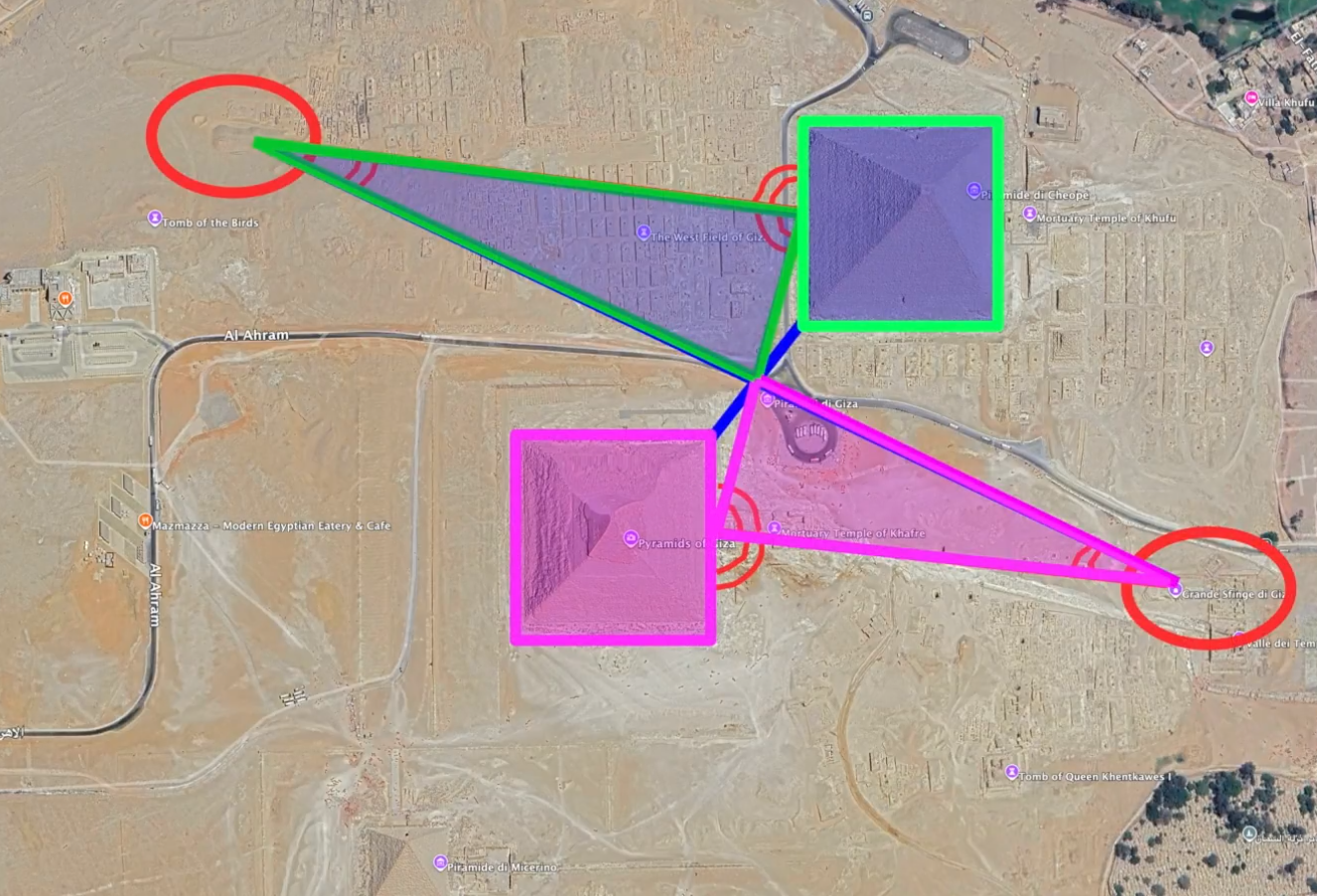
According to Biondi, geometric alignments between the pyramids and the known Sphinx appear to point toward a separate mound nearby. His team believes that mound — visible in satellite imagery and estimated to be about 108 feet tall — could conceal a second statue.
“The first Sphinx sits slightly below the surrounding surface, in a shallow depression, so it is possible the second Sphinx could be hidden beneath this higher mound,” he said.
He added that the mound’s composition of hardened sand, rather than solid bedrock, could make such a hidden structure possible.
Biondi said the “precise geometrical correlation” between the visible monuments and the mound leaves him about 80 percent confident in the theory.
The idea is also supported, he claims, by imagery on the Dream Stele, a granite slab positioned in front of the existing Sphinx. The carving depicts two sphinxes, which some interpret as evidence that a pair was always intended.
The stele is tied to Thutmose IV, who ruled around 1401 BC. Ancient inscriptions describe how the Sphinx appeared to him in a dream, promising him the throne if he cleared the sand engulfing it.
To investigate further, Biondi’s team scanned areas beneath the monuments and reported detecting “vertical shafts, horizontal passages” consistent with what he described as an “underground megastructure.”
He said the formations appear to mirror the network of tunnels already known beneath the Sphinx, creating what he called an “incredible symmetry.”
The concept of a second Sphinx is not entirely new. Egyptologist Bassam El Shammaa has previously suggested ancient records and mythology could point to another monument that may have been destroyed.
In 2021, tourism official Reda Abdel Halim claimed a second Sphinx had been identified, offering detailed measurements that rival the known structure.
Still, skepticism remains. Former antiquities minister Zahi Hawass has dismissed such claims, citing extensive excavations that have uncovered no evidence of another Sphinx.
Biondi acknowledged that more work is needed before any conclusions can be drawn.
“We are still analyzing the data,” he said, noting that his team is waiting for permission from Egyptian authorities to further study the site.