



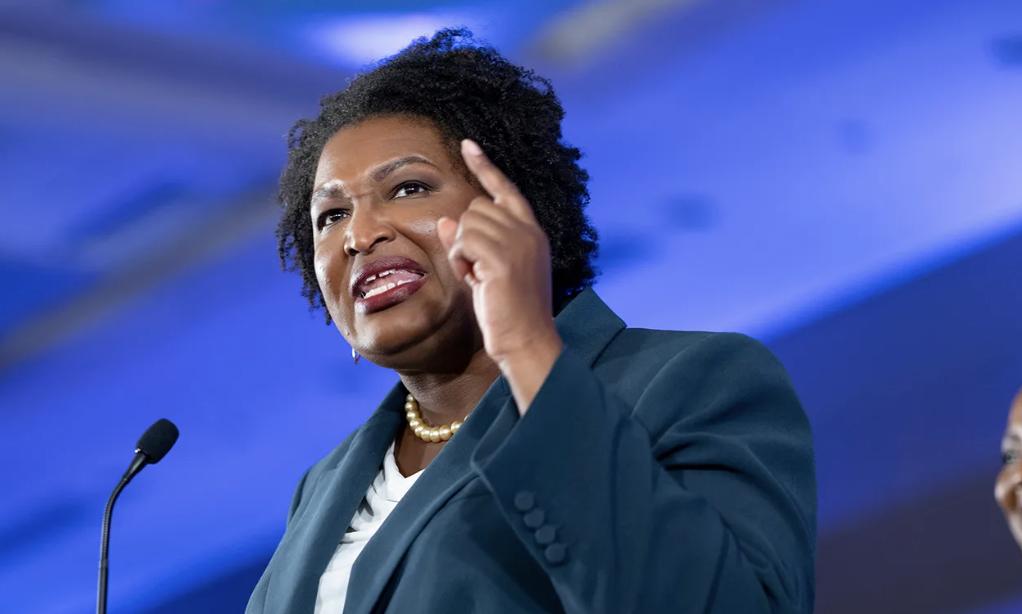
White House spokeswoman Abigail Jackson dismissed Abrams’ comments and took aim at her past election losses. She questioned whether Abrams had ever conceded those races, referencing Abrams’ long-standing refusal to formally concede her 2018 gubernatorial loss in Georgia. Jackson added that election integrity remains a central focus for Trump and said his return to office reflected voter support for that agenda.
Abrams made her remarks during a weekend appearance on MSNBC, where she argued the executive order would disenfranchise voters and fit into what she described as a broader pattern of voter suppression. She called the order “patently illegal” and said it aligns with efforts she believes Republicans have pursued for years to restrict access to voting.
The executive order, titled “Ensuring Citizenship Verification and Integrity in Federal Elections,” directs federal agencies, including the Department of Homeland Security and the Social Security Administration, to work with states to compile a list of U.S. citizens.
It also instructs the Postal Service to deliver mail-in ballots only to individuals on that list. The administration has framed the move as a way to strengthen safeguards and ensure that only eligible voters participate in federal elections.
Abrams and other critics see it differently. She argued the order oversteps federal authority, saying the Constitution gives states primary control over how elections are run. She also raised concerns about the creation of a centralized database of voters, describing it as a potential form of national surveillance and a shift toward federal control of election systems.
The clash reflects a continuation of tensions between Abrams and Trump that date back to her 2018 run for governor. At the time, Trump criticized Abrams’ positions on voting policies, including her opposition to certain voter identification requirements.
Since then, Abrams has remained active in voting rights advocacy. She founded Fair Fight Action following her 2018 loss, arguing that Georgia’s election system unfairly suppressed voters. The group later lost a major lawsuit challenging the state’s election practices and was ordered to pay legal costs. Other organizations tied to Abrams have also faced scrutiny over campaign finance and nonprofit compliance issues.
Meanwhile, Trump has continued to argue that noncitizen voting, while illegal, is a broader issue than commonly acknowledged. In addition to the executive order, he has pushed for federal legislation like the SAVE Act, which would require proof of citizenship when registering to vote, though it has not advanced in the Senate.
Legal challenges are already underway. About two dozen states and several voting rights groups have filed lawsuits seeking to block the order, arguing it violates the Constitution by infringing on state authority over elections.
The dispute highlights a familiar divide in the national debate over voting laws, with the administration emphasizing security measures and critics warning about access and federal overreach.
The post White House Responds To Stacey Abrams EO Comment appeared first on Red Right Patriot.