



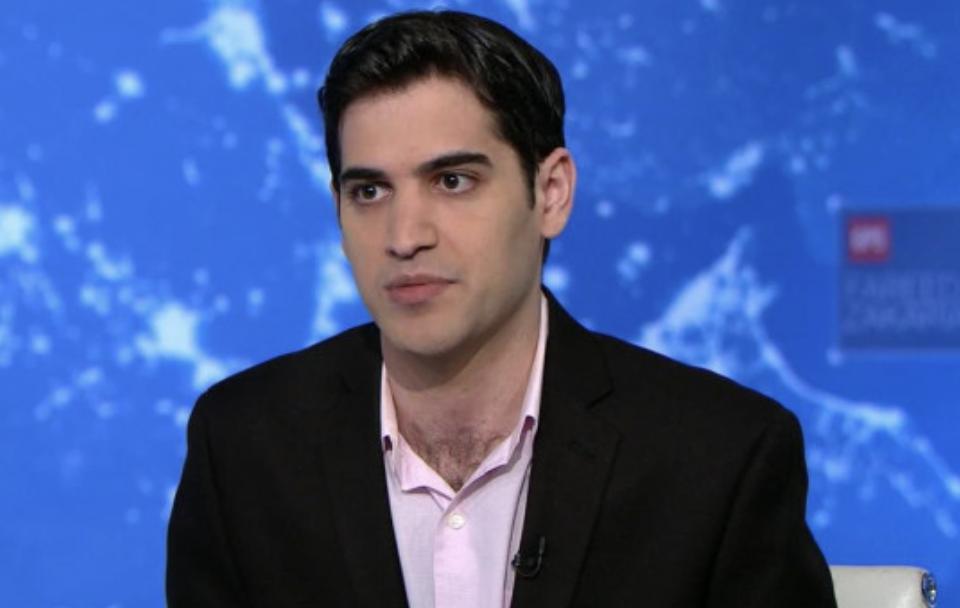
CNN chief data analyst Harry Enten delivered a blunt warning for Democrats on Tuesday, arguing that Republicans remain firmly in contention ahead of the 2026 midterm elections despite President Trump’s declining approval ratings and growing voter frustration over the economy.
Speaking on “CNN News Central,” Enten pointed to new polling showing that while most Americans blame Trump for rising living costs, Democrats have failed to convert that dissatisfaction into a dominant political advantage.
“I think this poll serves as a big-time reality check for Democrats, and that is it ain’t over yet, especially with the redistricting when we look ahead to the 2026 race for Congress,” Enten said, according to Mediaite.
The discussion centered around a CNN survey showing that 77% of Americans believe Trump bears responsibility for the increasing cost of living. Host John Berman asked whether Democrats were benefiting politically from the president’s struggles on the economy.
Enten’s answer was simple: not really.
Drawing from aggregate polling on the generic congressional ballot — a standard measure asking voters which party they would support in congressional elections — Enten explained that Democrats’ lead has actually narrowed over the past year.
According to Enten, Democrats held roughly a six-point advantage in March of last year. That margin has since shrunk to around three points, which he emphasized falls within the margin of error.
“You would have thought that the Democrats’ lead would expand on the generic congressional ballot,” Enten said. “It didn’t happen.”
The analyst stressed that Trump’s declining approval ratings have not automatically translated into broader support for Democrats.
“So, despite all of the talk about Donald Trump’s unpopularity, the fact is, Republicans very much remain in the game when it comes to the congressional midterms,” he added.
Democrats have spent months trying to capitalize on voter concerns surrounding inflation, rising prices, and Trump’s foreign policy decisions, including criticism tied to military action involving Iran. But Enten argued that voter frustration with Republicans has not been accompanied by enthusiasm for Democrats.
Later in the segment, Berman asked why Democrats were struggling to gain ground politically even as Trump’s approval numbers deteriorated.
Enten responded by highlighting another troubling indicator for Democrats: public confidence in the party remains weak.
According to average polling data cited during the segment, Trump’s approval rating currently sits 36 points underwater. Yet despite those historically poor numbers, voters still appear evenly divided on which party they trust more to handle the economy.
“There’s nowhere Republicans could possibly hold onto the House?” Enten asked rhetorically before pointing to polling showing a dead-even split between Democrats and Republicans on economic trust among registered voters.
“But look at this, which party is trusted more in the economy? It’s a tie among registered voters,” he said.
That finding may be especially concerning for Democrats given the economy’s outsized role in national elections. Traditionally, the party viewed as stronger on economic issues tends to perform better in congressional races, particularly during periods of financial uncertainty.
Enten closed with a warning that summed up the broader political landscape heading into the midterms.
“Just because Donald Trump is unpopular doesn’t make Democrats popular,” he said.
“And when you match Democrats against Republicans, all of a sudden it is a dead heat.”
The remarks underscore growing concerns among political analysts that Democrats may be overestimating the political impact of Trump’s weak approval ratings while underestimating Republican resilience heading into November.


