



President Donald Trump has found himself siding more often with neoconservatives that he opposed when he came down the escalator to announce his first presidential campaign at Trump Tower in June 2015.
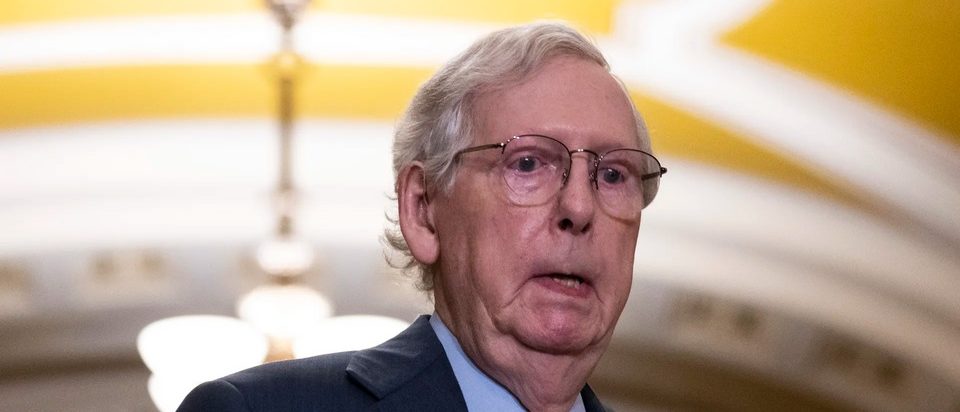
Trump campaigned in 2016 on ending foreign wars and shifting to an “America First” foreign policy approach that prioritized domestic priorities over foreign aid, but is now finding himself more aligned on issues with establishment Republicans such as South Carolina Sen. Lindsey Graham and Kentucky Sen. Mitch McConnell and other neoconservatives since the Iran war began on Feb. 28. The president has campaigned against Republican Kentucky Rep. Thomas Massie, who has expressed strong opposition to the Iran war and foreign aid.
Trump and his allies backed Massie’s opponent, Retired Navy SEAL Ed Gallrein, who stood neck-and-neck with Massie in the polls as of Monday. Pro-Israel lobbyists, including a super PAC for the American Israel Political Action Committee (AIPAC), spent over $9 million in mostly independent expenditures to help Gallrein defeat Massie.
Trump opposed the Iraq war in 2003 and criticized “endless wars” in Afghanistan and other locations in the Middle East. He campaigned in 2016, 2020 and 2024 on prioritizing U.S. interests and on avoiding nation building. However, he always viewed Israel as a key ally when facing enemies in the Middle East, including Iran.
In June 2025, Trump decided to strike Iranian nuclear sites after Iran refused to abandon its uranium enrichment programs. Iran had dramatically increased its stockpile of near-weapons-grade uranium.
Israeli leaders reportedly attempted to convince Trump during a Feb. 11 meeting to launch strikes against Iran, arguing the strike would kill the ayatollah, weaken the regime, prevent Iran from obtaining a nuclear weapon and install a secular leader to take over the nation, The New York Times reported on April 7. Trump also believed the war on Iran would be short-lived.
Neoconservative Republicans cheered on Trump’s military action in Iran. McConnell praised Operation Epic Fury in a Feb. 28 statement and continued affirming his support for the Iran war, stating in April that “taking the fight back to [Iran] is the right thing to do.” Other Republicans who defended Trump’s actions in Iran were Senate Majority Leader John Thune, Graham, Arkansas Sen. Tom Cotton and House Speaker Mike Johnson.
McConnell repeatedly emphasized that defeating Russian aggression in Ukraine was a top priority for Senate Republicans. He strongly backed using U.S. taxpayer dollars to aid Ukraine, arguing it was a practical investment for U.S. security.
Trump endorsed Graham, a proponent of foreign aid and wars, on April 10 against his primary opponent, Mark Lynch, who has pledged to refuse all money from the American Israel Public Affairs Committee (AIPAC) and has been critical of foreign aid to Israel. McConnell has also been one of the strongest supporters of foreign aid on the Republican side, championing aid packages to Ukraine, Israel, Egypt and other countries.
Graham said Sunday on “Meet the Press” that Massie aligns himself with Democrats to destroy Trump’s agenda. He also said it is “worth losing [his] job” over the Iran conflict as the midterm elections approach.
“If you align with Democrats to stop his agenda like Massie does, you’re going to lose,” Graham said.
In 2020, Gallrein donated $500 to Graham’s campaign committee, which Massie’s campaign has repeatedly highlighted. Graham has not publicly expressed his support for Gallrein in the lead up to the primary.
Trump expressed anger at Republicans who publicly opposed his decisions, including Massie, who has opposed the Iran war and foreign aid. Massie argued on May 4 that Israel “forced [the U.S.’] hand and dragged us“ into the conflict. He also stated that Trump’s strikes on Iran in June 2025 were unconstitutional.
Trump maintained that the war in Iran was necessary to prevent the nation from obtaining a nuclear weapon, though some intelligence officials argued Iran was never on the verge of having one.
The pro-Israel lobby and AIPAC’s super PAC, the United Democracy Project (UDP), poured millions of dollars in mostly independent expenditures to help Gallrein defeat Massie. Advertising spending amounted to $32 million as of Monday, making this the most expensive House primary race in U.S. history.
Massie received endorsements from Republican Reps. Lauren Boebert of Colorado, Warren Davidson of Ohio, Victoria Spartz of Indiana and Sen. Rand Paul of Kentucky, who all campaigned for him at a Saturday rally in Florence, Kentucky. Trump threatened to back Boebert’s future primary challenger over her support for Massie.
Trump vowed to back a primary challenger to Massie over his opposition to the actions in Iran, his leading role in releasing the files surrounding Jeffrey Epstein and voting twice against the One Big, Beautiful Bill Act (OBBBA).
Activists such as Kentucky 4th PAC, Make Liberty Win, Defeating Communism PAC and other groups spent over $10 million in independent expenditures in support of Massie. The campaigns for Paul and Republican Ohio Rep. Jim Jordan also donated to Massie’s campaign, according to Federal Elections Commission (FEC) records.
The White House did not respond to the Daily Caller News Foundation’s request for comment.
All content created by the Daily Caller News Foundation, an independent and nonpartisan newswire service, is available without charge to any legitimate news publisher that can provide a large audience. All republished articles must include our logo, our reporter’s byline and their DCNF affiliation. For any questions about our guidelines or partnering with us, please contact [email protected].