



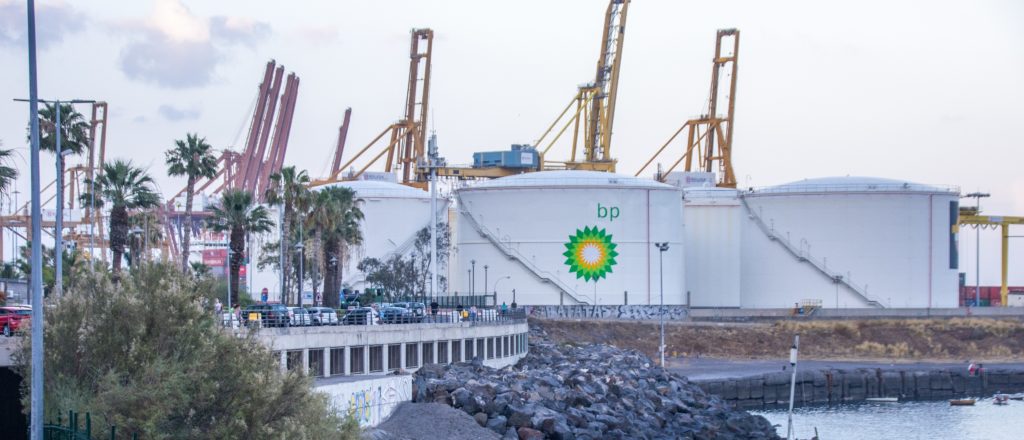
In a rather inconvenient display of corporate dysfunction, BP announced on Tuesday the immediate removal of its chairman, Albert Manifold, just months after he took the helm and weeks after the company reported a robust $3.2 billion quarterly underlying profit. The board cited “serious concerns” over “important governance standards, oversight and conduct” that it deemed unacceptable. Shares plunged nearly 10% on the news, underscoring the market’s frustration with yet another leadership upheaval at one of the world’s largest energy companies.
This latest bit of boardroom theater comes at a time when BP had hoped to be laser-focused on delivering value in a volatile energy landscape. Manifold, a former CRH plc CEO with no prior oil and gas experience, was appointed in October 2025 as an outsider to drive a strategic reset after the company’s decades of misallocating too much capital towards unprofitable “green” investments.
His job was to champion a faster pivot back to hydrocarbons, cost-cutting, asset sales, and board streamlining, moves targeted by activist investors like Elliott Management.
And the plan was working. In late April, BP delivered strong Q1 2026 results: underlying replacement cost profit doubled year-over-year to $3.2 billion, beating expectations, driven by exceptional oil trading and refining margins amid geopolitical tensions, including the Iran conflict. CEO Meg O’Neill hailed the results as “another quarter of strong operational and financial delivery.”
But now, instead of building on this momentum, the board pulled the trigger on Manifold. Senior Independent Director Amanda Blanc stated: “Albert has helped bring a welcome focus and pace to bp’s transformation. However, the board has been surprised and disappointed to learn of governance oversight and conduct issues it deems unacceptable and has taken decisive action.”
Interim Chair Ian Tyler added: “The Board and leadership team have deep conviction in the strategic direction we have laid out… The Board has been very impressed with Meg O’Neill since she joined as CEO. She has extensive industry and operational experience and real clarity about the direction and opportunity for the business.”
So, what exactly were these “conduct issues?” That question and others are left unanswered. BP has declined to elaborate, and Manifold has not publicly responded. Without transparency, the vagueness fuels cynicism about board accountability.
Unfortunately, BP’s leadership churn is not an anomaly, but a pattern. Bernard Looney was ousted in 2023 for misleading the board on internal personal relationships. His successor, Murray Auchincloss, departed abruptly in December. Meg O’Neill became the company’s fifth CEO since 2020. Manifold’s predecessor, Helge Lund, also faced activist heat. The frequent upheavals can only hinder the company’s efforts to regain a competitive posture with peer companies like ExxonMobil, Chevron, and Shell.
Critics on the green side may cheer any stumble at a “Big Oil” giant, but the real victims are shareholders and investors. BP’s strategic reset efforts acknowledge the realities of the global energy situation: Oil trading booms from conflicts highlight how geopolitics, not ESG virtue-signaling, drives profits. Forcing rapid “net zero” shifts and ESG obsessions have burned capital and eroded returns at BP and peers.
The market’s harsh reaction speaks volumes. BP shares, already underperforming rivals in recent years, took another hit. Investors crave stability, not drama. In an era of multiple major energy security concerns — rising demand from AI data centers, EVs straining grids, and supply risks from unstable regions — neither BP nor any other major player can afford to engage in endless reboots. Shareholders deserve focus on what works: safe, profitable hydrocarbon production while innovating pragmatically in lower-carbon tech.
In the end, this latest abrupt change in management is just another upset for a company which has seemingly existed in a constant state of upheaval and instability since the Deepwater Horizon catastrophe in April 2010. BP’s board must now deliver a credible permanent successor quickly — but please, not without strict due diligence — who is capable of bringing real, lasting stability to a struggling giant.
Energy markets in the 21st century wait for no one – least of all for companies whose boards and management can’t get it together.
David Blackmon is an energy writer and consultant based in Texas. He spent 40 years in the oil and gas business, where he specialized in public policy and communications.
The views and opinions expressed in this commentary are those of the author and do not reflect the official position of the Daily Caller News Foundation.
All content created by the Daily Caller News Foundation, an independent and nonpartisan newswire service, is available without charge to any legitimate news publisher that can provide a large audience. All republished articles must include our logo, our reporter’s byline and their DCNF affiliation. For any questions about our guidelines or partnering with us, please contact [email protected].