
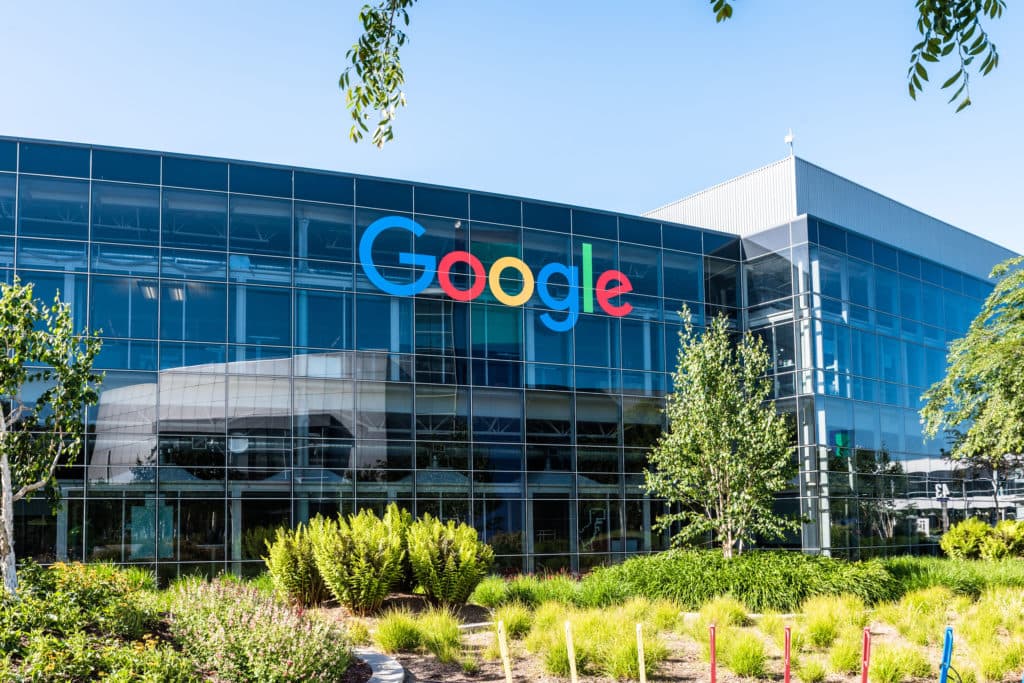
Large corporations facing antitrust actions would normally breathe a sigh of relief when a Republican replaced a Democrat in the White House. But, thanks to the Trump administration’s leadership, there’s no sign that the pressure is letting up for Google — and that’s great news.
On March 4, Bloomberg reported that the tech giant is begging President Donald Trump’s Justice Department to take it easy on them, citing “people familiar with the discussions.”
That strategy hasn’t been working out so well for them thus far.
Last week, lawyers for Google and the DOJ began facing off in a Washington, D.C. court, and the DOJ is reportedly poised to make its case for breaking up the company.
The DOJ’s antitrust case against Google, which accuses the company of monopolizing the online search market, began during Trump’s first term and continued under former President Joe Biden. A few weeks after the 2024 election, a judge ruled that Google held an illegal monopoly, sending the case to the remedy phase.
Biden’s antitrust team took an aggressive approach, proposing that the court force Google to sell off Chrome (which has the highest market share of any web browser) and ban the company from paying Apple to make Google the default search engine for its Safari browser (which has the second-highest market share).
In response to the proposed remedy, Kent Walker, Google’s chief legal officer, wrote a blog post condemning DOJ’s “radical interventionist agenda.”
Past GOP administrations would likely have taken this opportunity to propose less drastic remedies. The last two, for example, were always eager to establish their pro-business bona fides in contrast to Democratic interventionism.
Donald Trump is a different kind of Republican. As a former businessman, he’s undoubtedly pro-business, but he’s also pro-consumer. He knows better than any politician in America that Big Tech has gotten too big for its britches. After all, the social media censorship of the Hunter Biden laptop story may have cost him the 2020 election, and by the time he left office, he had been silenced on Facebook, Instagram, Twitter, Snapchat, and a host of other sites.
YouTube, which Google owns, demonetized and banned conservative accounts, and even removed Trump’s video asking rioters who stormed the Capitol to go home. Google itself also went all-in on censorship, banning the conservative social network Parler from its app store in 2021 and failing to provide autocomplete prompts for searches about the 2024 assassination attempt against Trump.
The company’s recent attempts to curry favor with the once and current president are too little, too late. Sending Google CEO Sundar Pichai to the inauguration and changing the Gulf of Mexico to the Gulf of America on Google Maps are nice gestures, but they do nothing to fix the underlying problem – that a single company currently has the power to filter reality for hundreds of millions of people. Public opinion has turned (for now) against left-wing social media censorship, but the pendulum could always swing back. The only way to make sure it never happens again is to break up Big Tech.
Trump understands this, and so does his antitrust team.
In an April 24 interview, Omeed Assefi, DOJ’s Deputy Assistant Attorney General for the Antitrust Division, said “aggressive enforcement is here to stay.” Gail Slater, the DOJ’s top antitrust enforcement official, appears to concur. In a Truth Social post announcing Slater’s selection, Trump accused Big Tech of “stifling competition in our most innovative sector” and “using its market power to crack down on the rights of so many Americans” and expressed confidence that Slater would “fight these abuses.” Slater agrees with him. In answering written questions to Congress before her Senate confirmation vote, she promised to prioritize enforcement against Big Tech.
When Slater puts the screws to Google in remedy negotiations (and in a separate lawsuit that targets Google’s digital ad business), Never Trumpers will almost certainly make indignant noises about “government interventionism.” Those criticisms would have only had validity before Pam Bondi and Gail Slater took over, back when antitrust policy seemed to presuppose that “big” always equals “bad.”
There are plenty of case studies. Biden’s DOJ sued Visa for monopolizing debit card services, even though other ways to pay for goods and services continue to prosper and proliferate. Antitrust expert Aurelian Portuese called it one more example of the DOJ “taking on corporations merely because of their market share percentages, even if said corporations are benefiting consumers and not interfering with the competitive marketplace.”
Biden’s antitrust regulators also sued to block the JetBlue-Spirit merger, ignoring the fact that JetBlue and Spirit together controlled only about eight percent of the U.S. market, far behind American, Delta, and United. This suit ultimately led to Spirit’s bankruptcy, which reduced industry competition.
With Slater at the helm, ridiculous lawsuits like these will become a thing of the past. She understands that big doesn’t necessarily mean bad — anti-consumer activity is what is of concern.
And that’s the problem with Big Tech. It isn’t bad because it’s big. It’s bad because these companies (including Google) have proven repeatedly that they’re willing to stifle competition and censor Americans’ speech.
One of Slater’s first big challenges as antitrust czar will be resolving the search monopoly lawsuit against Google. Naysayers can call her an “over-regulator” all they want, but it won’t matter. Slater will stick to the same principles that have defined her career. The company’s cries for mercy will fall on deaf ears and the American people will finally obtain the relief they desperately need and deserve.
Aiden Buzzetti is the President of the 1776 Project Foundation. He was previously the Director of Coalitions for the 1776 Project PAC and can be found on X at @AidenBuzzetti.
The views and opinions expressed in this commentary are those of the author and do not reflect the official position of the Daily Caller News Foundation.
All content created by the Daily Caller News Foundation, an independent and nonpartisan newswire service, is available without charge to any legitimate news publisher that can provide a large audience. All republished articles must include our logo, our reporter’s byline and their DCNF affiliation. For any questions about our guidelines or partnering with us, please contact [email protected].