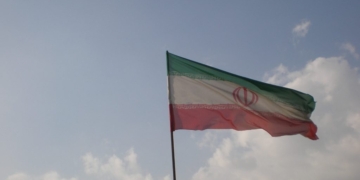


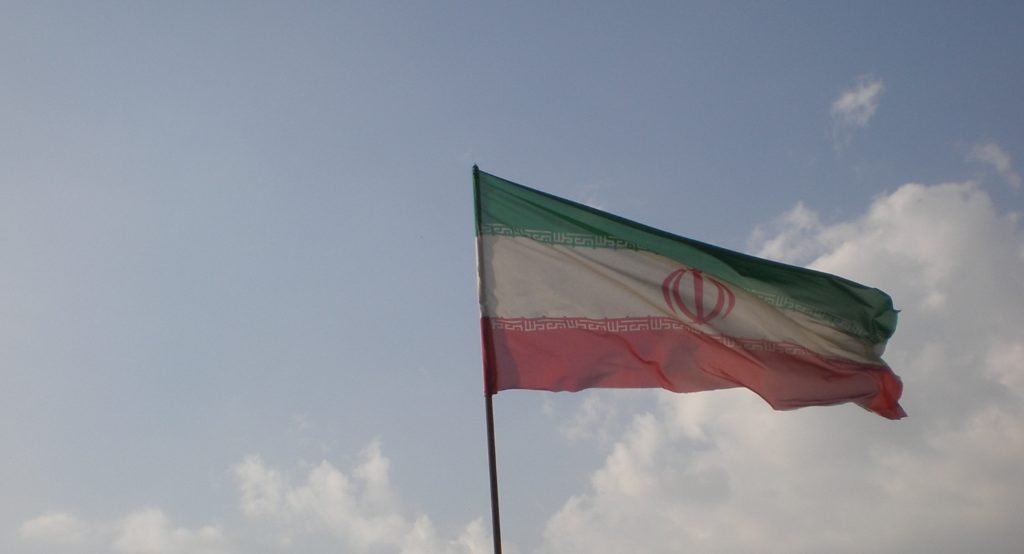
Protests unfolding across Iran in recent days have drawn attention to the country’s collapsing currency, runaway inflation, and deepening economic misery. The Iranian public is angry. But to frame the unrest as economic outrage misses the point. Today’s protests, though triggered by a worsening economy and widespread corruption, are fundamentally political. They are aimed not at reforming the system but at ending authoritarian rule altogether.
Since late 2017, Iran has had multiple rounds of nationwide uprisings that included all 31 provinces. Regardless of what sparked the initial demonstrations, within days the slogans shifted from economic grievances to political demands. Protesters openly challenged the clerical regime that has ruled Iran for more than four decades.
The regime’s response has been brutally consistent. About 1,500 people were killed during the November 2019 uprising. Thousands were arrested, tortured, or imprisoned. The violence suppressed protests briefly, but the underlying crisis was unresolved. The September 2022 uprising that expanded to more than 280 cities required widespread killing and arrests for the regime to gain control. Yet, dissent resurfaced in new forms: labor strikes, student protests, and localized uprisings. Each time, a broader, more radical, and more coordinated effort arose.
By 2025, the ruling regime understood that its greatest vulnerability was not foreign pressure. Rather, the organized resistance and the possibility of renewed domestic upheaval were its primary foe. Iran’s regional influence through proxies already had been significantly weakened, its terror networks disrupted, and its image of invincibility severely damaged. In response, Tehran turned inward with ferocity. An execution spree was unleashed on Iranian society, aimed squarely at intimidating the population to deter resistance.
The regime executed more than 2,000 people in a single year, including women and political prisoners. These were extrajudicial and were instruments of terror. Tehran’s leaders, believing that fear could succeed where propaganda had failed, tried to silence a society that had demonstrated its willingness to rise.
That strategy has clearly failed.
Despite mass arrests, heavy security deployments, and the record executions, the protests and strikes are again spreading across Tehran and other cities. Universities, bazaars, and working-class neighborhoods have become centers of defiance. Merchants have closed their shops in protest. Students have demonstrated with chants that leave no room for misinterpretation.
The slogans heard since Dec. 28 — “Down with the Dictator” and “Neither Pahlavi nor the supreme leader; freedom and equality” — are revealing. They are not calls for lower prices or factional reshuffling within the regime. They reject all forms of dictatorship whether past or present. They express a clear demand for a future based on freedom, equality, and popularly elected sovereignty.
The Iranian people are not seeking a return to the past nor are they interested in cosmetic reforms. They are saying that the problem is structural, and that the solution must be fundamental. They want a democratic republic that separates religion from the state, guarantees equal rights for women and minorities, and derives its legitimacy from the ballot box, not from clerical authority or inherited power.
Merchants, workers, students, and young people are converging into a broader movement of collective defiance.
For the international community, these developments carry an unmistakable message. Policies based on appeasement, wishful thinking, or the illusion of moderation have failed. What is unfolding in Iran is not a crisis of governance that can be managed from above, but a confrontation between a society demanding freedom and a regime determined to survive through violence.
The world should recognize that silence or neutrality in the face of mass executions and systemic brutality emboldens the perpetrators. At the same time, supporting the aspirations of the Iranian people does not require military intervention or appropriation of money. It requires moral clarity, political resolve, and an end to policies that legitimize repression.
The protests signal the vulnerability of the regime and that the only viable path for change in Iran is through organized resistance and continued uprisings until the people reclaim their country and their future.
Alireza Jafarzadeh, author of The Iran Threat (Palgrave Macmillan: New York), is Deputy Director of the Washington Office of the National Council of Resistance of Iran. He is on X at @A_Jafarzadeh.
The views and opinions expressed in this commentary are those of the author and do not reflect the official position of the Daily Caller News Foundation.
(Featured Image Media Credit: https://www.flickr.com/photos/9306986@N07/5327693470/in/photolist-97MPDY-RXYpmr-RVmvfA-S9UBdi-aDNyXG-sf7oAc-motKr-Fagxem-nodUvt-pTBBE1-5EFDBK-4FKKsP-6B8WWb-nodJYy-eHdjrR-ryHZS8-RVmt5y-3Dmxrd-RXYmMt-RXYoma-RVmv1s-RVmrQQ-6B8WLs-4C6SRL-f3gtGn-f6k2H3-UY41SW-4FPVcJ-4C6Tff-eQkFop-4C6Ssq-V2F2wR-eHjfyh-eyZChx-5Aw51L-4PS5FF-PZcevQ-mAq6xr-U15m3p-nfWPvx-4PS1y4-nodMEL-NXbDGE-8g7wEf-8rtwSa-5oJK99-eHdGnT-PDdSM9-nov89X-DoUZ2a)
All content created by the Daily Caller News Foundation, an independent and nonpartisan newswire service, is available without charge to any legitimate news publisher that can provide a large audience. All republished articles must include our logo, our reporter’s byline and their DCNF affiliation. For any questions about our guidelines or partnering with us, please contact [email protected].