



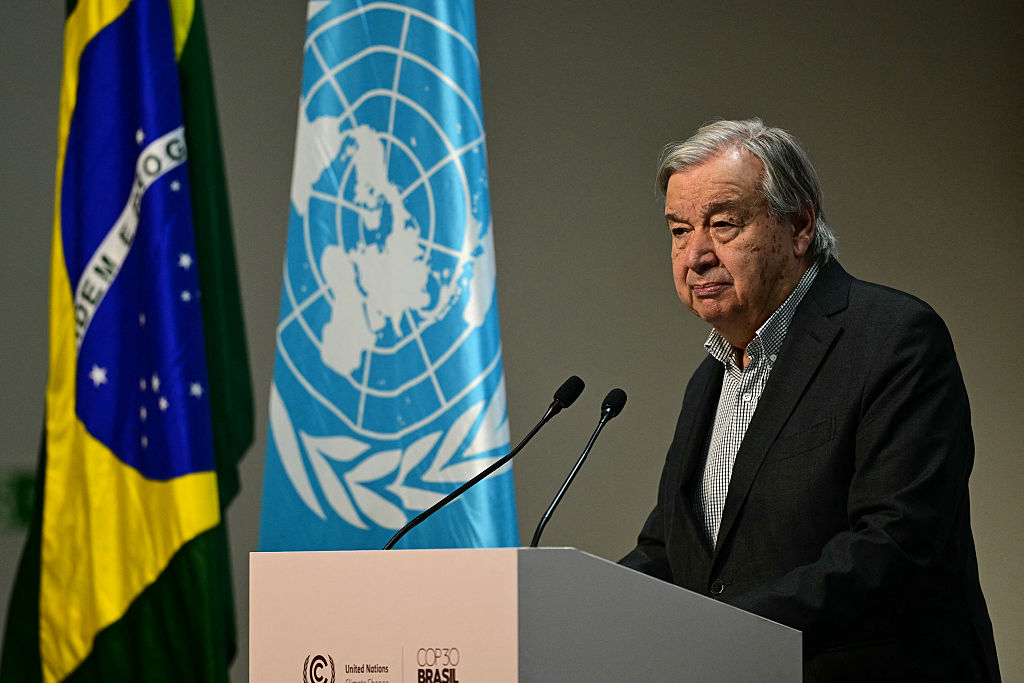
U.N. Secretary-General António Guterres issued an urgent appeal Thursday for countries gathered at global climate talks in Brazil to push past political gridlock and reach a compromise before time runs out.
According to The Associated Press, speaking in Belem, where diplomats are deep into the final scheduled days of COP30, Guterres said negotiators must “show willingness and flexibility to deliver results,” even if some measures fall short of the most ambitious goals on the table.
“We are down to the wire and the world is watching Belem,” Guterres said, urging delegates to negotiate “in good faith” after talks slipped past a key Wednesday deadline. Over the years, climate summits routinely spill beyond their two-week windows, and this year appears to be no different.
Guterres emphasized that the stalemate is being closely watched not just by diplomats and activists, but also by those already reeling from the extreme impacts of climate change.
“Communities on the front lines are watching, too — counting flooded homes, failed harvests, lost livelihoods — and asking, ‘how much more must we suffer?’” he said. “They’ve heard enough excuses and demand results.”
The tensions at COP30 largely center on long-debated demands: a detailed plan to phase out fossil fuels and stronger commitments to financial support for poorer nations. Despite the rifts, Guterres insisted he was “perfectly convinced” that compromise remained possible and rejected claims that failing to secure the toughest measures would represent defeat.
He also addressed the absence of President Donald Trump, who withdrew the U.S. from the negotiations. Asked whether he had a message for Trump, Guterres replied, “We are waiting for you.”
When pressed on whether he believed Trump might soften his stance, the secretary-general offered a brief smile. “Hope is the last thing that dies,” he said.
Trump previously called climate change predictions a “con job” during a U.N. session in September. His administration remains absent from the Belem talks, even as they unfold on the edge of the Amazon.
Guterres was particularly direct in urging wealthy nations to expand financial assistance for developing countries facing escalating climate disasters. He reiterated his call to triple adaptation funding from $40 billion to $120 billion annually.
Earlier in the week, officials from nations battered by storms, floods, and droughts delivered emotional pleas for urgent global action, warning that the time for speeches had passed.
“No delegation will leave Belem with everything it wants, but every delegation has a duty to reach a balanced deal,” Guterres said. “Every country, especially the big emitters, must do more.”
Financial support — with an aspirational target of $300 billion a year — is one of four major issues that were initially left off the agenda. Others include tougher national climate plans, trade-related climate concerns, and improved transparency in reporting progress.
COP30 President André Corrêa do Lago had pushed negotiators to produce a package on those items by Wednesday, but talks remained stalled.
More than 80 countries have urged adoption of a clear “road map” for transitioning away from fossil fuels, expanding on a broad agreement reached in Dubai two years ago. Guterres repeatedly referenced that earlier commitment but stopped short of endorsing the detailed plan pressed by Brazilian President Luiz Inácio Lula da Silva.
As the clock ticks down, the question looming over Belem is whether world leaders will leave with a meaningful deal — or with another reminder of how difficult compromise has become.












