



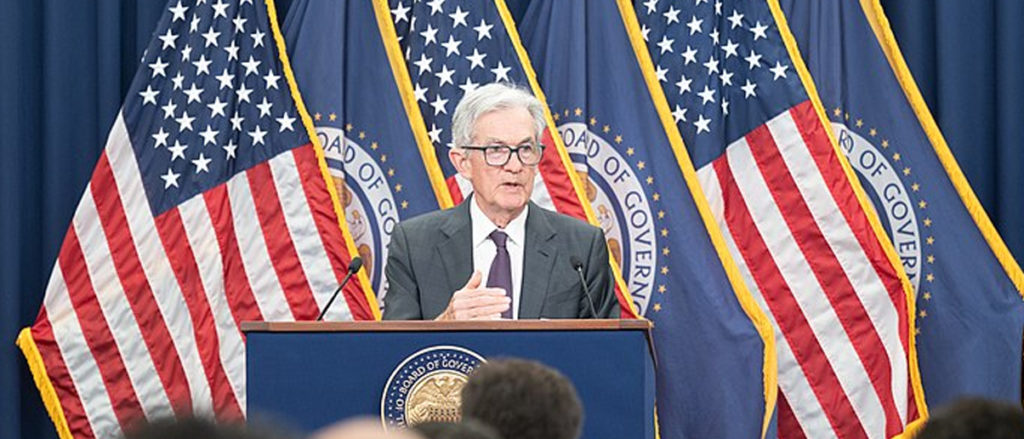

The Federal Reserve delivered its third straight interest-rate cut on Wednesday, capping off a dramatic year at the central bank as President Donald Trump pushes for aggressive rate cuts and seeks to reshape its leadership.
After a two-day meeting, the Federal Open Market Committee (FOMC) voted to lower the benchmark federal funds rate by a quarter point to a target range of 3.50% to 3.75%. The decision came amid deepening divisions inside the committee over the path ahead, as some policymakers worry that labor-market weakness could worsen without additional easing, while others argue that further cuts risk reigniting inflation.
The decision also landed amid an unprecedented data blackout caused by the record-setting federal government shutdown. Key economic indicators like the November jobs report are not slated for release until Dec. 16, and the October consumer price index was canceled entirely. Still, alternative data has pointed to a cooling labor market.
The new year is likely to be just as consequential, with Federal Reserve Chair Jerome Powell’s leadership term ending in May, giving Trump a major opportunity to shape the direction of the central bank. The president is expected to announce his pick to replace Powell in early 2026 and has made clear he intends to nominate someone committed to rapid rate cuts.
“We have a bad head of the Fed. We’re going to be making a change,” Trump said during an economy-focused speech in Pennsylvania on Tuesday.
Betting markets currently view National Economic Council Director Kevin Hassett — a supporter of Trump’s push for rate cuts — as the frontrunner to succeed Powell.
During the Tuesday speech, Trump also questioned the legitimacy of the four Fed governors appointed by former President Joe Biden, suggesting his predecessor may have used his autopen to appoint them. In recent weeks, the Trump administration has moved to invalidate orders signed by Biden’s “infamous and unauthorized” autopen.
The president attempted to fire Federal Reserve Governor Lisa Cook in August for alleged mortgage fraud. The Supreme Court ruled that Cook may remain on the board at least until January, when justices will hear arguments on the administration’s effort to remove her, according to the court’s order.
Alongside the four Biden-appointed governors, the Fed board includes Christopher Waller and Michelle Bowman, both appointed by Trump during his first term, as well as Stephen Miran, whom Trump appointed to fill a vacant seat in September.
The Fed is also in the midst of reappointing the 12 regional reserve bank presidents, five of whom vote annually on interest-rate decisions as members of the FOMC. While each regional board nominates its own president, the appointment must be approved by the seven-member board.
Though the administration does not have a direct role in the reappointment process, Treasury Secretary Scott Bessent said on Dec. 3 that he plans to push for a new requirement that the regional bank presidents live in their districts for at least three years before taking office. Bessent argued in November that the reason for the regional Fed banks was to bring the perspective of their districts to the Fed’s interest rate decisions and “break the New York hold.”
All content created by the Daily Caller News Foundation, an independent and nonpartisan newswire service, is available without charge to any legitimate news publisher that can provide a large audience. All republished articles must include our logo, our reporter’s byline and their DCNF affiliation. For any questions about our guidelines or partnering with us, please contact [email protected].