
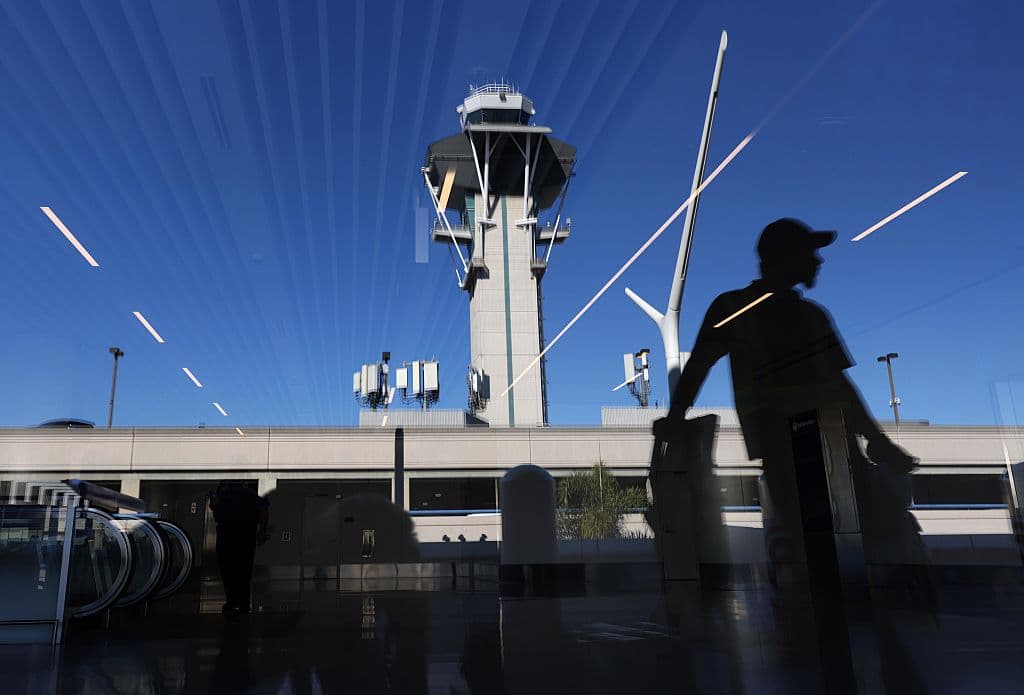
Flight delays continued Sunday at U.S. airports as the Government shutdown entered its second month, with Newark Liberty International Airport in New Jersey seeing delays of two to three hours.
According to The Associated Press, New York City’s Emergency Management office said on X that delays at Newark often ripple across the region’s other airports.
Travelers flying to, from, or through New York “should expect schedule changes, gate holds, and missed connections. Anyone flying today should check flight status before heading to the airport and expect longer waits,” the post added.
Other major airports, including George Bush Intercontinental in Houston, Dallas Fort Worth International, and Chicago O’Hare, were experiencing dozens of delays and one or two cancellations, along with airports in San Francisco, Los Angeles, Denver, and Miami, according to FlightAware.
As of Sunday evening, FlightAware reported 4,295 delays and 557 cancellations of flights within, into, or out of the U.S., though not all were caused by controller shortages. In July, before the shutdown, about 69% of flights were on time and 2.5% were canceled.
U.S. Transportation Secretary Sean Duffy has warned that longer shutdowns will result in increased flight disruptions.
“We work overtime to make sure the system is safe. And we will slow traffic down, you’ll see delays, we’ll have flights canceled to make sure the system is safe,” Duffy said Sunday on CBS’s Face the Nation with Margaret Brennan.
He added that he does not plan to fire air traffic controllers who miss work during the shutdown.
“Again when they’re making decisions to feed their families, I’m not going to fire air traffic controllers,” Duffy said. “They need support, they need money, they need a paycheck. They don’t need to be fired.”
Earlier in October, Duffy had warned that controllers who called in sick while working without pay risked being fired, even as the FAA faces a critical shortage of staff. Nearly 13,000 controllers have been working without pay for weeks, the FAA said Friday on X.
Shortages can occur in both regional control centers and individual airport towers, though they don’t always disrupt flights. Before the shutdown, the FAA was already short about 3,000 air traffic controllers. Cirium, an aviation analytics firm, noted that most major U.S. airports maintained strong on-time performance in October despite isolated staffing issues.