



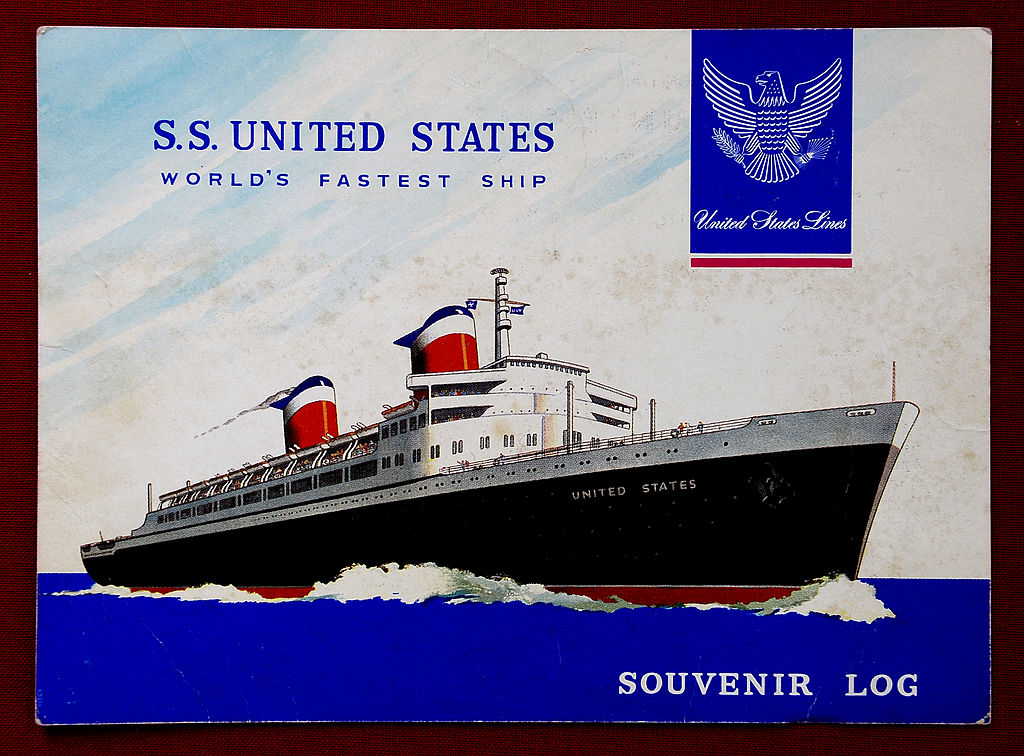
A famed American ocean liner that once symbolized speed, engineering power, and national pride will soon take on a very different role — becoming the world’s largest artificial reef.
According to The Associated Press, Okaloosa County officials announced Tuesday that the SS United States will be sunk in early 2026, roughly 22 nautical miles southwest of Destin and 32 nautical miles southeast of Pensacola.
The location was finalized after months of discussion with Pensacola-area tourism officials, who are contributing $1.5 million toward the project. Coastal Conservation Association Florida is providing an additional $500,000.
The 990-foot vessel — longer than the RMS Titanic — shattered the trans-Atlantic speed record on its maiden voyage in 1952. But after decades of disuse, failed restoration attempts, and rising upkeep costs, the ship has spent recent months at the Port of Mobile, where crews have been removing cables, plastics, glass, and chemicals to prepare it for reefing.
Officials say the project is as much about boosting tourism as preserving marine environments.
“This collaboration will foster amazing adventures for generations of visitors and create a tourism economy that will benefit the state and the entire Northwest Florida region,” Okaloosa County Board Chairman Paul Mixon said.
The sinking is part of a $10.1 million county plan that includes purchasing, moving, and cleaning the ship, along with a marketing campaign to promote the reef. The plan also dedicates $1 million toward a future onshore museum to honor the ship’s history.
Once placed on the ocean floor, the SS United States will rest at a depth of about 180 feet. Because of its height, the upper decks will sit only about 60 feet from the surface — making it accessible to both new and experienced divers. The site will also be roughly 12 nautical miles from the USS Oriskany, another well-known artificial reef and popular dive destination.
Darien Schaefer, president and CEO of Visit Pensacola, said the project represents a major opportunity for the region.
“The transformation of the SS United States into the world’s largest artificial reef creates a rare opportunity to elevate our entire region on the global stage,” he said.
For conservationists, the ship’s future role as a marine habitat is equally significant. The Coastal Conservation Association of Florida said its donation was the largest in the organization’s 40-year history.
“It is truly a once-in-a-lifetime opportunity to contribute to the creation of the world’s largest artificial reef,” CCA Florida Executive Director Brian Gorski said.
The SS United States arrived in Alabama in March after a 12-day tow from Philadelphia, where it had remained for nearly 30 years. Its ownership transferred to Okaloosa County last fall after a long-running rent dispute between its conservancy and landlord was resolved.
Although preservation groups have fought for decades to restore the vessel, the scale and cost proved overwhelming. A recent lawsuit filed by the New York Coalition sought to stop the sinking, arguing the liner’s historical value should protect it. County officials countered that without the reefing project, the SS United States would likely be scrapped.
At its peak, the ship was a symbol of American innovation. It averaged 36 knots — more than 41 mph — on its maiden voyage, crossing the Atlantic in three days, 10 hours, and 40 minutes. That time beat the RMS Queen Mary’s record by 10 hours, and the SS United States still holds the trans-Atlantic speed record today.
Soon, its legacy will continue — beneath the waves, serving as a habitat for marine life and a destination for divers from around the world.












