



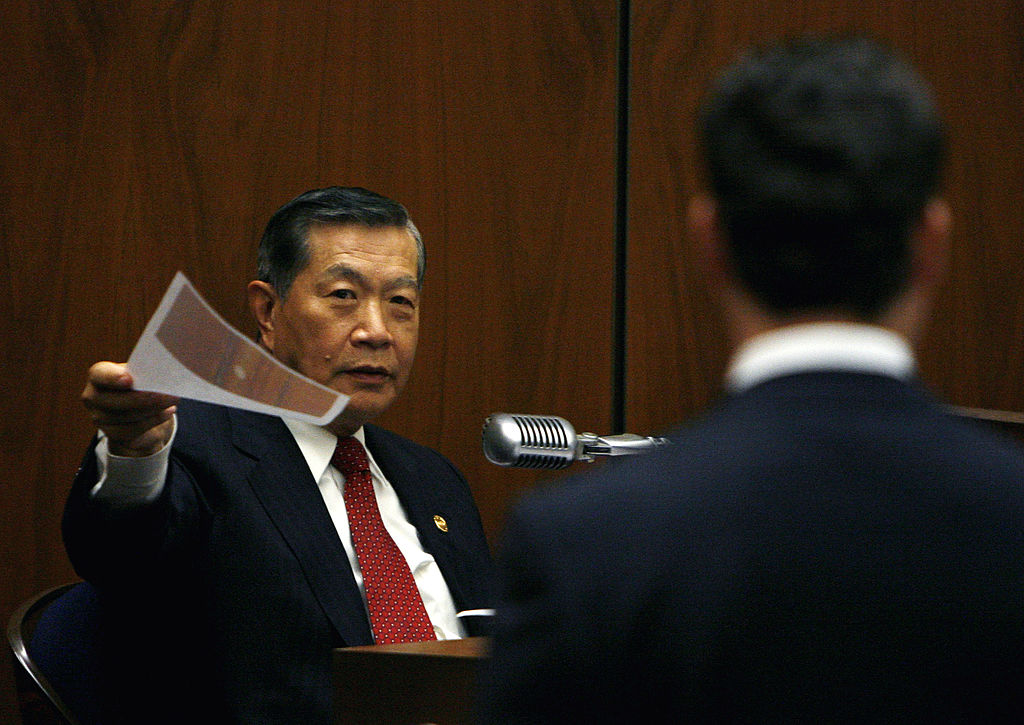
The final days of Henry C. Lee have cast a long shadow over a career once defined by high-profile courtroom victories and scientific acclaim.
According to the New York Post, the renowned forensic expert, who died Friday at 87, was a central figure in some of the most closely watched criminal cases in modern history.
But as questions mounted in recent years about his work, Lee reportedly gave a candid final interview in an attempt to defend his legacy.
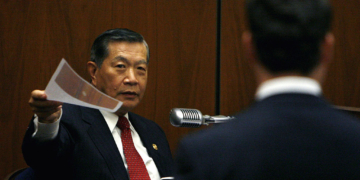
For decades, Lee built his reputation on blood spatter analysis and crime scene reconstruction, earning national recognition during the 1994 trial of O. J. Simpson.
Testifying for the defense, Lee claimed to have discovered previously overlooked bloody footprints, suggesting Simpson had been framed in the killings of Nicole Brown Simpson and Ron Goldman.
Simpson was ultimately acquitted, though Lee’s findings were disputed by an FBI analyst, who argued construction workers left the marks.
Lee also worked on the still-unsolved killing of JonBenét Ramsey in 1996, where he was among the first to suggest the ransom note found at the home had been staged.
“He got famous for getting results that no one else could,” said forensic scientist Brent Turvey, who once studied under Lee.
“The problem is the pressure and celebrity of doing a great job and living up to the myth of the forensics of Henry Lee.”
His résumé extended to the 2003 trial of music producer Phil Spector in the death of Lana Clarkson.
During that case, Lee denied allegations that he had improperly handled evidence. Spector was later convicted of second-degree murder.
However, scrutiny of Lee’s work intensified after the wrongful convictions of Shawn Henning and Ricky Birch were overturned in 2025.
Their convictions had relied heavily on Lee’s testimony about a towel he said contained blood — a claim later disproven.
The revelations prompted broader concerns about other cases tied to Lee’s analysis.
“[The Pressure] obviously got to him, and he got to the point where he couldn’t live up to that image. So, he just kept giving answers without doing examinations,” Turvey claimed.
Lee had pushed back publicly, saying at the time, “In my 57-year career, I have investigated over 8,000 cases and never, ever was accused of any wrongdoing. This is the first case that I have to defend myself.”
But in a final interview conducted shortly before his death, Lee reportedly sought to explain himself.
“Logic is the bottom line for law enforcement. But I only did one thing in my life. It’s to make the impossible be possible.”
Turvey recalled another remark Lee once made during a speech at the University of New Haven.
“He said, ‘Just remember, it takes 25 years to build a good name and 25 seconds to destroy it.’ He was always speaking out against fraud, always speaking out against negligence and incompetence,” Turvey said.
“But, as we now know, that was a confession of guilt to what he did in practice.”