



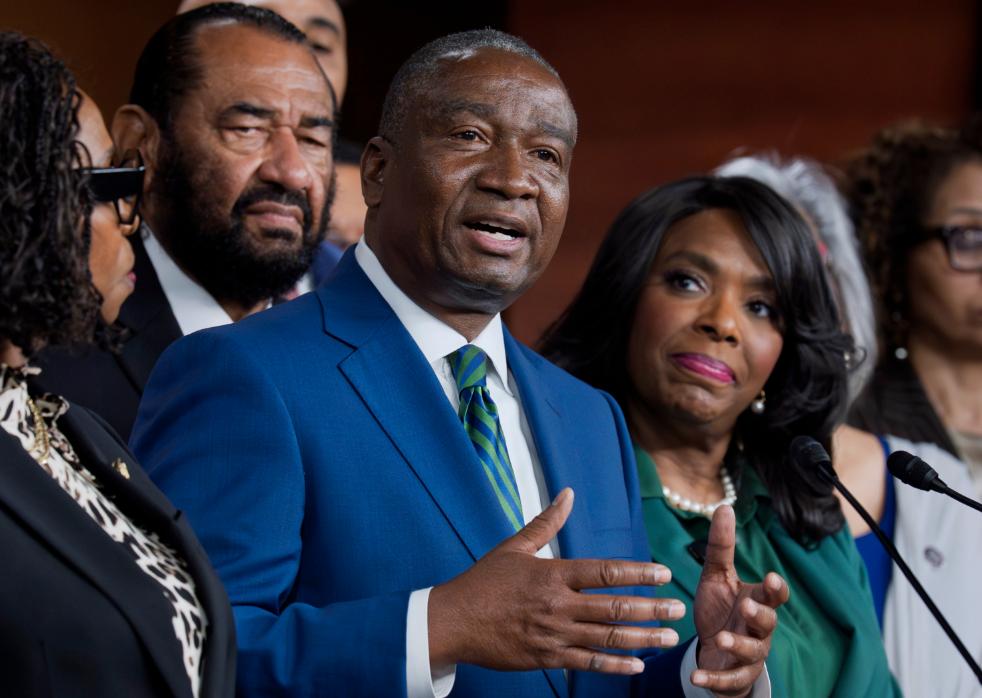
Rep. Wesley Hunt of Texas pushed back on questions about race and political representation during a tense interview Wednesday, arguing that his role in Congress has nothing to do with his identity and everything to do with the voters who elected him.
The exchange came during an interview with MeidasTouch reporter Pablo Manríquez, who asked Hunt about the future of Black Republicans in the House following the Supreme Court’s decision in Louisiana v. Callais. The ruling, decided 6-3, found that Louisiana’s newly drawn second majority-Black congressional district amounted to an unconstitutional racial gerrymander, narrowing how race can be used in redistricting under the Voting Rights Act.
Manríquez asked Hunt whether the decision could lead to a situation where there are no Black Republicans left serving in Congress. Hunt immediately dismissed the premise.
“It’s not relevant. I’m not here because I’m Black,” he said. “I am here because I am a qualified representative for Congressional District 38.”
Hunt’s response centered on the idea that elections should be driven by voter choice rather than racial considerations. He made clear that he does not view the number of Black Republicans in Congress as a meaningful benchmark.
“The American people choose who they want to choose,” Hunt said. “I don’t want to get into this game of race bait all day, every day.”
He went on to downplay the significance of representation defined by race, suggesting that the number itself — whether it’s a handful of lawmakers or none at all — should not be treated as a central political concern.
“If there’s four? If there’s 10? If there’s none,” Hunt said.
To reinforce his argument, Hunt pointed to the demographics and voting patterns in his own district. He noted that he represents a majority-White district that former President Donald Trump carried by a wide margin, and said his own victory exceeded that margin.
“I represent a White majority district that President Trump would have won by over 20 points, and I won by over 25 points,” he said.
Hunt closed by invoking a well-known line from Martin Luther King Jr., framing his political career as an example of being judged on merit rather than race.
“I’m being judged not by the color of my skin, but the content of my character,” he said.
The broader context of the exchange reflects ongoing national debates over redistricting and the role race should play in drawing congressional maps. The Supreme Court’s decision in the Louisiana case is expected to influence similar disputes across the country, as courts and lawmakers continue to grapple with how to balance protections under the Voting Rights Act with constitutional limits on race-based districting.












