



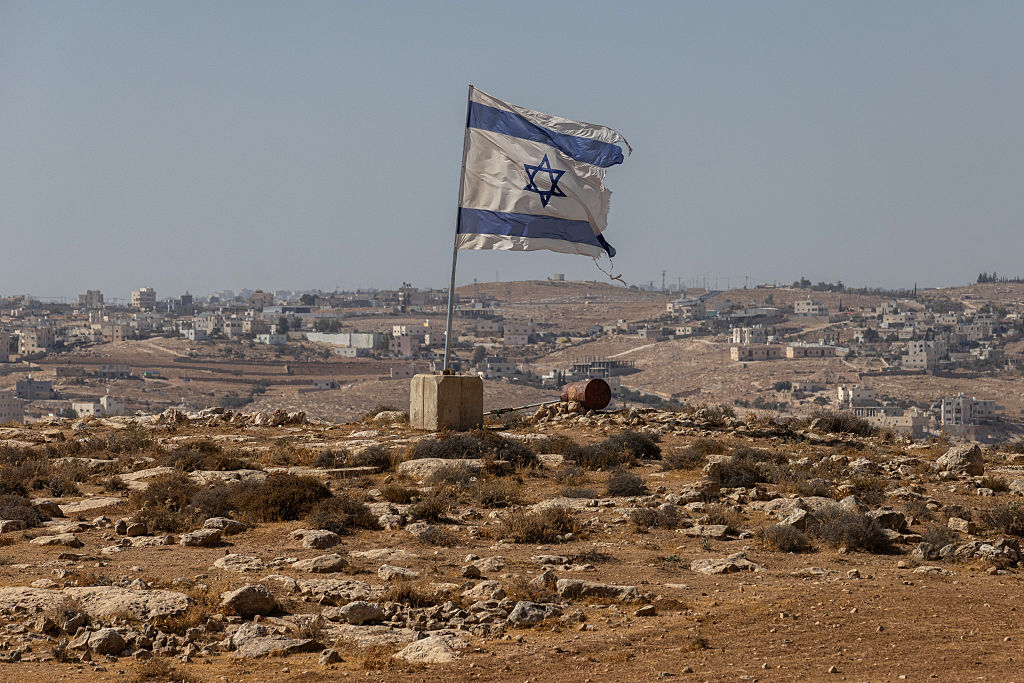
Israel is moving to seize large portions of a major archaeological site in the West Bank as settlers simultaneously established a new outpost near Bethlehem, further escalating tensions in the occupied territory, according to newly obtained documents and rights groups.
The Associated Press reported that a government order from Israel’s Civil Administration — shared by Peace Now — reveals plans to expropriate roughly 1,800 dunams, or about 450 acres, in Sebastia.
The watchdog group says it is the largest seizure of historically significant land Israel has carried out. Officials first released the order on Nov. 12, listing parcels that would be placed under Israeli control.
Peace Now said the land belongs to Palestinians and includes thousands of olive trees. The site holds major religious and historical significance: it was once the capital of the ancient Israelite kingdom of Samaria, and many Christians and Muslims believe John the Baptist was buried there.
Israel’s government announced plans last year to turn Sebastia into a major tourist attraction. Excavations are already underway, and more than 30 million shekels — about $9.24 million — have been allocated for development. Palestinians have 14 days to file objections.
The move came the same night settlers erected an unauthorized outpost close to Bethlehem. Etzion settler council chairman Yaron Rosenthal celebrated the new site as a “return to the city of our matriarch Rachel, of King David,” saying the community would bolster ties between Etzion and Jerusalem.
The outpost’s establishment followed a deadly stabbing attack earlier in the week, in which Palestinian assailants killed one Israeli and wounded three more near a busy junction.
Rosenthal urged Israel to respond aggressively and argued that “terrorism is fueled by the hope of a state,” linking the violence to renewed diplomatic pushes for Palestinian statehood.
Peace Now said the outpost was built on land formerly used as an Israeli military base. Photos from settlers show bulldozers and temporary homes already in place.
Human Rights Watch issued its own warning Thursday, saying Israel may have committed war crimes in the West Bank this year.
The group said Israeli forces forcibly expelled 32,000 Palestinians from three refugee camps during massive raids carried out in January and February — the largest displacement since Israel captured the territory in 1967.
Satellite analysis cited by the organization shows more than 850 buildings destroyed or severely damaged.
Israel said the operations, known as “Operation Iron Wall,” targeted militant infrastructure following the Hamas-led Oct. 7, 2023, attack and have reduced militant activity in the West Bank by 70%. Officials provided no evidence for that figure, and critics note that Israel has not explained why entire camps were cleared or why thousands of Palestinians have not been allowed to return.
Amid the broader tensions, Palestinian lawyer Riham Nasra said West Bank activist Ayman Ghrayeb Odeh — who documented settler violence — has been detained and hospitalized.
Nasra said authorities will not disclose his condition or which facility is holding him. Israel’s Shin Bet confirmed he was arrested on incitement charges and may face administrative detention, which does not require a trial.
His brother, Bilal Ghrayeb, said Odeh was simply posting what he witnessed. “He is not inciting. He is not hiding anything,” he said.
Israel has settled more than 500,000 Jews in the West Bank and over 200,000 in disputed East Jerusalem since capturing the territories in 1967. The current government includes prominent supporters of the settlement movement, including Finance Minister Bezalel Smotrich and National Security Minister Itamar Ben-Gvir.
As international pressure mounts over settler violence, land seizures, and mass displacement, rights groups say the latest actions signal a deepening crisis with long-term consequences for both Palestinian communities and regional stability.