



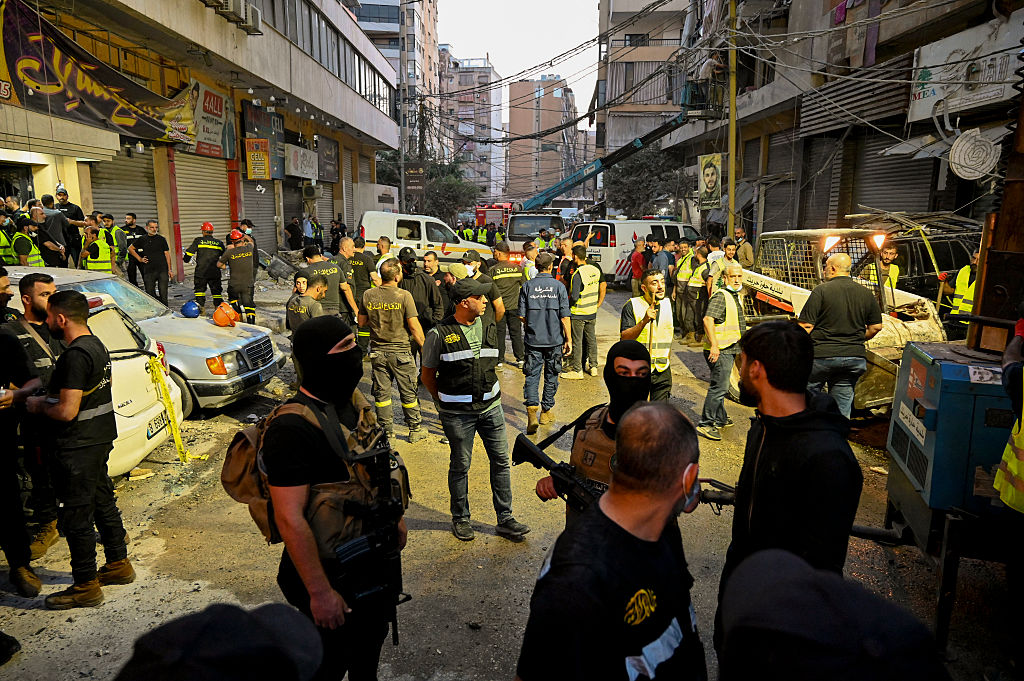
Israel carried out airstrikes in Lebanon’s capital on Sunday for the first time since June, killing Hezbollah’s chief of staff, Haytham Tabtabai, and wounding 25 others, Lebanese authorities said.
According to The Associated Press, five people were killed in the southern suburbs of Beirut, Lebanon’s Health Ministry reported.
“Hezbollah’s leadership is studying the matter of response and will take the appropriate decision,” said Mahmoud Qamati, deputy chair of Hezbollah’s political council. “The strike on the southern suburbs today opens the door to an escalation of assaults all over Lebanon.”
The targeted strike comes nearly a year after the last Israel-Hezbollah war and just days before Pope Leo XIV is scheduled to make his first foreign visit to Lebanon.
“We will continue to act forcefully to prevent any threat to the residents of the north and the state of Israel,” Israeli Defense Minister Israel Katz said.
Israeli authorities instructed residents near the Lebanese border to continue daily routines, signaling that a broader retaliation from Hezbollah was not expected.
Israeli Prime Minister Benjamin Netanyahu accused Tabtabai of leading Hezbollah’s efforts to rearm. Tabtabai had previously led Hezbollah’s elite Radwan Unit and was designated a terrorist by the U.S. in 2016.
He was considered the apparent successor to Ibrahim Aqil, who was killed in September 2024 during Israeli attacks on Hezbollah leadership.
Hezbollah, which has not launched significant attacks on Israel since the ceasefire, fired minor rockets last December near Israeli military positions, calling it a “warning.”
Lebanon’s President Joseph Aoun condemned the strike, accusing Israel of violating the ceasefire and calling on the international community to intervene.
Smoke and damage were reported in the Haret Hreik neighborhood, a densely populated civilian area, drawing criticism from Hezbollah parliamentarian Ali Ammar.
“This is definitely a civilian area and void of any military presence,” Ammar said.
Locals expressed defiance despite the attack. “They want to take our weapons. But our weapons will not be taken,” said Maryam Assaf, who lives near the strike site.
The strikes follow a pattern of escalating tension in southern Lebanon, as Israel and the U.S. pressure Lebanon to disarm Hezbollah, which continues to rebuild its military capabilities.
The two countries remain locked in a delicate balance, with Israel asserting the need to prevent further threats while Lebanon maintains that disarmament must be negotiated through state channels.
Sunday’s strikes mark a tense milestone nearly a year after the last war that killed over 4,000 people in Lebanon and 127 in Israel, leaving widespread destruction and unresolved security fears on both sides.












