




For years, Washington treated critical minerals as a paperwork problem. If only permits moved faster, investors would flock, and supply chains would hum.
How quaint.
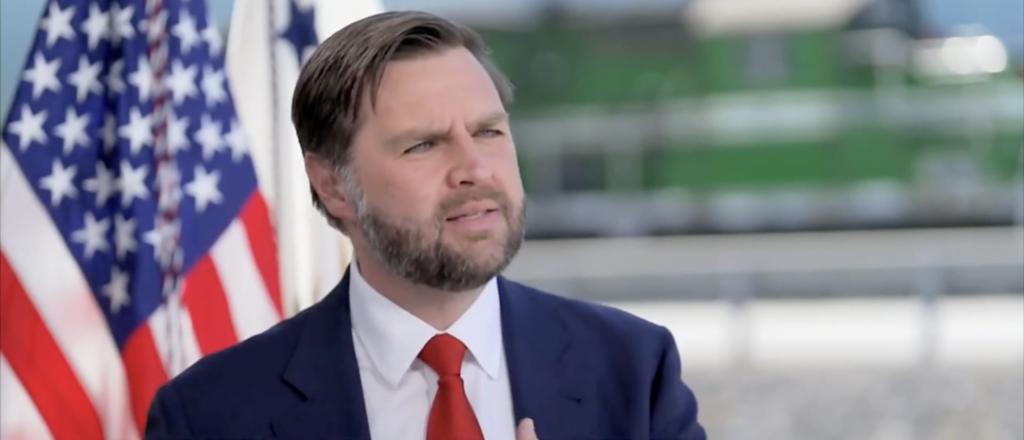
That tidy theory has finally—and irretrievably—crashed into reality. As Vice President JD Vance argued at the recent Critical Minerals Ministerial, the global market for critical minerals is NOT a free market.
Critical minerals aren’t boutique commodities. They’re essential—the building blocks of global economic and military power. They run through missile guidance systems, semiconductors, electric vehicle batteries, and power grids. Whoever controls their supply controls the future.
The pattern has become painfully familiar. A rare-earth project gathers financing. Optimism builds. Then—bang—global supply soars, prices plunge, and the project collapses. Investors retreat. The fledgling mines never open.
What looks like volatility is really strategy: deliberate overproduction and price dumping to crush rivals in their infancy.
No country has perfected this playbook like China. Through lavish subsidies, strict export controls, and tolerance of environmental shortcuts, Beijing has cornered one sector after another.
When the competition dies, prices rise, dependence deepens, and Beijing pockets both profit and leverage. Private capital, watching this cycle, concludes rationally that investing against a state is a losing bet.
The Trump administration’s emerging response marks a clean break from that fatalism. Rather than pretending sabotage is market discipline, it boldly proposed to redesign the board.
At its center is a proposed trusted-partner trade zone for critical minerals—a forward-thinking initiative that championed enforceable price floors to anchor prices within a fair band through reference targets. While pragmatically pivoting from direct domestic price floors due to funding and legal hurdles, the administration stands firmly behind this strategic vision, advancing it through robust allied coalitions and innovative reference pricing mechanisms.
Critics may cry “protectionism.” In reality, this is protection against manipulation. Markets can’t operate when a dominant producer intentionally drives prices below cost to destroy competitors.
A referee calling a foul isn’t distorting the game; he’s keeping it honest.
A structured price floor would serve three purposes.
First, it restores investment viability. Mining projects require billions upfront and decades to pay back. No investor risks that kind of capital when prices can crater overnight by political design. Stable pricing tells financiers they can plan, not pray.
Second, it rewards diversification. Guaranteed fair pricing across allied economies would spread production beyond China’s shadow—into North America, Europe, allied Asia, and credible African and Latin partners. Supply-chain resilience is built with checkbooks, not white papers.
Third, it raises the cost of coercion. A network of stockpiles, shared reserves, and diversified supply chains dulls the edge of any export threat. Dumping only works when your rivals have nowhere else to turn.
The Trump administration is backing this strategy with capital. The U.S. is taking equity stakes in mining ventures, reviving domestic smelting, and expanding stockpiles beyond the defense sector to buffer civilian industries.
Predictable pricing, not just patriotic slogans, is what attracts investment.
And America isn’t going it alone. Secretary of State Marco Rubio calls this a coalition of capability: some allies have the ore, others the refineries or financing.
Together they comprise most of global GDP—enough demand to sustain a parallel market governed by transparent, enforceable rules.
For decades, Washington clung to the fiction that critical mineral manipulation was a technical glitch. It’s not. It’s unbridled economic warfare conducted with spreadsheets instead of missiles.
Playing by rules your competitor ignores isn’t virtue; it’s surrender.
Now comes the test. The policy framework is on the table. What matters is execution: binding trade pacts, enforceable reference prices, and counter-tariffs against predatory dumping.
Congress must fund stockpiles and long-term offtake guarantees to give private capital confidence that the playing field will stay level.
This isn’t radical industrial policy. It’s strategic realism.
The minerals that power the modern world aren’t waiting, and neither should we. The free market can’t fix a rigged game—but a fair one can still win it.
James Carter is a Principal and Policy Director with Navigators Global. He previously served as Deputy Undersecretary for International Affairs at the U.S. Department of Labor (2006-07) and as the Director of the America First Policy Institute’s Center for American Prosperity (2021-23). Jacob Choe is a member of the Bretton Woods Committee and serves as the Eurasia Center’s Asia Program Director.
The views and opinions expressed in this commentary are those of the author and do not reflect the official position of the Daily Caller News Foundation.
(Featured Image Media Credit: Screenshot/Fox News/”Special Report With Bret Baier”)
All content created by the Daily Caller News Foundation, an independent and nonpartisan newswire service, is available without charge to any legitimate news publisher that can provide a large audience. All republished articles must include our logo, our reporter’s byline and their DCNF affiliation. For any questions about our guidelines or partnering with us, please contact [email protected].