



A federal judge on Monday dismissed a Trump administration lawsuit challenging New York policies that prevent federal immigration officials from making arrests at state courthouses, ruling that the federal government cannot compel states to assist in enforcement.
According to The Associated Press, U.S. District Judge Mae D’Agostino granted New York’s motion to dismiss the case, one of several legal actions filed by the Republican administration targeting state and local immigration policies.
The lawsuit took aim at New York’s 2020 Protect Our Courts Act, which bars federal immigration officials from arresting people coming and going from state courthouses—or attending court proceedings—without a judge-issued warrant. The law, passed in response to federal enforcement actions during President Donald Trump’s first term, does not apply to federal immigration courts.
The Department of Justice argued that the law, along with two related state executive orders, was unconstitutional because it obstructed federal immigration enforcement.
D’Agostino disagreed, citing the Tenth Amendment, which limits the federal government’s power over the states.
“Fundamentally, the United States fails to identify any federal law mandating that state and local officials generally assist or cooperate with federal immigration enforcement efforts. Nor could it,” the judge wrote. “No such federal laws exist because the Tenth Amendment prohibits Congress from conscripting state and local officials and resources to assist with federal regulatory schemes, like immigration enforcement.”
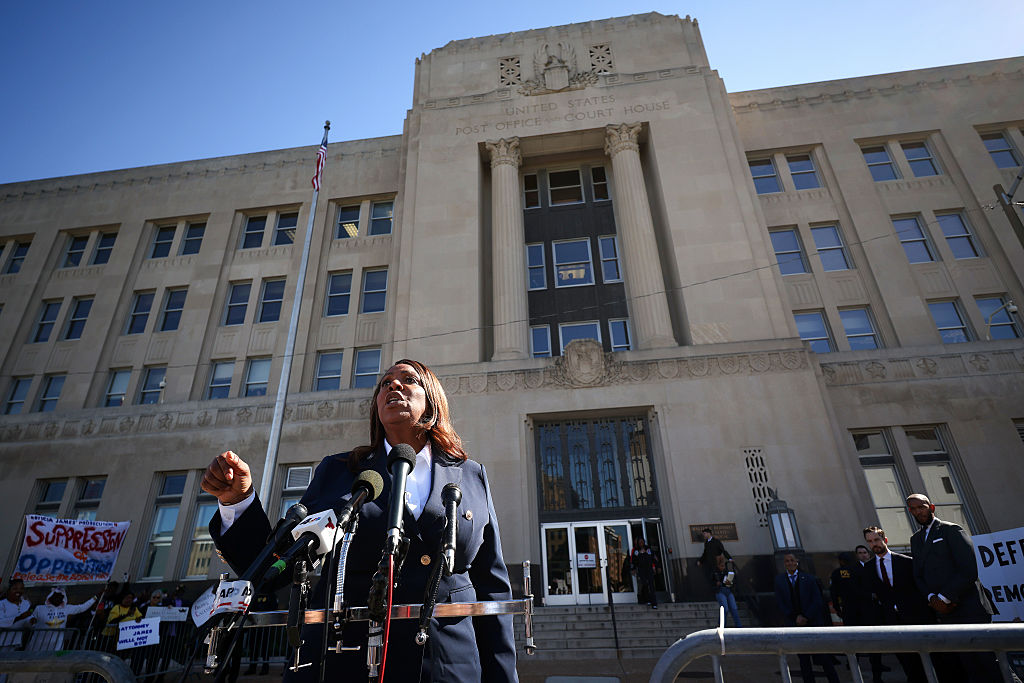
New York Attorney General Letitia James, a Democrat who argued to dismiss the lawsuit, praised the ruling.
“Everyone deserves to seek justice without fear,” James said in a statement. “This ruling ensures that anyone can use New York’s state courts without being targeted by federal authorities. We are fighting for the dignity and rights of immigrant communities.”
The Justice Department did not immediately respond to requests for comment on the ruling or indicate whether it plans to appeal.
The decision underscores the legal principle that states are not required to cooperate with federal civil immigration enforcement, reinforcing protections for immigrants navigating New York’s court system.
This case adds to the ongoing tension between state policies aimed at safeguarding immigrant communities and federal efforts to enforce immigration laws nationwide.












