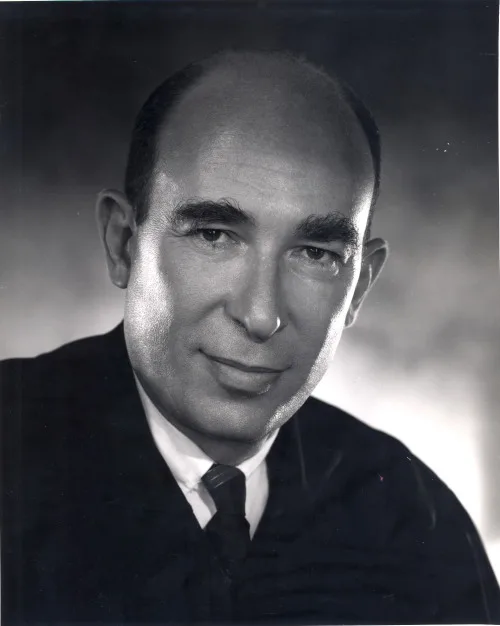
James v. Goldberg
District Court, S.D. New York · 1969-08-18 · cited 10×
The case involved a class action challenge by Barbara James, an AFDC recipient, to New York City and State regulations requiring mandatory home visits by welfare officials for recertification of benefits. James refused entry to her home on privacy and Fourth Amendment grounds but offered to provide information at the Department offices; when benefits were terminated solely for that refusal, she sought declaratory and injunctive relief under 42 U.S.C. § 1983. A three-judge district court held that the home visit constituted a search requiring a warrant or other Fourth Amendment justification, that no recognized exception applied, and that conditioning continued receipt of statutorily entitled public assistance on consent to a warrantless entry was unconstitutional. The court therefore enjoined enforcement of the termination provisions against James and the class.
civil rights
Davis v. EI DuPONT De NEMOURS & COMPANY
District Court, S.D. New York · 1966-09-02
This case involved a copyright infringement claim by plaintiff Donald Davis against defendants including E.I. DuPont de Nemours & Company over a 1960 nationwide television broadcast that allegedly copied his dramatization of Edith Wharton's novel 'Ethan Frome.' The court had previously found liability and awarded $25,000 in statutory damages under the Copyright Act. In this opinion, the court addressed the plaintiff's requests for pre-judgment interest from the date of the broadcast and for $75,000 in attorney's fees. It denied pre-judgment interest, reasoning that no precedent supported such an award in copyright cases, the damages were statutory rather than proven actual losses, and the plaintiff had already received a substantial discretionary award above the statutory maximum. The court also discussed the discretionary standards for awarding reasonable attorney's fees to the prevailing party under 17 U.S.C. § 116.
propertyprocedure
Candiano v. Moore-McCormack Lines, Inc.
District Court, S.D. New York · 1966-03-15 · cited 12×
This admiralty case concerns a longshoreman injured when a one-ton hatch beam fell on him in a ship's hold, after a hook on the pontoon bridle used to lower the beam became dislodged. Plaintiff sued the shipowner on an unseaworthiness theory (a negligence count having been dismissed), claiming the pontoon bridle was an unfit appliance and that a toggle beam bridle should have been used instead; the shipowner impleaded the stevedore employer and argued that any misuse was mere operational negligence that did not create an unseaworthy condition. The court reasoned that the bridle as actually rigged was unsafe and unfit for its intended use, drawing on Second Circuit precedents such as Grillea and Puddu to conclude that the negligent rigging had progressed beyond a mere incident of ongoing operations and into an unseaworthy condition.
torts & liability
Barr Rubber Products Company v. Sun Rubber Company
District Court, S.D. New York · 1966-03-09 · cited 8×
The case concerned a dispute between Barr Rubber Products Company and Sun Rubber Company over the validity of Sun's Molitor patent for manufacturing articles from vinyl resins. Barr sought a declaratory judgment of invalidity, along with claims of unfair competition and antitrust violations, based on Sun's filing of a corresponding Canadian patent application only 51 days after the U.S. application, in violation of the terms of a license from the Commissioner of Patents requiring a 60-day wait under 35 U.S.C. §§ 184 and 185. Sun obtained a retroactive license from the Commissioner authorizing the early Canadian filing on grounds of inadvertence. The court examined whether the Commissioner had jurisdiction to grant a retroactive license after the U.S. patent issued, whether such a license could cure a violation of an existing license, and whether Sun's showing of inadvertence was adequate, ultimately addressing the statutory requirements and administrative authority involved.
business & regulatoryproperty
Hellenic Lines Limited v. Winkler
District Court, S.D. New York · 1966-02-04 · cited 14×
The case involved Hellenic Lines Limited, which held a judgment for breach of affreightment contracts against Intercontinental Railway Tie Corporation, seeking to hold Winkler personally liable by piercing the corporate veil of the New York corporation he controlled. The court reviewed evidence from Winkler and corporate records showing that Intercontinental was incorporated in 1948, had directors and officers, held occasional meetings, and filed tax returns, though it lacked assets, employees, or formal record-keeping and was largely dormant. The core reasoning centered on whether the corporation's minimal adherence to formalities and Winkler's dominance, under New York law, warranted disregarding the separate corporate entity to impose personal liability for the $100,545.35 judgment.
business & regulatory
Davis v. EI DuPont De Nemours & Company
District Court, S.D. New York · 1966-01-20 · cited 18×
This case involves a copyright infringement claim by plaintiff Donald Davis arising from a 1960 nationwide television broadcast of 'Ethan Frome' on 162 stations, which the court had already determined infringed his rights in a dramatization of Edith Wharton's novel. The proceeding focuses on fixing 'just' damages under 17 U.S.C. § 101(b) of the Copyright Act, rather than actual damages or profits. The court considered the statute's provisions allowing discretionary awards (with minimums and maximums) where infringement occurred after written notice, the broadcast's reach to over 17 million viewers, the involvement of multiple defendants (including sponsor DuPont, CBS, and producers), and the live nature of most of the program. Core reasoning centers on applying the ambiguous statutory framework to determine an appropriate award based on the facts of the telecast and prior notifications to defendants.
property
Atlantic City Electric Co. v. I-T-E Circuit Breaker Co.
District Court, S.D. New York · 1965-11-23 · cited 6×
The case concerns motions under 28 U.S.C. § 1404(a) to transfer dozens of civil antitrust suits—stemming from 1960-1961 criminal indictments and guilty pleas against electrical equipment manufacturers—to specific transferee districts for final pre-trial and trial. These suits, part of over 1,900 originally filed nationwide involving more than 25,000 claims across multiple product lines, had already seen extensive national discovery and a sharp reduction in pending cases. The court approved the transfers, citing the convenience of parties and witnesses, the interest of justice, the national scope of the litigation, and recommendations from the Judicial Conference's Coordinating Committee for Multiple Litigation, while noting that defendants operated in a national market and that some parties consented or did not object.
procedurebusiness & regulatory
Sherman v. Jacobson
District Court, S.D. New York · 1965-11-03 · cited 42×
This case concerns plaintiff Mike Sherman's suit against Leo Jacobson (later substituted with executrix Martha Jacobson) to recover on seven promissory notes totaling $185,000 issued as part of a 1960-1961 livestock investment venture in Iowa. After prior interpleader actions in federal court in Iowa resolved competing claims to related assets and upheld the validity and enforceability of the notes held by Sherman, the plaintiff moved for summary judgment here on grounds of collateral estoppel. The court granted summary judgment to the plaintiff and denied the defendant's motion for a stay, holding that Jacobson had fully litigated the issues of note validity, delivery, consideration, alteration, negotiability, and Sherman's status as a holder in due course in the Iowa proceedings, precluding relitigation in this diversity action.
procedurebusiness & regulatory
In Re Luftman
District Court, S.D. New York · 1965-09-21 · cited 9×
This case involved a dispute in bankruptcy between two judgment creditors, Boyar and Adfin, over the proceeds from the sale of the bankrupt's real property after expenses. Boyar had docketed his judgment first in Westchester County and later succeeded in setting aside the bankrupt's fraudulent conveyance of his home to his mother, while Adfin docketed its judgment several months afterward. The court decided that Boyar was entitled to the entire remaining fund of $4,776.34 rather than sharing it pro rata with Adfin. The core reasoning was that under New York law, docketing a judgment immediately creates a lien on the debtor's real property that takes priority over later-docketed judgments, treating any prior fraudulent conveyance as void ab initio so that the liens do not attach simultaneously.
propertyprocedure
Ohio Valley Electric Corp. v. General Electric Co.
District Court, S.D. New York · 1965-08-31 · cited 31×
The case concerns a private antitrust action brought by Ohio Valley Electric Corporation and its subsidiary Indiana-Kentucky Electric Corporation against General Electric and Westinghouse under the Clayton Act for treble damages. Plaintiffs alleged that a price-fixing conspiracy among manufacturers of steam turbine generators violated the Sherman Act and caused them to overpay for eleven units purchased in 1952 to supply power to an Atomic Energy Commission facility. The non-jury trial, which followed 1960 criminal antitrust proceedings against the manufacturers, featured extensive evidence including testimony from thirty-six witnesses and over 690 exhibits to examine the market, bidding processes, and any collusive effects on pricing. The court's analysis focused on determining whether a conspiracy distorted competitive pricing in the relevant transactions.
business & regulatory
Treves v. Servel, Inc.
District Court, S.D. New York · 1965-08-25 · cited 11×
This case is a shareholder derivative action by a Sonotone stockholder against Servel (Sonotone's controlling parent) and individual directors, challenging a proposed merger as unduly favorable to Servel and alleging that a proxy statement recommending the merger was false and misleading in violation of the Securities Act of 1933 and Securities Exchange Act of 1934; a second claim alleged violations of section 8 of the Clayton Act due to interlocking directorates between competitors. After the merger was abandoned, defendants moved to dismiss on grounds that the claims were moot, while plaintiff moved for summary judgment. The court denied the motions to dismiss, holding that voluntary abandonment of the challenged conduct does not automatically moot the case under Supreme Court precedent in United States v. W.T. Grant Co., as defendants failed to show no reasonable expectation of repetition and damages claims (such as costs of the proxy statement) remained viable. The court also denied summary judgment because material facts, including whether the proxy was misleading and whether the companies were competitors, were genuinely disputed.
business & regulatoryprocedure
Ross Products, Inc. v. New York Merchandise Co.
District Court, S.D. New York · 1965-06-24 · cited 13×
This case is a copyright infringement action in which plaintiff Ross Products sought damages and an injunction against defendant New York Merchandise Company for copying an inflatable vinyl toy shaped like a baseball catcher. Plaintiff obtained a U.S. copyright registration after the toy had been displayed and sold in Japan without any copyright notice, and the defendant argued that this prior publication placed the work in the public domain, that the registration contained material misrepresentations, and that the copyright was therefore invalid. The court denied both parties' motions for summary judgment, holding that a genuine dispute of material fact existed as to whether plaintiff had acted in good faith when it omitted the Japanese sales from its copyright application and answered that the work was first published in the United States.
propertyprocedurebusiness & regulatory
Scott v. Celebrezze
District Court, S.D. New York · 1965-06-04 · cited 15×
The case concerned the Social Security Administration's multiple reversals regarding the validity of Joseph Scott's 1956 transfer of his small butcher shop to his wife Bunia, which affected his eligibility for old-age benefits and led to a demand for recoupment of over $4,000 in payments made from 1958 to 1961. After initially denying benefits, approving the transfer in 1958, and then invalidating it in 1962 on reconsideration, the Secretary ruled that Scott had retained ownership, that the couple were not partners, and that overpayments could not be waived. Plaintiffs sought judicial review under 42 U.S.C. § 405(g). The court granted summary judgment to the plaintiffs, holding that the Secretary's final determination was not supported by substantial evidence despite SSA's technical authority to reopen the matter within the regulatory timeframe.
healthcarefederal powerprocedure
Life Music, Inc. v. Wonderland Music Company
District Court, S.D. New York · 1965-05-24 · cited 15×
This case involves a motion for a preliminary injunction in a copyright infringement lawsuit where plaintiffs claimed that defendants' song "SUPERCALIFRAGILISTICEXPIALIDOCIOUS" from the movie Mary Poppins infringed on their song "SUPERCALAFAJALISTICKESPEEALADOJUS." The court denied the motion, finding that plaintiffs failed to demonstrate a likelihood of success on the merits of their infringement claim. The reasoning centered on the lack of similarity between the musical compositions, as determined by listening to recordings and expert analysis, along with evidence that the key nonsensical word or phrase had been used publicly by others before plaintiffs' claimed creation. The court applied the standard requiring a prima facie showing of valid copyright and infringement for such relief and concluded plaintiffs could not establish copying.
propertyprocedure
Davis v. E. I. DuPont De Nemours & Co.
District Court, S.D. New York · 1965-04-16 · cited 30×
The case concerns plaintiff Donald Davis's claim that a 1960 television adaptation of Edith Wharton's novel 'Ethan Frome,' sponsored by DuPont and produced by Talent Associates, infringed copyrights in a 1936 Broadway dramatization co-authored by Davis and his father. The court reviewed the chain of copyrights and licensing agreements for the novel and adaptations, including renewals and assignments among Wharton, the Davises, Scribner, and others. It determined that the defendants had access to the Davis play and that the telecast script copied substantial protected elements, resulting in a finding of infringement on both the unpublished and published Davis copyrights. Liability was imposed on the producer and scriptwriters, with further analysis of the sponsor and network's roles in the production.
propertybusiness & regulatory
Nation v. Esperdy
District Court, S.D. New York · 1965-03-19 · cited 21×
The case involved a naturalized U.S. citizen seeking a declaratory judgment that the District Director of the Immigration and Naturalization Service wrongly denied her petition to classify her husband's illegitimate son as a nonquota immigrant stepchild under section 101(b)(1)(B) of the Immigration and Nationality Act. The beneficiary was born out of wedlock in Jamaica, abandoned by his natural mother, cared for by the plaintiff starting in 1949, and left behind when the plaintiff and her husband immigrated; after the plaintiff became a citizen in 1962, she petitioned for him, but the petition was rejected on the ground that the statute did not extend stepchild status to an illegitimate child of the natural father. The court granted summary judgment to the plaintiff, holding that the beneficiary qualified as her stepchild. The core reasoning was that the statute's plain language defines stepchild without distinguishing between mother and father and expressly includes children born out of wedlock provided the marriage occurred before the child reached eighteen, a reading reinforced by legislative history and the absence of any contrary limitation in the text.
immigration
Diaz v. Gulf Oil Corporation
District Court, S.D. New York · 1965-01-15 · cited 15×
In Diaz v. Gulf Oil Corporation, a Spanish-speaking seaman with a childhood history of asthma sued his employer for maintenance and cure after an asthmatic attack while serving as a galleyman on the S.S. Gulf Queen from December 1960 to January 1961; claims under the Jones Act and for unseaworthiness were withdrawn. The court found as fact that the plaintiff became ill in the service of the ship, had not engaged in culpable misconduct by failing to disclose his condition (having been recently certified fit for limited duty by the U.S. Public Health Service), and had not yet reached maximum cure, making the defendant liable for maintenance at the stipulated rate of $8 per day plus certain medical expenses at non-PHS facilities. It reasoned that maintenance and cure is owed when a seaman's condition recurs or manifests during employment, without requiring a causal link to ship conditions or proration among prior employers, and continued until October 1962 when active treatment ended.
labor & employmenttorts & liability
United States v. Greenberg
District Court, S.D. New York · 1965-01-12 · cited 15×
The case involved the United States seeking civil penalties under the False Claims Act against contractor Joe Greenberg for submitting 34 false payroll reports on three Navy construction contracts, which falsely certified that workers were paid prevailing wages required by the Davis-Bacon Act when they were actually paid less. The court held Greenberg liable and imposed a total of $6,000 in forfeitures. It reasoned that Greenberg's prior criminal conviction under 18 U.S.C. §§ 2 and 1001 conclusively established the falsity of the reports and his role in preparing them, that the reports were essential to obtaining progress payments under the contracts and thus qualified as false claims, and that three forfeitures (one per contract) were appropriate given the circumstances including a prior settlement, the criminal conviction, and lack of proven actual damages.
criminal lawbusiness & regulatory
Otten v. Marasco
District Court, S.D. New York · 1964-11-23 · cited 9×
The case involved a dispute over ownership of twenty-five $1,000 negotiable bearer bonds stolen from plaintiff Otten in Pennsylvania; the bonds ended up in the possession of the United States and its Marshal after an FBI investigation, with defendant-intervenor Dr. Weingart claiming them as collateral for loans he made to a financially troubled company via an intermediary named Littman. The court applied New York’s Negotiable Instruments Law and determined that Weingart was not a holder in due course because he failed to prove he accepted the bonds in good faith without notice of any defect in title. The decision rested on findings that Weingart, a sophisticated businessman, knew the bonds belonged to the president of the Bakers Union yet made no inquiry into Littman’s authority to use them as collateral for the company’s benefit, and that any such inquiry would likely have revealed the lack of authorization. Judgment was therefore entered for Otten as the rightful owner.
propertybusiness & regulatory
Petition for Naturalization of O— N
District Court, S.D. New York · 1964-09-21 · cited 10×
The case concerns a Hungarian immigrant's petition for naturalization under Section 316(a) of the Immigration and Nationality Act, which requires a showing of good moral character over the prior five years. The Immigration and Naturalization Service recommended denial because the petitioner had lived with a married woman (both separated from their spouses) before obtaining Mexican divorces and marrying, constituting adultery under New York law. The court analyzed whether the 1952 Act's explicit bar on finding good moral character for anyone who committed adultery during the period (8 U.S.C. § 1101(f)(2)) eliminated consideration of extenuating circumstances, such as long separations and stable relationships, that had been permitted in pre-1952 precedents like Petition of Rudder; circuit decisions indicated the statute created an automatic disqualification.
immigrationcriminal law