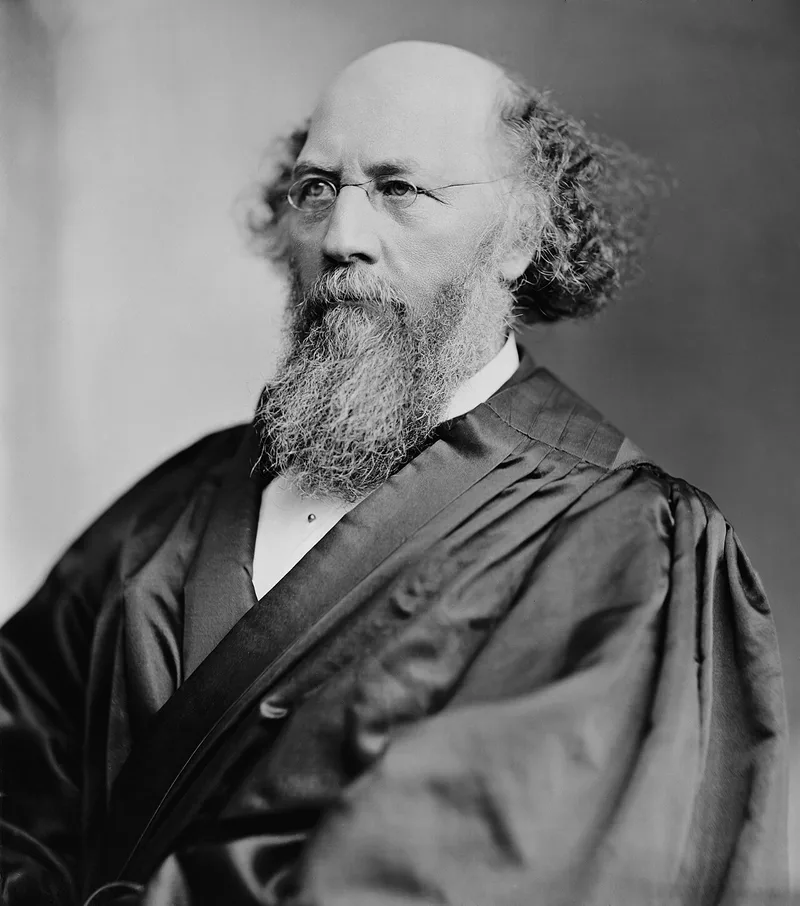
This case involved a contract dispute in which Russ agreed to transfer to Telfener his claimed rights to purchase over a million acres of Texas public land under statutes requiring applications for surveys, filing of maps and field notes, and payment within set deadlines. Russ applied for surveys of 1,813 sections but did not complete proper on-the-ground surveys for the full tract, return all required documents to the General Land Office, or make the necessary payments, leaving the entire process incomplete. The Court held that no vested right or transferable interest in the lands passed to Russ solely from his application or partial efforts, as the state statutes created no binding obligation until all steps were fulfilled. It reversed the judgments below and remanded for a new trial because the incomplete compliance meant Russ had nothing to convey under the contract.
The case concerned a dispute over title to land in Washington Territory that had been reserved by Congress for university purposes under the act of July 17, 1854. One party traced its claim to a homestead entry made by Lemuel Holgate, while the other traced its claim to a conveyance by university commissioners to John Ross (later transferred to Brygger). The court held that Holgate's voluntary relinquishment of his homestead entry was valid and restored the land to the public domain, allowing the university commissioners' selection and conveyance to take effect under federal law and the practices of the land department. It therefore affirmed the judgment of the Supreme Court of Washington upholding title in the Brygger claimants.
This case was an ejectment action brought by plaintiff McHarry to recover possession of certain public land parcels in Contra Costa County, California, after defendant Stewart entered and claimed them. Stewart asserted a right to the land as an adjoining farm homestead under federal statutes (Rev. Stat. §§ 2289-2290), based on his ownership of adjacent property acquired from his wife, and he had initially received approval from the Commissioner of the General Land Office before the Secretary of the Interior reversed that decision on grounds that Stewart did not reside on the original farm. The Supreme Court of California affirmed a judgment for the plaintiff after sustaining a demurrer to Stewart's cross-complaint, and the U.S. Supreme Court affirmed that ruling. The Court held that Stewart's ownership satisfied the statutory requirements for an additional homestead entry, but the land department's factual finding regarding his lack of residence on the adjoining land was conclusive and not subject to judicial reexamination absent fraud or imposition. With these conclusions, the judgment in favor of the plaintiff was affirmed.
This case was an equity suit filed in federal court by the New York heirs of Oliver Teall against numerous California residents, seeking to compel the transfer of extensive land holdings in San José based on allegations that Teall's attorney-in-fact, Davis Devine, fraudulently conveyed the property to himself via intermediary deeds executed around the time of Teall's 1857 death. The circuit court dismissed the claims, and the Supreme Court affirmed. The Court reasoned that Devine and his successors had exercised open, undisputed ownership and control of the property for decades without objection from Teall or his relatives, who never paid taxes or asserted any interest, giving rise to a presumption of valid title. It further held that California's statute of limitations for recovery of real property, combined with principles of adverse possession, barred any belated claims to disturb the long-settled ownership.
This case concerned a dispute over title to 110.80 acres of land in Sonoma County, California, between the heirs of John Mann, who had filed a preemption claim, and defendant Steiger, who claimed the land under the 1866 Act to quiet land titles as a purchaser from a Mexican grant. The U.S. Supreme Court affirmed the California Supreme Court's judgment for the defendant after a patent had been issued to him. The Court reasoned that the disputed land lay within the exterior boundaries of the confirmed Agua Caliente grant, which gave the defendant preferential rights under the 1866 Act over the preemption claim by Mann's heirs. Earlier decisions by land office officials had varied, but the final administrative ruling and patent favored the defendant based on the grant's boundaries as determined by survey and confirmation proceedings.
This case concerned a workplace injury at a mine where an inexperienced worker was severely harmed by an explosion of powder and caps stored in an engine-house with extreme heat from a boiler and ongoing jarring from operating machinery. The plaintiff sued the mine operators for negligence, alleging improper storage of explosives, failure to mitigate known risks like heat and vibration, and lack of any warning about the dangers. The jury found for the plaintiff, and the court affirmed the judgment, holding that employers in occupations with great and unusual dangers must use all readily attainable safety precautions known to science and inform workers of the hazards, with liability following from any negligence in these duties. The evidence showed the defendants were aware of the continuing risks yet took no steps to reduce them or warn the plaintiff, who had no prior knowledge or experience with explosives.