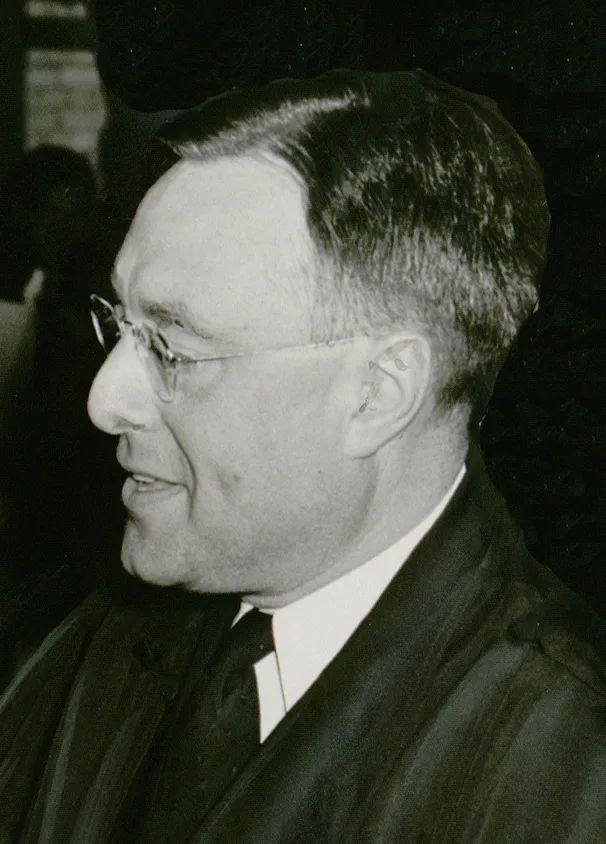
This case involved Black students in New Jersey public schools suing state officials to address alleged racial imbalance in school districts, which they claimed violated the Equal Protection Clause of the Fourteenth Amendment and the Civil Rights Act of 1964. The plaintiffs sought an order requiring the state to redraw school district lines, implement desegregation plans, and provide compensatory education. The court dismissed the complaint, holding that the imbalance constituted de facto segregation resulting from housing patterns rather than state-mandated segregation. The decision relied on the Civil Rights Act of 1964 and Supreme Court precedent in Swann v. Charlotte-Mecklenburg, which prohibit federal courts from ordering remedies to achieve racial balance in such circumstances, and found the challenged state statutes constitutional.
This case involved a civil antitrust action by the United States against Volkswagen of America, Inc. and fourteen distributors, alleging violations of Section 1 of the Sherman Act and Section 3 of the Clayton Act through a conspiracy since 1953 to fix prices, allocate exclusive territories, restrict sales to franchised dealers, and require exclusive dealing in Volkswagen products. The defendants moved under Rules 12 and 56 to dismiss or preclude evidence on certain complaint allegations, particularly those concerning conduct before January 1, 1956, when VOA became the exclusive importer, and on aspects of the territorial and dealing restrictions. The court denied the motion, holding that the pre-1956 allegations could properly be included because they formed part of a single continuing conspiracy or scheme, even if individual elements might otherwise be lawful, and that the presence of price-fixing claims made consideration of other practices premature at this stage.
The case involves a Connecticut Volkswagen dealer suing multiple corporate defendants, including manufacturers and distributors, along with individuals, for nine causes of action stemming from an alleged franchise relationship. The claims include breach of contract to supply a minimum number of vehicles monthly, fraud based on false representations about supply, violations of the Automobile Dealer Franchise Act, Robinson-Patman Act, Sherman Act, Clayton Act, and Wilson Tariff Act, all arising from the termination of the dealership and alleged discriminatory practices and monopolistic agreements. Jurisdiction rests on diversity for the contract and fraud claims and federal statutes for the others. Defendants VOA and VW moved to dismiss the first two causes of action for failure to state a claim or for summary judgment under Federal Rules of Civil Procedure 12(b) and 56, supported by affidavits denying any agreement to supply specific quantities of vehicles, while the plaintiff countered with evidence of recognition as a franchised dealer and oral assurances.
The case involved a negligence suit filed in New Jersey state court by Jacob Goldfarb against Richard Muller over a 1956 car accident. Muller then filed a third-party complaint against John Davidson, a U.S. Postal Service truck driver, seeking contribution under state joint tortfeasor law. Davidson removed the case to federal court under 28 U.S.C. § 1442(a), asserting he qualified as a federal officer or employee acting under color of office, and later moved for summary judgment based on a release after Muller settled with the government. The court granted the motion to remand, holding that § 1442 removal applies only to officers or those acting under them, not to ordinary federal employees like a postal driver, and that the release and settlement did not create a removable federal question.
The case involved Roebling Securities Corporation, formerly a manufacturer of wire products, seeking a refund of over $211,000 in 1954 federal income taxes after the IRS disallowed a net operating loss carryover deduction from a 1952 asset sale. The dispute centered on two simultaneous and interdependent agreements: the sale of Roebling's operating assets to Colorado Steel Corporation for $23 million and Roebling's purchase of 200,000 shares of Colorado Fuel & Iron preferred stock for $10 million, with each deal conditioned on the other's completion. Roebling contended that the transactions should be treated as an exchange of assets for the stock, preserving a larger loss for carryover purposes under the 1939 Internal Revenue Code, while the Government maintained they were separate arms-length deals requiring Roebling to be treated as having received cash. The court examined the stipulated facts, the conditional terms of the contracts, and the parties' motions for summary judgment to resolve this characterization issue that would determine Roebling's entire tax liability for 1954.
This case is a patent interference action under 35 U.S.C. § 146 brought by American Machine & Foundry (AMF) against Liggett & Myers (L&M) seeking to overturn a Board of Patent Interference Examiners decision that awarded priority to L&M for a patent on a tobacco sheet composition using galactomannan plant gum (such as locust bean gum) to bind dry-ground tobacco fragments into sheets with specified moisture, tensile strength, and other properties suitable for cigarette manufacturing. AMF's inventor Dr. Bandel had conducted experiments in 1952, including ferrotype runs and T Runs, which AMF argued established an earlier date of invention, but the Board found insufficient corroboration for key elements like gum content and awarded priority to L&M's inventors Samfield et al. The district court reviewed the record, including testimony and exhibits on the experiments' details, the requirements of the interference counts, and standards for proof beyond a reasonable doubt as the junior party, while applying precedents requiring clear and convincing evidence to reverse the Patent Office. Jurisdiction was based on federal patent statutes, and the opinion examined whether AMF met its evidentiary burdens regarding the composition's elements.