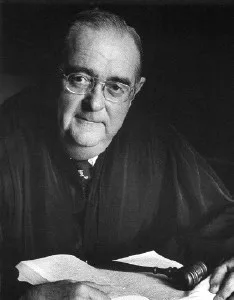
This case involved a dispute in the bankruptcy of Hurricane Elkhorn Coal Corporation II over $84,652.60 that its coal broker, Logan & Kanawha Coal Co., had overpaid to the financing bank before the bankruptcy filing. The district court affirmed the bankruptcy court's ruling that it had jurisdiction because the funds were part of the debtor's estate under 11 U.S.C. § 541, and that the broker's retention of the amount violated the automatic stay. However, the court reversed the bankruptcy court's determination on restitution, holding that the broker was entitled to recover the overpayment under principles of constructive trust and tracing rules derived from Kentucky law and federal precedents. The matter was remanded to determine whether relief from the automatic stay should be granted under 11 U.S.C. § 362(d).
This case involves a Social Security disability benefits claim by plaintiff Peveler, which the Secretary of Health and Human Services had denied using grid regulations despite the claimant's vision impairment. After the district court remanded for vocational expert testimony, the Secretary delayed for months in holding hearings, issuing decisions, and responding to court filings and motions for summary judgment. The court addressed the Secretary's untimely motion for a further extension of time to respond, noting Sixth Circuit policies requiring dispatch in such cases and limits on default judgments under Fed.R.Civ.P. 55(e) and 42 U.S.C. § 405(g). The court granted the extension but ordered the Secretary to issue a final administrative decision by February 23, 1983, respond to the summary judgment motion, and file any cross-motion, with no further extensions allowed.
This case involves a seaman's personal injury suit under the Jones Act and general maritime law for unseaworthiness, where plaintiff Richard Burden sought to amend his complaint to add his wife Mabel as a plaintiff asserting a claim for loss of society after his back injury on a vessel. The court reversed its prior denial of the motion to amend, allowing Mrs. Burden to join under Fed.R.Civ.P. 15(a) and 20(a). The core reasoning centered on the 1980 Act Limiting Maritime Tort Claims, which established a uniform three-year federal statute of limitations applicable to such claims, rendering the amendment timely regardless of relation back under Rule 15(c) or any state limitations period like Kentucky's one-year rule for loss of consortium. The court found no bar to adding the related claim arising from the same occurrence and determined that justice required permitting the amendment.
This case arose from competition between two cable television companies for a non-exclusive franchise from the City of Hopkinsville, Kentucky; after the city awarded the franchise to Pennyroyal Cablevision and denied Hopkinsville Cable TV's application, the latter sued the city, its officials, and the competitor alleging violations of Sections 1 and 2 of the Sherman Act, the First and Fourteenth Amendments' protections for speech and press, and the Fourteenth Amendment's Due Process Clause, along with a pendent state contract claim. The court treated the defendants' motions to dismiss as motions for summary judgment and granted them, dismissing all federal claims with prejudice. It held that the city's actions were immune from antitrust liability under the Parker v. Brown state-action exemption, that the franchise decision did not implicate or violate free-speech rights, and that Hopkinsville Cable had no protected property interest in a renewed franchise because it had operated only under annually renewable licenses rather than a franchise as required by Kentucky law. The court then dismissed the state-law claim without prejudice for lack of pendent jurisdiction.
business & regulatorycivil rightsfree speechprocedure
In Taylor v. United States, the plaintiff sued the federal government under the Federal Tort Claims Act for personal injuries allegedly caused by negligent federal inspections of a coal mine in Kentucky, claiming the inspectors failed to identify missing safety equipment on a machine that later caused an accident. The district court granted the government's motion to dismiss, holding that it lacked subject matter jurisdiction because the FTCA requires that the United States be liable only if a private person would be liable under the law of the place where the act occurred. The court reasoned that Kentucky's adoption of Restatement (Second) of Torts §§ 323 and 324A did not impose liability on the government here, as the Federal Mine Safety and Health Act created a regulatory enforcement scheme rather than a direct undertaking of services to mine operators or miners that would trigger the good Samaritan doctrine or increase the risk of harm in a manner creating tort duty.
The case involved Webster County Coal Corporation suing the Tennessee Valley Authority (TVA) and Louisville & Nashville Railroad for allegedly conspiring to limit rail cars for coal shipments from the plaintiff's mine, in order to evade TVA's coal purchase obligations under a 1974 contract, along with claims of tortious interference, contract breach by TVA, and inadequate rail service by the railroad. The court dismissed the antitrust claims against TVA, holding that as a federal agency and instrumentality it is exempt from liability under the Sherman Act. It referred the tortious interference and contract breach claims against TVA to arbitration per the parties' agreement while retaining jurisdiction to enforce any award. The antitrust claims against the railroad were allowed to proceed in court, but the request for a preliminary injunction was denied pending a trial on the merits. The claim that the railroad breached its duty to provide adequate rail service was dismissed due to the primary jurisdiction of the Interstate Commerce Commission over such matters.
business & regulatoryfederal powerproceduretorts & liability