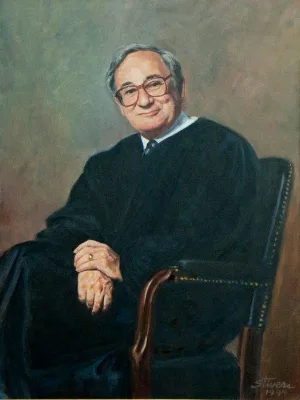
This case concerns the dissolution of the Nussbaum & Wald law partnership in Washington, D.C., where former partners disputed the existence of any agreement governing the division of profits, assets, and liabilities for 1995 and 1996, along with related claims of fraud, breach of contract, and fiduciary duty. The court conducted a bench trial on the non-jury claims and determined that the partners had never reached a comprehensive written or oral agreement on profit-sharing percentages, instead relying on ad hoc, retrospective negotiations often completed at the last minute without prejudice to future years. Applying the District of Columbia Uniform Partnership Act and Beckman v. Farmer, the court declared that each equity partner was entitled to an equal share of the firm's net profits, assets, and liabilities upon dissolution, as no contrary agreement existed. Partial summary judgment had earlier established the defendant's right to share in certain pending client fees. The ruling resolved declaratory relief issues while leaving damages and other counts for separate proceedings.
In United States v. Johnson, the district court addressed a proposed plea agreement under which the defendant would waive all rights to appeal or collaterally challenge any sentence imposed, while the government retained its own appeal rights. The court refused to accept the plea conditioned on this waiver. It reasoned that the waiver could not be knowing and voluntary under Rule 11 of the Federal Rules of Criminal Procedure because the defendant cannot foresee sentencing errors at the plea stage, that it would undermine the appellate review of sentencing decisions contemplated by the Sentencing Guidelines, and that the one-sided terms created an impermissible contract of adhesion.
This case involves a dispute among former partners of the dissolved Washington, D.C. law firm Nussbaum & Wald over the equity partner status of plaintiff Jeffrey Robinson, profit-sharing arrangements for 1995 and 1996, and related claims of fraud, misrepresentation, breach of contract, wrongful dissolution, and breach of fiduciary duty. Defendant Michael Nussbaum moved to dismiss Counts One, Two, and Five of the amended complaint under Rule 12(b)(6) and for summary judgment on all seven counts. The court denied both motions, holding that the amended complaint adequately stated claims with sufficient particularity under Rule 9(b) and that each count presented genuine issues of material fact, such as conflicting evidence about Robinson's partnership status and the existence of any carryover profit-sharing agreement, precluding judgment as a matter of law under Rule 56.
The case involves the dissolution of the law firm Nussbaum & Wald, which had no written partnership agreement, and a dispute over whether defendant Michael Nussbaum is entitled to a share of profits from hourly-rate client matters that were pending at dissolution but later handled by the plaintiffs' new firm. The plaintiffs sought a declaration that Nussbaum had no right to those profits, while Nussbaum counterclaimed for a share of the fees along with an accounting. The court granted partial summary judgment to Nussbaum on this issue. It reasoned that under the District of Columbia Uniform Partnership Act, pending cases constitute unfinished business of the partnership whose profits are assets to be shared among partners, a principle that applies to both hourly and contingency matters and stems from partners' fiduciary duties during wind-up.
The case involved two California companies, Patriot, Inc. and America’s Trust, that assisted elderly homeowners in obtaining FHA-insured reverse mortgages and challenged a March 1997 HUD Mortgagee Letter barring lenders from using their services due to concerns over high fees. The plaintiffs argued that the letter was an invalid substantive rule issued without the notice-and-comment procedures required by the Administrative Procedure Act and that Fannie Mae breached an implied contract by refusing to repurchase affected loans. The court granted a preliminary injunction against HUD, finding a substantial likelihood that the letter constituted a binding rule with immediate effect on the plaintiffs, while dismissing the claims against Fannie Mae for lack of contractual privity and because Fannie Mae is a private entity not subject to the same regulatory obligations. The decision rested on the four-factor test for preliminary injunctions and analysis of APA exemptions for policy statements or interpretive rules.
The case involves former White House Travel Office employees suing aviation consultants Thomason and Martens for allegedly causing their 1993 dismissal by forwarding false accusations of bribery and kickbacks to White House officials, including Hillary Rodham Clinton. Plaintiffs asserted claims for intentional interference with employment relationship and intentional infliction of emotional distress. The court granted defendants' motion to dismiss, holding that District of Columbia law does not recognize a cause of action for intentional interference with an at-will employment relationship, as confirmed by the D.C. Court of Appeals in Bible Way Church v. Beards.