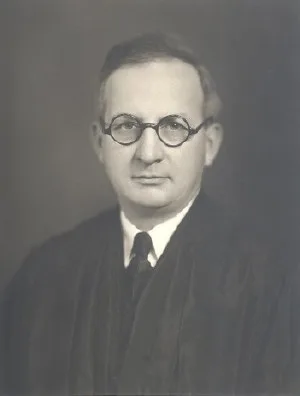
Squire v. Denman
District Court, N.D. Ohio · 1936-12-29 · cited 5×
In Squire v. Denman, the plaintiff sued the government for tax refunds from 1929 and 1930, alleging that the Commerce Guardian Trust & Savings Bank had been wrongly denied the ability to use inventories in computing its income as a dealer in securities under Treasury Regulation 74. The court found that the bank operated a distinct bond department with significant public sales, separate ledgers, and state licenses, establishing it as a dealer in securities under precedents like Harriman National Bank v. Commissioner. The court also determined that the bank's books followed the accrual method of accounting rather than a purely cash basis, making inventory use permissible, and rejected the government's counterclaim regarding interest deductions due to lack of credible evidence. Judgments were entered in favor of the plaintiff.
taxesbusiness & regulatory
McNary v. Guaranty Trust Co.
District Court, N.D. Ohio · 1934-03-27 · cited 3×
The case involved a committee representing numerous bondholders of a leasehold mortgage suing Guaranty Trust Co. (as successor to the sublessee bank) for allegedly wrongfully procuring release of the sublease and termination of the underlying lease, thereby destroying the bondholders' security; the petition asserted four causes of action including third-party beneficiary contract, waste, conspiracy, and inducement of breach, seeking a money judgment for the outstanding bonds. The suit had been docketed at law, prompting the defendant's motion to transfer to the equity docket on the ground that the representative character of the action (with many absent bondholders) required equitable procedures. The court granted the transfer, reasoning that federal courts rigidly maintain the law-equity distinction and that no precedent allowed representative or class suits at common law, as common-law party rules were too inflexible and equity alone could provide complete relief in such cases involving numerous interested parties.
procedure
Swetland v. Curtiss Airports Corporation
District Court, N.D. Ohio · 1930-07-07 · cited 9×
The case involved owners of a rural estate suing an adjacent airport and flying school operator for trespass and nuisance, alleging interference from low-altitude flights, engine noise, crowds, and planned facilities like hangars and parking lots. The court granted a limited injunction barring flights below 500 feet over the plaintiffs' property while allowing other airport operations to continue. Its reasoning rested on common-law principles that a landowner controls airspace to the height reasonably needed for enjoyment of the land, reinforced by state aviation statutes that adopted federal minimum-altitude rules and treated unauthorized low flights as unlawful; the decision balanced these property rights against the emerging public interest in aviation but found the low overflights constituted an actionable trespass.
propertytorts & liability
In Re Voorhees
District Court, N.D. Ohio · 1930-03-25 · cited 5×
This case concerned the enforceability of a 1928 wage assignment that Gerald L. Voorhees gave to City Loan & Savings Company as security for a loan, specifically whether the assignment could reach wages earned after Voorhees's 1929 bankruptcy adjudication and discharge. The loan company sought to collect half of Voorhees's post-discharge earnings from a new employer under both common law and an Ohio statute regulating chattel and salary loans. The court held that the assignment was unenforceable as to post-discharge wages. It reasoned that uniform federal precedents establish that such assignments do not survive a bankruptcy discharge, and the Ohio statute, a police regulation on lending, neither addresses nor overrides the effects of federal bankruptcy law.
business & regulatorylabor & employmentproperty