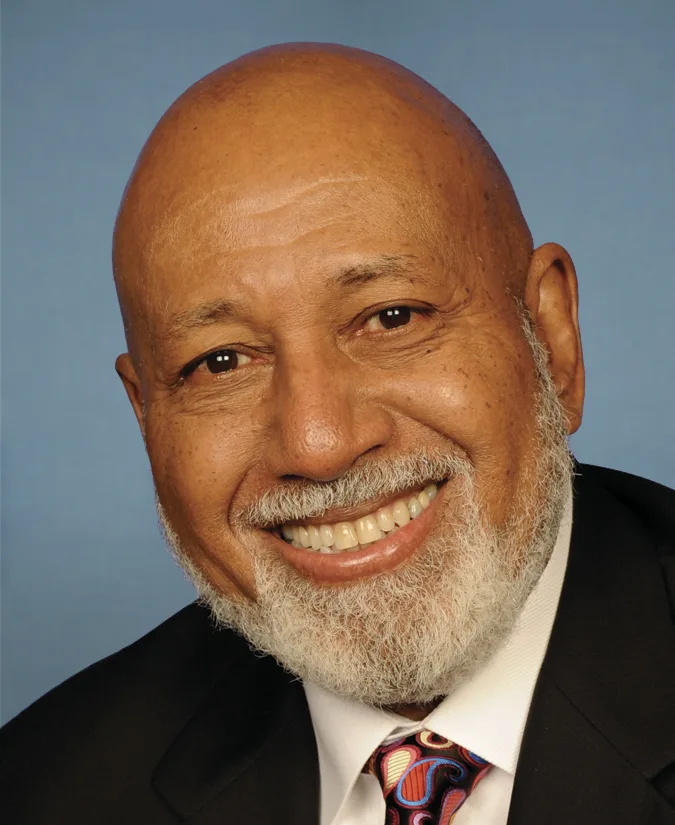
Alcee Lamar Hastings
Born 1936 · Altamonte Springs, FL
Born 1936 · Altamonte Springs, FL
Chan Tse Ming v. Cordis Corp.
District Court, S.D. Florida · 1989-01-18 · cited 5×
This case involves Hong Kong plaintiffs suing Florida-based Cordis Corporation in federal court over injuries allegedly caused by a defective pacemaker designed, manufactured, and tested in Florida; the device was implanted and later replaced in Hong Kong. After plaintiffs voluntarily dismissed an earlier state-court action where Hong Kong law was selected, the defendant moved to dismiss the federal suit on forum non conveniens grounds, arguing Hong Kong was the more convenient forum. The court denied the motion, holding that collateral estoppel did not apply because the state action ended without a final judgment and that the private and public interest factors under Piper Aircraft and Gulf Oil weighed against dismissal, primarily because the core events and evidence centered on the defendant's Florida operations. The court therefore retained jurisdiction and ordered the defendant to answer the complaint.
torts & liabilityprocedure
News and Sun-Sentinel Co. v. Cox
District Court, S.D. Florida · 1988-12-19 · cited 17×
The case involved a newspaper publisher challenging the City of Fort Lauderdale's enforcement of Florida Statute section 337.406, which bans commercial uses such as sales on the rights-of-way of state-maintained roads, against its vendors selling papers to motorists. After residents complained and the city commission directed enforcement, police issued citations to vendors, prompting the publisher to sue for a permanent injunction on First Amendment grounds. The court found that the statute, as applied to news vendors, violated the First Amendment freedoms of speech and press because newspaper sales on public streets constitute protected activity, the law was not narrowly tailored to address traffic safety concerns, and it was enforced selectively without sufficient justification. The court granted the injunction preventing enforcement against the plaintiff's vendors while noting that other commercial activities could still be regulated. It declined to reach related equal protection claims under the Fourteenth Amendment.
free speechcivil rights
News and Sun-Sentinel Co. v. Cox
District Court, S.D. Florida · 1988-11-23 · cited 18×
The case concerns the News and Sun-Sentinel Company's lawsuit against the City of Fort Lauderdale to block enforcement of a state statute banning newspaper sales on public rights-of-way and roads, on grounds including press freedom and equal protection. After a bench trial on the preliminary injunction motion, the Miami Herald sought leave to file a post-trial amicus curiae memorandum. The court denied the motion, finding that the Herald had long been aware of the case but chose not to participate earlier despite multiple opportunities, that existing counsel had adequately presented the issues, and that the untimely request lacked sufficient justification.
free speechcivil rightsprocedure
United States v. Real Prop. & Res. at 3097 Sw 111th Ave.
District Court, S.D. Florida · 1988-11-15 · cited 8×
In this civil forfeiture case brought under 21 U.S.C. § 881(a)(7), the United States sought forfeiture of a house in Miami, Florida, owned by Carlos Veccio, after a confidential informant and wiretap investigation revealed that Veccio used the property in connection with a cocaine transaction on September 8, 1987. Veccio, the legal titleholder, had been convicted in a parallel criminal proceeding of knowingly possessing cocaine with intent to distribute, and evidence showed that meetings and the exchange of purchase money occurred at the residence. After trial, the court granted the government's motion for involuntary dismissal, concluding that probable cause existed of a substantial connection between the property and the drug offense and that the claimant failed to prove otherwise. The court held that the entire parcel was forfeitable because the illegal activity took place on the premises.
criminal lawproperty
Burnup & Sims, Inc. v. Posner
District Court, S.D. Florida · 1988-07-29 · cited 8×
This case involved a target company, Burnup & Sims, suing entities controlled by Victor Posner that were acquiring its stock in a takeover bid, alleging violations of Sections 7 and 8 of the Clayton Act due to potential lessening of competition in the telephone and CATV service industry and interlocking directorships. The court granted the defendants' motion for partial summary judgment on the Section 8 claim and motion to dismiss the Section 7 claim. It reasoned that a full merger would eliminate any separate entities capable of having interlocking directors under Section 8, and that the target company lacked standing under Section 7 because it was not injured by any reduction in competition but instead stood to benefit from a change in control, with other parties better positioned to enforce antitrust laws.
business & regulatoryprocedure
Orange Ridge, Inc. v. State of Fla.
District Court, S.D. Florida · 1988-07-22 · cited 2×
Orange Ridge, Inc., operating as New Frontier Package & Lounge, cashed various checks including federal social security refunds and state welfare payments; after discovering the checks were stolen and forged, the United States and Florida seized funds from the company's bank accounts to recover the proceeds. The plaintiff sued in federal court claiming the seizures violated due process under the Fifth and Fourteenth Amendments and seeking damages, asserting jurisdiction under 28 U.S.C. §§ 1331 and 2401(a). The court granted the defendants' motions to dismiss for lack of subject-matter jurisdiction, holding that sovereign immunity barred the claims against both the United States and the State of Florida. The reasoning was that neither sovereign had waived immunity for these suits in federal district court, the claims lacked a plausible foundation for invoking federal jurisdiction under Bell v. Hood exceptions, and any takings claim against the United States belonged in the Claims Court under the Tucker Act while state claims were barred by the Eleventh Amendment.
civil rightsfederal powerprocedure
Blanco v. Dugger
District Court, S.D. Florida · 1988-07-11 · cited 8×
The case involves Omar Blanco's federal habeas corpus petition challenging his 1982 Florida convictions for first-degree murder and armed burglary, along with his death sentence. After an evidentiary hearing, the district court reviewed fifteen constitutional claims, including issues with pretrial identifications, jury instructions, prosecutorial comments, and the trial court's interference with defense strategy at sentencing. The court denied relief on most claims but granted it in part, ordering a new sentencing hearing because the trial judge improperly took control of witness selection and other defense decisions, violating Blanco's rights. The reasoning centered on due process and Sixth Amendment standards, finding that the trial court's actions were not harmless error despite prior state court rulings upholding the conviction and sentence.
criminal lawprocedurefederal power
Bankers Security Life Insurance Society v. Kane
District Court, S.D. Florida · 1988-06-27 · cited 4×
This case involved two life insurance companies, Bankers Security Life Insurance Society and Prudential Insurance Company of America, seeking to declare policies on the life of Arthur H. Kane void and to recover for alleged fraudulent misrepresentation and conspiracy by beneficiary Judith S. Kane. Kane, previously known as Katz, had entered the federal Witness Protection Program after assisting in prosecutions, legally assuming a new identity that was used when applying for the policies; he later died by suicide. The court granted the defendant's motions to dismiss with prejudice under Rule 12(b)(6), holding that the new identity was authorized by federal statute and thus statements to insurers were not false, that no causal link existed between any alleged misrepresentation and the cause of death, and that no valid fraud or conspiracy claims were stated.
criminal lawbusiness & regulatoryprocedure
United States v. Ayala
District Court, S.D. Florida · 1988-06-03 · cited 3×
In United States v. Ayala, defendant Ayala moved to withdraw his guilty plea to a charge of possession with intent to distribute cocaine, arguing that the plea was not knowing and voluntary due to misunderstandings about sentencing recommendations for acceptance of responsibility, pressure from a package-deal offer involving his co-defendant, and the government's late disclosure of fingerprint evidence. The district court denied the motion, applying the factors from U.S. v. Buckles and finding that Ayala had the close assistance of counsel, made statements in open court affirming the plea's voluntariness, and faced no improper government coercion. The court further held that any potential Brady violation did not undermine the plea's validity and that such nonjurisdictional claims were waived by the guilty plea itself.
criminal lawprocedure
Na-Yuet v. Hueston
District Court, S.D. Florida · 1988-04-18 · cited 3×
The case concerns petitioner Jennie Cheng Na-Yuet's challenge to a magistrate's certification of extraditability to Hong Kong on a kidnapping charge, following denial of her habeas corpus petition. She moved for rehearing or remand based on newly discovered evidence and discrepancies in the extradition documents. The court grants the motion for rehearing and remands the case to the magistrate, reasoning that its limited review permits consideration of new evidence that may create grave doubt as to probable cause, consistent with precedents such as Application of D’Amico, while noting that only explanatory evidence is admissible and the threshold remains probable cause rather than proof of guilt.
criminal lawprocedure
Heller v. Plave
District Court, S.D. Florida · 1987-02-04 · cited 7×
The case involved taxpayer Daniel Neal Heller suing IRS Special Agent Lawrence Plave for improper disclosures of return information during a criminal tax evasion investigation, in violation of 26 U.S.C. §§ 6103 and 7217. The court found that Plave made thirteen improper disclosures—seven in letters to third parties and six in verbal statements to witnesses—revealing details such as the existence of the investigation, potential indictment, and characterizations of Heller's conduct. It awarded Heller $13,000 in statutory damages but denied punitive damages, concluding the disclosures were not willful and grossly negligent. The core reasoning was that the statements exceeded what was necessary to obtain information for the investigation and that Plave, as a long-serving agent, should have known the statutory limits on disclosures.
criminal lawfederal powertaxes
Great American Bank of the Florida Keys v. Aetna Casualty & Surety Co.
District Court, S.D. Florida · 1986-12-10 · cited 2×
The case involved Great American Bank seeking indemnification from Aetna for attorney's fees incurred in defending a breach of contract lawsuit brought by Heller, under a Bankers Blanket Bond that covers losses from employee fraud or dishonesty. Aetna denied coverage because the Heller complaint alleged only breach of contract without any claims of fraud. The court granted summary judgment to Aetna, holding that under Florida law, the duty to defend is determined solely by the allegations in the complaint, which did not fall within the bond's coverage, and there was no potential for coverage.
business & regulatoryprocedure
In Re Evans Products Co.
District Court, S.D. Florida · 1986-10-02 · cited 14×
This case involved consolidated appeals by debtor corporations and non-insider equity holders challenging a bankruptcy court's confirmation of a creditors' joint plan of reorganization under Chapter 11 for Evans Products Co. and its affiliates, which are primarily in the building materials retail business. The plan cancelled existing shareholders' stock and provided creditors with cash, debt securities, and stock in a reorganized entity, over the objections of debtors and equity interests. The district court affirmed the confirmation order, holding that the bankruptcy court's factual findings on valuation of the reorganized company (at $112.5 million, insufficient to satisfy all debts and allow equity participation) were not clearly erroneous, that the plan met the requirements of 11 U.S.C. § 1129 including the absolute priority rule, and that other alleged defects such as classification, consolidation, and modifications did not render the plan unconfirmable.
business & regulatoryprocedure
Guarantee Insurance v. Gulf Insurance
District Court, S.D. Florida · 1986-02-20 · cited 7×
This case involved a dispute between two insurers over coverage for a legal malpractice judgment against their insured attorney, Richard Marx. Guarantee Insurance, which provided a claims-made policy, defended Marx in a suit alleging negligence in preparing a stock option agreement in 1973 and handling a 1975 shareholders' derivative action, then sought contribution and indemnification from Gulf Insurance, which had provided both occurrence and claims-made coverage during earlier periods. The court denied Guarantee's motion for summary judgment and granted Gulf's, ruling that Guarantee could not recover because the underlying verdict was general and did not specify which negligent acts formed the basis for liability, making it impossible to determine coverage under Gulf's policies. The court held that the party seeking indemnity bears the burden of apportioning damages when some acts fall outside the prior insurer's coverage and that a general verdict bars recovery absent such proof, as established in Florida precedent like Jones v. Holiday Inns.
business & regulatorytorts & liability
Luca v. Heckler
District Court, S.D. Florida · 1985-07-24
This case involves judicial review under the Social Security Act of the Secretary's denial of disability insurance benefits to a 53-year-old plaintiff with a history of arteriosclerotic heart disease, myocardial infarctions, bypass surgery, and diabetes. The treating cardiologist's uncontroverted medical findings and RFC assessment indicated the plaintiff could not perform even sedentary work due to severe physical limitations and need for frequent rest. The district court determined that the administrative law judge erred by failing to give substantial weight to the treating physician's opinion under established circuit precedent and by improperly substituting reliance on Social Security Ruling 82-51 for medical evidence. The court therefore reversed the Secretary's final order and directed an award of benefits.
healthcarefederal power
United States v. Gurwitch (In Re Gurwitch)
District Court, S.D. Florida · 1985-06-07 · cited 5×
The case involved the IRS appealing a bankruptcy court ruling that barred it from collecting new tax penalty assessments against a debtor after his Chapter 11 reorganization plan had been confirmed. The debtor, as the owner of two corporations, had been assessed for unpaid withholding taxes on one corporation during the bankruptcy, but the IRS later sought to enforce additional assessments on both corporations outside the plan. The district court reversed the bankruptcy court's decision and remanded for enforcement of the new claims, reasoning that the Bankruptcy Act makes such tax debts nondischargeable whether or not a claim was filed or allowed, consistent with policy ensuring liability for responsible corporate officers.
taxesbusiness & regulatory
United States v. Viomar Co.
District Court, S.D. Florida · 1985-03-21 · cited 5×
This case concerns a motion by Malka Wiesenberg to release two Florida properties from a preliminary injunction that froze assets of her parents, Jose and Margarita Bejman, who are federal fugitives facing criminal charges for failing to report large currency transactions and a related $23 million civil penalty. The movant claimed the properties had been conveyed to her as a wedding gift before the injunction was issued in 1982. After an evidentiary hearing, the court denied the motion, finding insufficient evidence under Florida law to establish a valid gift due to lack of effective delivery and transfer, inconsistencies in testimony and documents, and the absence of recorded deeds. The court also disregarded affidavits from the fugitive parents, ruling that they could not invoke judicial processes while evading jurisdiction.
criminal lawprocedureproperty
United States v. All Interests of Escobar
District Court, S.D. Florida · 1984-12-07 · cited 7×
This case involves a civil forfeiture action by the United States against a condominium unit owned by Severo Escobar and his wife, which was encumbered by a first mortgage held by Florida Federal that had gone into default. The mortgage holder sought to recover the unpaid principal, pre-seizure interest, late charges, and additional post-seizure interest, costs, and attorney fees following the government's seizure of the property. The court denied the claimant's motion for summary judgment as to the post-seizure amounts and attorney fees, finding no authority for such claims to survive the forfeiture, and granted the United States' motion for summary judgment. It awarded Florida Federal only the unpaid principal balance of $131,952.23, pre-seizure interest of $6,919.98, and late charges of $251.40 as of the March 22, 1984 seizure date, relying on precedent from United States v. One Piece of Real Estate.
criminal lawpropertyprocedure
In Re Duque
District Court, S.D. Florida · 1984-11-20 · cited 30×
This case involved a Chapter 11 bankruptcy debtor who sought to use estate funds to retain criminal counsel for defending against federal investigations and charges stemming from pre-bankruptcy activities, including alleged fraud. The district court reviewed an appeal from a bankruptcy court order that had authorized such employment nunc pro tunc. The court held that estate funds could not be used for this purpose and reversed the authorization order. It reasoned that the employment was not necessary or in the best interest of the estate and creditors, as the criminal defense primarily benefited the debtor personally rather than advancing reorganization or protecting estate assets, with any potential RICO forfeiture risks deemed too speculative to justify the expense.
criminal lawprocedurebusiness & regulatory
Blumberg v. Heckler
District Court, S.D. Florida · 1984-11-05 · cited 2×
This case is a judicial review of the Secretary of Health and Human Services' final decision denying Allen Blumberg's application for Social Security disability and disability insurance benefits under 42 U.S.C. §§ 416(i) and 423. The district court adopted the magistrate judge's report and recommendation, reversing the Secretary's denial on the ground that the administrative law judge's finding of no disability lacked substantial evidence in the record. The opinion applies the sequential five-step evaluation process under 20 C.F.R. § 404.1520, focusing on whether the claimant's medically documented ischemic heart disease met or equaled the severity criteria in the Listing of Impairments (20 C.F.R. Part 404, Subpart P, Appendix 1, § 4.04), after considering the statutory definition of disability and the requirement for objective medical evidence.
healthcareprocedure