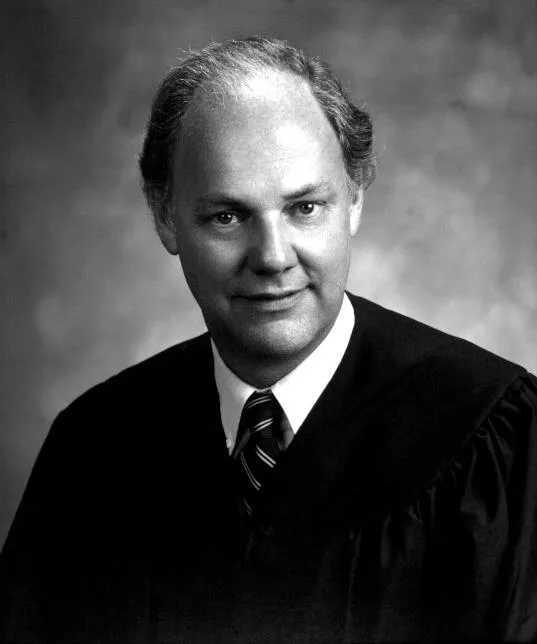
Plaintiff Darren Cuff sued Trans States Holdings, Inc., Trans States Airlines, LLC, GoJet Airlines, LLC, and a supervisor, alleging interference and retaliation under the Family Medical Leave Act after his termination. The defendants moved for summary judgment, arguing primarily that only TSA employed Cuff and that it did not meet the FMLA's 50-employee threshold within 75 miles, while Cuff cross-moved for liability on his interference claim and contended the companies were joint or integrated employers. The court denied the defendants' motion and granted Cuff's, holding that the undisputed facts established the defendants were covered employers under the FMLA, that Cuff was eligible for leave, and that the interference claim succeeded as a matter of law; after-acquired evidence issues were deemed relevant only to damages, not liability.
This case involved a trademark dispute in which plaintiffs claimed that Google's use of the ANDROID mark infringed their registered ANDROID DATA mark. The court had previously granted summary judgment to Google after finding that plaintiffs abandoned their mark. Google then sought attorneys' fees under the Lanham Act as the prevailing party in an exceptional case and sanctions against plaintiffs' attorneys under 28 U.S.C. § 1927 for allegedly unreasonable conduct that multiplied the proceedings. The court denied the fees and sanctions motions, as well as plaintiffs' motions to strike, reasoning that the case was not exceptional and that while some attorney conduct was unreasonable, it did not warrant sanctions under the statute.
In Ruiz v. Kinsella, homeowners Jose and Sandra Ruiz sued developers, city officials, and the City of Chicago alleging RICO violations, civil rights conspiracies, and due process violations related to structural defects and building code issues in their purchased homes in the Bridgeport Village development, which led to foreclosure on one property. The court granted motions to dismiss, dismissing the federal claims with prejudice and declining supplemental jurisdiction over state law claims. The reasoning was that plaintiffs failed to adequately plead the required elements for RICO, conspiracy, and substantive due process claims, as defendants' actions were tied to legitimate government interests in enforcing building codes and did not shock the conscience.
In this case, plaintiffs Automotive Finance Corp. and Manheim Automotive Financial Services sought summary judgment to pierce the corporate veil of Joliet Motors, Inc. (JMI) and hold its owner and sole officer Cindy Boliaux personally liable for prior state-court judgments against EMC Automotive and its operator Edward Boliaux. The court granted the motions after finding JMI to be a mere continuation of EMC. The core reasoning was that JMI and Cindy lacked separate personalities due to commingling of funds, including transfers of over $100,000 in cash and nearly $75,000 in checks to Edward without documentation, interest-free loans, and direct payment of Cindy's personal expenses such as mortgage, utilities, and entertainment from corporate accounts. The court further determined that failing to pierce the veil would sanction fraud or injustice because JMI collected EMC's receivables while knowing of the outstanding debts to the plaintiffs.
In Specht v. Google Inc., plaintiffs Erich Specht and his companies sued Google for trademark infringement, unfair competition, and related claims under federal and state law, alleging that Google's use of the ANDROID mark for its mobile platform created a likelihood of confusion with their registered ANDROID DATA mark for e-commerce software. The court granted Google's motion for summary judgment on all of plaintiffs' claims and on two counts of Google's counterclaim. The core reasoning was that plaintiffs abandoned the ANDROID DATA mark by ceasing all commercial use after December 2002—transferring assets to a new entity, canceling services, filing a final tax return, and making statements indicating no ongoing business—while Google began using ANDROID in commerce in 2007; without a valid, enforceable mark, there could be no infringement, and the court ordered cancellation of the federal registration.
The case concerned claims by ChampionsWorld, a former sponsor of international soccer exhibitions, against the United States Soccer Federation (USSF) and Major League Soccer (MLS) alleging that USSF lacked authority to regulate professional soccer, used that claimed authority to impose over $3 million in fees, and engaged in an anticompetitive scheme favoring MLS. The court addressed motions for judgment on the pleadings under Rule 12(c), granting them in part and denying them in part. It held that the Olympic and Amateur Sports Act does not authorize USSF to govern professional soccer except as needed for Olympic, Paralympic, and Pan-American Games participation, and therefore USSF receives no broad antitrust exemption in the professional sphere. The court dismissed the economic duress count but allowed the antitrust, RICO, and remaining contract counts to proceed, finding the allegations sufficient under the applicable pleading standards.