Judicial data via CourtListener (Free Law Project). Social links via Wikidata.
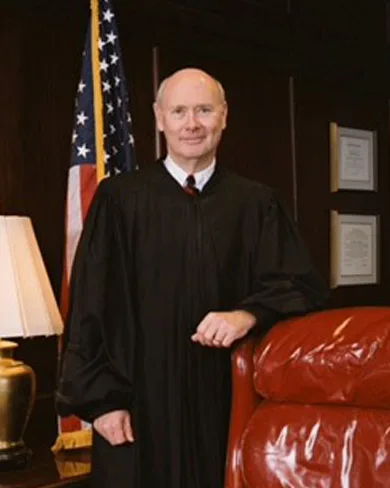
District Court, D. Kansas — appointed by George H.W. Bush
Brockway v. Astrue
District Court, D. Kansas · 2011-02-17
This case involves a plaintiff's challenge to the Social Security Administration's partially favorable decision granting disability insurance benefits beginning May 18, 2008, but denying them for any earlier period based on an alleged onset date of October 11, 2004. The court found error in the ALJ's determination of the onset date, noting that the rationale was unconvincing and that SSR 83-20 requires a proper inference from ambiguous medical evidence, often with input from a medical advisor. It therefore reversed the Commissioner's decision under 42 U.S.C. § 405(g) and remanded for further proceedings to determine the correct onset date. The court declined to order an immediate award of benefits, finding that the record was not fully developed on the precise onset.
healthcarefederal power
Peckham v. Astrue
District Court, D. Kansas · 2011-02-03 · cited 2×
The case involved a plaintiff's challenge to the Social Security Commissioner's denial of disability insurance benefits and supplemental security income after an ALJ found the claimant not disabled, despite inability to perform past relevant work, because other jobs existed in significant numbers in the economy. The district court reviewed the ALJ's evaluation of medical opinions under the five-step sequential process and relevant regulations. The court found error in the ALJ discounting a treating physician's opinion in part because the form was undated and unsigned, without recontacting the source as required when information is inadequate to determine disability, and without other regulatory basis for the discount. The court therefore reversed the Commissioner's decision and remanded the case for further proceedings under 42 U.S.C. § 405(g).
federal powerhealthcare
Garcia v. Tyson Foods, Inc.
District Court, D. Kansas · 2011-01-31 · cited 20×
In Garcia v. Tyson Foods, Inc., current and former hourly employees at Tyson beef processing facilities sued under the Fair Labor Standards Act and Kansas Wage Payment Act, along with a common law quantum meruit claim, seeking unpaid wages for time spent on pre- and post-shift donning and doffing of protective gear, meal-period activities, walking, and unpaid rest breaks. The case was certified as a collective and class action. On cross-motions for summary judgment, the court denied the parties' requests regarding the compensability of rest breaks and meal-period donning/doffing, as well as rulings on whether donning/doffing activities were integral to the workday or de minimis, Tyson's good faith and willfulness, and the state wage claims; however, it granted summary judgment to Tyson on the quantum meruit claims because an adequate statutory remedy existed under the FLSA and KWPA. The court reasoned that factual disputes precluded summary resolution of most issues, that Kansas law barred recovery of overtime via the KWPA due to exemptions in the state's wage statutes, and that the availability of statutory remedies defeated the equitable claim regardless of outcome at trial.
labor & employmentprocedure
Fuller v. Astrue
District Court, D. Kansas · 2011-01-21 · cited 9×
Plaintiff sought judicial review of the Social Security Commissioner's denial of disability insurance benefits and supplemental security income, claiming disability since 2004 due to conditions including coronary artery disease, degenerative disc disease, and various mental disorders. The ALJ had found the plaintiff not disabled after determining he retained the residual functional capacity for a limited range of sedentary work and that jobs existed in significant numbers in the economy. The court held that the ALJ erred by failing to properly weigh medical opinions, not recognizing the significance of accepted severe impairments, separately evaluating physical and mental opinions without considering their combined effects, selectively relying on favorable portions of opinions, and improperly citing lack of treatment without applying the required four-part test. The court therefore reversed the Commissioner's decision and remanded for further proceedings under 42 U.S.C. § 405(g).
healthcare
NEW JERSEY & ITS DIVISION OF INVESTMENT v. Sprint
District Court, D. Kansas · 2010-12-17
This case was a proposed securities fraud class action brought by a shareholder on behalf of those who purchased Sprint stock during 2001-2003, alleging that statements in the company's 2001 and 2002 proxy materials describing new employment agreements with top executives as 'designed to insure the long-term employment' of those executives were misleading under federal securities laws because the company knew termination was predictable or was considering it. The plaintiff asserted claims under Sections 10(b), 14(a), and 20(a) of the Securities Exchange Act and related SEC rules for fraud in connection with securities sales and proxy misrepresentations. The court granted the defendants' motions for summary judgment. It reasoned that even if the board knew termination was predictable or was planning firings at the time of the statements, defendants had no duty to disclose that information because the challenged statements merely summarized the purpose of the agreements without making any predictions about future employment and thus were not misleading.
business & regulatoryprocedure
McDonald v. Kellogg Co.
District Court, D. Kansas · 2010-09-16 · cited 1×
This case is a collective action under the Fair Labor Standards Act in which current and former hourly production employees at a Kellogg bakery facility allege that the company failed to pay overtime for time spent donning and doffing uniforms and safety gear, gathering tools, and walking to workstations before and after shifts. The parties conducted bifurcated discovery focused on Kellogg's defense under FLSA section 203(o), which excludes time spent changing clothes if a collective bargaining agreement provides for or a custom or practice exists of noncompensation for such activities. On cross-motions for summary judgment, the court granted the motions in part and denied them in part, holding that donning and doffing of certain clothing items qualified for exclusion under section 203(o) due to the parties' longstanding custom and practice, while activities such as obtaining hair nets after leaving the locker room and post-clock-in walking did not qualify as changing clothes.
labor & employment