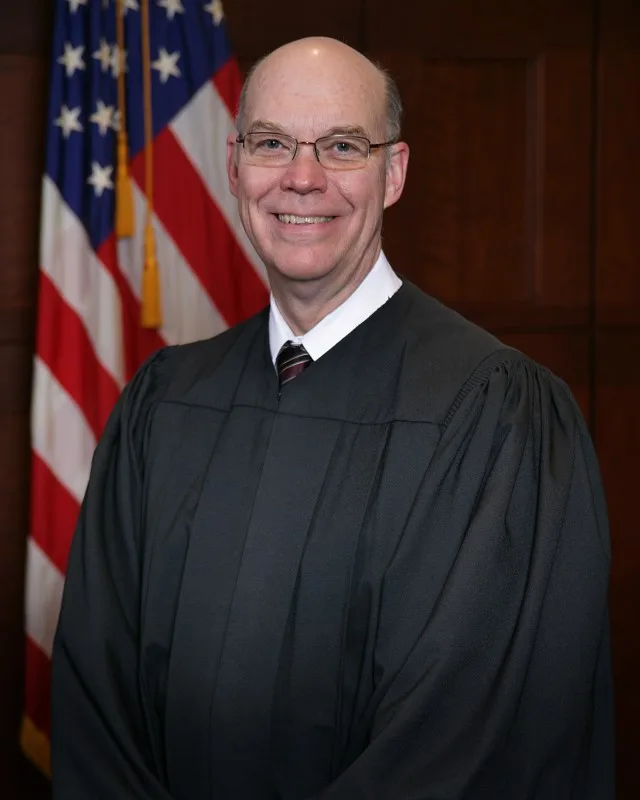
CITIZENS IN CHARGE v. Gale
District Court, D. Nebraska · 2011-08-30 · cited 9×
The case concerned a challenge by advocacy organizations, voters, and the Libertarian Party to a Nebraska statute (Neb. Rev. Stat. § 32-629(2)) that limited petition circulation for ballot initiatives and party formation to state residents only. Plaintiffs argued the residency requirement infringed their First and Fourteenth Amendment rights to political speech and association by raising costs, limiting access to experienced circulators, and preventing nonresidents from witnessing signatures. After trial, the court reviewed evidence of increased burdens on petition efforts, minimal documented fraud by out-of-state circulators, and legislative history reflecting concerns over paid circulators, then determined that the law imposed severe burdens on core political rights without sufficient justification tied to the state's interests.
electionsfree speechcivil rights
United States v. Burghardt
District Court, D. Nebraska · 2011-06-21
The case involved the sentencing of a defendant who pleaded guilty to being a felon in possession of a firearm under 18 U.S.C. § 922(g), with the government seeking a 15-year mandatory minimum enhancement under the Armed Career Criminal Act (ACCA) based on three prior convictions, including a 1993 attempted burglary. The defendant challenged whether the attempted burglary qualified as a violent felony under the ACCA. The court held that the ACCA enhancement did not apply, as the attempted burglary conviction did not meet the statutory definition of a violent felony. It therefore calculated the sentence under the Guidelines without the career-offender provisions, resulting in a total offense level of 23 and a range of 70-87 months, and imposed a sentence of 70 months' imprisonment plus five years of supervised release after considering the § 3553(a) factors. The reasoning centered on Supreme Court precedent interpreting the ACCA's residual clause to require conduct that presents a serious potential risk of physical injury to another, which the attempted burglary did not satisfy.
criminal lawguns
Hastings v. Papillion-LaVista School District
District Court, D. Nebraska · 2011-01-25
This case involves an employment discrimination claim brought by Patricia Hastings, a special education paraeducator, against the Papillion-La Vista School District after her termination in December 2008. Hastings alleged violations of the ADA, ADEA, and Nebraska age discrimination law, claiming her firing for falsifying time sheets was actually motivated by her temporary standing restriction, history of cancer, and age. The defendant moved for summary judgment, arguing Hastings could not show she was disabled under the ADA as it existed at the time or establish a prima facie case of age discrimination. The court denied the motion, finding genuine issues of material fact regarding whether the district's stated reason for termination was a pretext for discrimination, including evidence of how other employees were treated and perceptions of Hastings' medical conditions.
labor & employmentcivil rights
United States v. Correa
District Court, D. Nebraska · 2010-10-27
In United States v. Correa, the defendant was charged with possession with intent to distribute over 500 grams of methamphetamine and moved to suppress evidence and statements obtained during a drug interdiction encounter with officers on a Greyhound bus in Omaha. The magistrate judge recommended denying the motion, but the district court conducted a de novo review of the objection, focusing on whether the officers' actions amounted to a seizure under the Fourth Amendment and whether the defendant's consent to search was voluntary. The court examined the officers' plainclothes approach, boarding tactics, questioning about tickets and travel, and the defendant's nervous behavior and inconsistent statements, while noting that common interdiction indicators like cash tickets from source cities are consistent with innocent travel and do not establish reasonable suspicion. The analysis referenced Eighth Circuit precedents holding that such factors alone are insufficient to justify a non-consensual encounter or search.
criminal lawprocedure
Streck, Inc. v. Research & Diagnostic Systems, Inc.
District Court, D. Nebraska · 2010-09-30 · cited 2×
This case is Streck's appeal under 35 U.S.C. § 146 from a PTO Board of Patent Appeals and Interferences decision in Interference No. 105,522 that awarded priority of invention for a hematology control composition to R&D and canceled Streck's patents. The district court consolidated review with a related infringement action and considered the full trial record, including over fifty additional exhibits and live witness testimony not presented to the Board. Applying a preponderance of the evidence standard, the court examined the parties' respective dates of conception and reduction to practice for the count (a stabilized reticulocyte component combined with a fixed white blood cell component capable of a five-part differential), as well as issues of abandonment, suppression, or concealment. The opinion sets out findings on the inventors' activities, the intended purpose of the integrated control, and the sufficiency of the evidence supporting each side's priority claims.
business & regulatoryprocedure
United States v. Magallanes
District Court, D. Nebraska · 2010-08-03 · cited 2×
In United States v. Magallanes, the defendant was charged with two counts of possessing methamphetamine and cocaine with intent to distribute under 21 U.S.C. § 841. The district court reviewed the government's objection to the magistrate judge's findings and recommendation granting the defendant's motion to suppress evidence obtained from a November 2009 traffic stop on Interstate 80, where a deputy cited brief crossings onto the highway shoulder by an out-of-state vehicle as the basis for the stop. The court conducted a de novo review, agreed with the magistrate's factual and legal findings including the deputy's lack of credibility, overruled the objections, and granted suppression of the evidence from the stop and subsequent search.
criminal lawprocedure
Blair v. Nebraska Department of Correctional Services
District Court, D. Nebraska · 2010-06-22
This case involved a former Nebraska state prison inmate who sued multiple correctional officers and officials under 42 U.S.C. § 1983 and related statutes, alleging that his continued imprisonment from 2003 to 2005 after a court set aside his conviction violated his constitutional rights and amounted to a conspiracy to falsely imprison him. The defendants moved for summary judgment, arguing they were entitled to qualified immunity because they acted pursuant to court orders and warrants. The court granted the motion, holding that the plaintiff failed to show any constitutional violation by the officers and that qualified immunity therefore applied; it also dismissed the conspiracy claims for lack of an underlying rights violation and declined to exercise supplemental jurisdiction over the remaining state-law claims, dismissing them without prejudice. The opinion emphasized that the officers had no personal involvement in the alleged misconduct beyond following valid judicial directives.
criminal lawcivil rightsprocedure
United States v. Monnier
District Court, D. Nebraska · 2010-06-04 · cited 1×
The case involves defendant William T. Monnier's motion under 28 U.S.C. § 2255 seeking to vacate his convictions and life sentence for conspiracy to distribute over 500 grams of methamphetamine and distribution of methamphetamine resulting in death. Monnier claimed ineffective assistance of counsel at trial, including failure to secure a mistrial or properly challenge evidence, and on appeal, including failure to argue for resentencing under advisory Guidelines after United States v. Booker. The court reviewed the trial evidence, sentencing under the Guidelines, the timeline of the direct appeal and certiorari petition, and the scope of counsel's arguments regarding 18 U.S.C. § 3553(a) factors, noting that the case was not final before Booker was decided.
criminal lawprocedure
United States v. Bass
District Court, D. Nebraska · 2010-03-24 · cited 1×
In this case, Jerome Bass filed a motion under 28 U.S.C. § 2255 challenging his conviction for conspiracy to distribute and possess cocaine base, claiming ineffective assistance of counsel on multiple grounds including failure to advise on a bench trial, failure to impeach or object to certain witness testimony, failure to object to government vouching in closing arguments, and failure to object to irrelevant and prejudicial testimony about Jimmy Swain. The court applied the Strickland v. Washington standard requiring deficient performance and resulting prejudice, rejected the bench trial claim because the government would not have consented, but found counsel's performance deficient and prejudicial regarding the objections to testimony and closing arguments about Swain. The court therefore granted the motion, vacated the sentence, and ordered Bass's release within seventy days unless the government moved for a new trial.
criminal lawprocedure
Oppliger v. United States
District Court, D. Nebraska · 2010-03-01
In Oppliger v. United States, James and Gayle Oppliger sought a refund of payments made toward IRS assessments under 26 U.S.C. § 6672 for unpaid employment taxes of Livestock Feed Company and Double O, Inc., while the United States sought to reduce similar assessments to judgment. The court granted the United States' motions for summary judgment, holding the Oppligers personally liable for over $2.3 million in taxes. The core reasoning was that the Oppligers, as responsible persons, acted willfully by continuing to pay employees and other creditors after becoming aware of the tax deficiencies in April 2002, rather than remitting the taxes to the IRS.
taxesbusiness & regulatory
United States v. Stewart
District Court, D. Nebraska · 2009-12-15 · cited 1×
In United States v. Stewart, the defendant faced federal charges of possession with intent to distribute cocaine base after a police encounter that began at a convenience store parking lot and continued when officers located his vehicle in a nearby neighborhood. The defendant moved to suppress evidence obtained from a search of the vehicle's interior, objecting to the magistrate judge's recommendation that the motion be denied. The district court conducted a de novo review and granted the motion to suppress, concluding that the officers lacked reasonable, articulable suspicion that the defendant was armed and dangerous. The court reasoned that the officers' observations amounted only to an inchoate hunch, with no reports tying the defendant to crime, no knowledge of weapon-related history, and no other objective indicators of danger that would permit a protective vehicle search under Michigan v. Long.
criminal law
Streck, Inc. v. Research & Diagnostic Systems, Inc.
District Court, D. Nebraska · 2009-09-09 · cited 4×
This case is a patent infringement action in which Streck alleges that R&D's integrated hematology control products (CBC-XE, CBC-4K Plus Reties, and CBC-5D Plus Reties) infringe claims of three Streck patents ('500, '668, and '388) related to reticulocyte controls using human red blood cell encapsulation. R&D raises defenses and counterclaims of invalidity, non-infringement, and priority of invention, while both parties have filed cross-motions for summary judgment on issues including written description under 35 U.S.C. § 112, infringement, novelty under § 102, and obviousness under § 103. The opinion recites undisputed facts about the parties, their patents' filing and issuance dates, R&D's awareness of Streck's patents, and an ongoing PTO interference proceeding initiated by R&D to challenge priority, and it addresses procedural rules for amending infringement contentions.
business & regulatorypropertyprocedure
Hutson v. COVIDIEN, INC.
District Court, D. Nebraska · 2009-08-26 · cited 2×
This case involves plaintiff Hutson's claims of employment discrimination and retaliation under the Americans with Disabilities Act and the Nebraska Fair Employment Practice Act against his former employer, Covidien. Hutson alleged that after disclosing prior neck and other injuries and requesting accommodations for certain job tasks like box printing and pumping plastic, he was assigned duties that violated his restrictions and was terminated. On the defendant's motion for summary judgment, the court granted the motion in part and denied it in part. The court reasoned that Hutson failed to establish a prima facie case of discrimination because his impairments did not substantially limit a major life activity under the ADA, but found genuine issues of material fact regarding whether Hutson engaged in protected activity for the retaliation claim that precluded summary judgment.
labor & employmentcivil rights
Vondra v. Chevron U.S.A., Inc.
District Court, D. Nebraska · 2009-08-17 · cited 5×
This case is a wrongful death products liability suit brought by the estates of three former Goodyear employees who died from Acute Myelogenous Leukemia after workplace exposure to benzene-containing solvents supplied by the defendant petroleum companies. The defendants moved for summary judgment, arguing they owed no duty to warn because Goodyear was a sophisticated user, that their products were not unreasonably dangerous, and that proximate causation was lacking. The court denied summary judgment to Barton Solvents, Shell, Chevron, and Union Oil because conflicting evidence created genuine issues of material fact on the sophisticated-user defense, feasible alternative designs, and the decedents' actual exposure and knowledge. It granted Citgo's motion only as to the two decedents whose employment ended before Citgo supplied any products to the plant, dismissing those claims while allowing the third to proceed.
torts & liabilityprocedure
United States v. Alamilla-Hernandez
District Court, D. Nebraska · 2009-07-27 · cited 1×
This case involves a defendant charged with possession with intent to distribute over 500 grams of methamphetamine following a traffic stop on Interstate 80 for driving below the minimum speed limit. The court reviewed objections to a magistrate judge's report recommending denial of motions to suppress evidence from a vehicle search and statements obtained during later questioning. The court denied suppression of the evidence, concluding the stop was valid, an open alcohol container provided probable cause, and consent was given for the search that uncovered the drugs in a speaker box. It granted suppression of the statements, finding that the defendant had made a clear request for counsel after Miranda warnings were given, which was not honored before further questioning occurred. The decision applied Fourth Amendment standards to the search and Fifth Amendment protections regarding invocation of the right to an attorney.
criminal lawprocedure
Softchoice Corp. v. MacKenzie
District Court, D. Nebraska · 2009-07-02 · cited 6×
This case involved Softchoice Corporation suing its former employee Brett MacKenzie for breach of a confidentiality agreement, misappropriation of trade secrets and confidential information, unfair competition, and tortious interference with customer relationships and another former employee's contract. The defendant moved for summary judgment on all claims. The court granted the motion and dismissed the action, reasoning that the customer information at issue was not a protected trade secret, the confidentiality agreement provided no basis for the claims, covenants not to compete were unenforceable under Nebraska law, and Softchoice had no legitimate business expectancy in its at-will employment relationships or post-contract customer dealings.
business & regulatorylabor & employmenttorts & liability
United States v. Stanko
District Court, D. Nebraska · 2009-06-23 · cited 1×
The case concerned Rudy Stanko's motion under 28 U.S.C. § 2255 to vacate his federal conviction for being a felon in possession of firearms and ammunition after a jury trial. The court also addressed numerous related motions, including requests for release, sentence reduction, jury records, and a separate civil rights claim, dismissing most as moot, lacking jurisdiction, or without merit. In the fraud case indirectly referenced, the government had dismissed charges after an Eighth Circuit remand on venue issues. The court denied the § 2255 petition on the merits, noting that Stanko had received the requested jury selection plans and reports, that his conviction had been affirmed on direct appeal, and that no basis existed to vacate the sentence.
criminal lawprocedure
United States v. Hubel
District Court, D. Nebraska · 2008-12-30 · cited 2×
In United States v. Hubel, the defendant was charged with conspiracy to distribute and possess with intent to distribute methamphetamine, pleaded guilty pursuant to a cooperation agreement, and faced a guidelines sentencing range of 37 to 46 months. The court granted the defendant's motion for a variance and imposed a sentence of time served followed by five years of supervised release. The core reasoning was that the defendant's rehabilitation had been extraordinary, as shown by her completion of intensive drug treatment programs, her employment as a productive member of society, government concurrence, and the requirement under 18 U.S.C. § 3553(a) to impose a sentence sufficient but not greater than necessary.
criminal law
Vishay Dale Electronics, Inc. v. Cyntec Co., Ltd.
District Court, D. Nebraska · 2008-12-23
This case is a patent infringement action under federal law in which plaintiff Vishay Dale Electronics alleges that defendant Cyntec's high-current low-profile inductors infringe seven related patents (all continuations of an earlier abandoned application) covering inductor designs and manufacturing methods that use powdered magnetic material to surround a conductive coil. Following a Markman hearing, the court construed disputed claim terms appearing in the patents, adopting constructions such as "shield the coil" meaning "using magnetically conductive particles to prevent the majority of magnetic flux from leaving the inductor body," "substantially free from ferrite" meaning "substantially free from magnetic materials composed of oxides containing ferric ions as the main constituent," and correcting an awkward phrase in one claim to read "the compressed mixture of the dry conductive particles." The court's reasoning relied on the language of the claims, the detailed patent specifications and drawings describing the invention's objectives, and the context of the patents as a whole, while rejecting constructions that would import limitations or focus on invalidity issues rather than claim scope.
business & regulatoryprocedure
Kellogg v. Nike, Inc.
District Court, D. Nebraska · 2008-08-14 · cited 1×
The case involves plaintiff Gerald A. Kellogg alleging that Nike, Inc. infringed his 1997 U.S. Design Patent for a vented baseball-styled cap. Nike denied infringement and raised defenses including anticipation, obviousness, laches, and estoppel, while seeking a declaration of noninfringement and invalidity. The court denied Nike's motions for summary judgment on willfulness and noninfringement, finding genuine issues of material fact regarding the similarity of designs, Nike's knowledge of the patent, and the credibility of its invalidity arguments. It granted in part Kellogg's motion on affirmative defenses and denied motions to preclude evidence and strike responses, determining that unresolved factual disputes precluded summary judgment.
propertyprocedurebusiness & regulatory