Deference to government powerSkepticism of government power
Invalidates section 27A as an unconstitutional legislative interference with judicial finality in TGX while applying APA deference standards in Lujan. TGX Corp. v. Simmons ↗ State of La. v. Lujan ↗
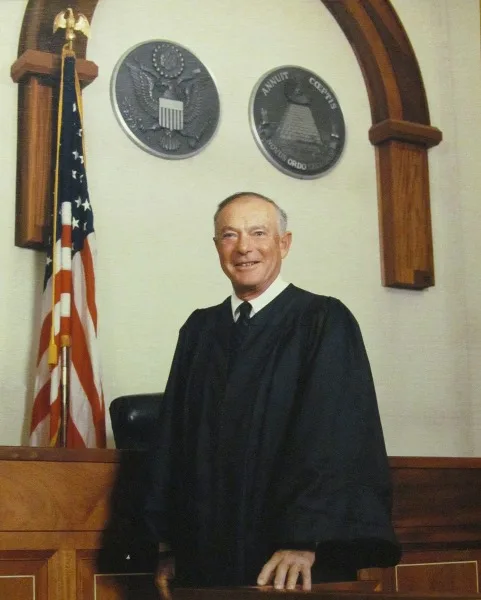
District Court, E.D. Louisiana — appointed by Jimmy Carter
Party: Democratic →B.B.A., Tulane University of LouisianaLL.B., Tulane University of LouisianaBA, Tulane University of LouisianaJD, Tulane University of Louisiana
In Brown v. R.J. Reynolds Tobacco Co., the plaintiff sued multiple cigarette manufacturers under the Louisiana Products Liability Act after being diagnosed with throat cancer, alleging that the cigarettes he smoked from 1946 to 1991 were unreasonably dangerous in design. Three of the plaintiff's four theories of recovery had already been dismissed, leaving only the defective design claim under the LPLA. The court granted the defendants' motion for summary judgment, holding that the plaintiff failed to meet his burden of proving a feasible alternative design existed at the time the relevant cigarettes left the manufacturers' control, that such a design would have prevented his injury, and that it satisfied the statute's risk-utility test; evidence regarding the Premier cigarette was insufficient because it was not commercially feasible and not admissible against all defendants.
In this case, the Simmons sought to reinstate federal securities claims under section 10(b) and Rule 10b-5 that had been dismissed as time-barred under Lampf v. Gilbertson after Congress enacted section 27A of the 1934 Act to allow such reinstatements within 60 days. The court denied the motion to reinstate, finding that while the claims met the statute's facial requirements, section 27A violated separation of powers principles. The core reasoning was that the statute impermissibly altered the retroactive application of Lampf in a manner inconsistent with James B. Beam Distilling Co. v. Georgia, which requires that new rules of law apply to all pending cases once decided, thereby constituting an unconstitutional legislative interference with judicial decisions.
In this case, plaintiff Engineering Dynamics, Inc. sued defendants Structural Software, Inc. and S. Rao Guntur for copyright infringement of its SACS structural analysis software manuals and user interface, as well as related trade dress and unfair competition claims. The court found that the defendants' StruCAD manuals were substantially similar to EDI's copyrighted SACS manuals, including copied errors, constituting infringement, but held that the user interface was not copyrightable under precedent from Synercom Technology, Inc. v. University Computing Co. It awarded EDI $250,000 in actual damages from SSI's profits and enjoined further distribution of the infringing manual until a non-infringing version was created, while dismissing claims against Guntur personally and rejecting trade dress liability. The reasoning centered on the manuals' originality following EDI's prior redesign to avoid infringement, the substantial similarities indicating copying, and the policy of the Copyright Act to protect expression while recognizing the defendants' innovation in personal computer compatibility.
This case involved the State of Louisiana seeking a temporary injunction to block proposed Outer Continental Shelf Sale 135, an offshore oil and gas lease sale scheduled for August 21, 1991, on grounds that the Department of the Interior violated the Coastal Zone Management Act and the National Environmental Policy Act. The court denied the motion for a preliminary injunction after applying the four-factor test from Canal Authority v. Callaway, which requires plaintiffs to show a substantial likelihood of success on the merits, irreparable injury, that the balance of harms favors them, and that the injunction would not disserve the public interest. The court concluded that the plaintiffs failed to meet the first factor because they did not show that the agency's consistency determination or Environmental Impact Statement was arbitrary, capricious, or otherwise not in accordance with law under the Administrative Procedure Act, as the agency had sufficient information to support its findings and the documents adequately addressed relevant coastal and environmental factors.
The case concerned whether defendants including H & B Construction, Blue Cross entities, and a multiple employer trust violated COBRA by failing to offer continuation coverage under a group health plan after plaintiff Oreste Kidder's termination from employment, instead providing only an individual conversion policy that paid lower benefits during a subsequent hospitalization. The court made findings of fact regarding the merger of H & B Construction and H & B Marine, their practice of exchanging employees, the number of employees covered under the plan, and the lack of any COBRA notice or election opportunity provided to the Kidders. It concluded that COBRA applied because the combined entities employed more than twenty people on average and that the defendants had duties to notify and provide continuation coverage under the statute.
In Castillo v. Spiliada Maritime Corp., five Filipino seamen sued their maritime employer for wages, penalty wages under 46 U.S.C. 10313, and related claims after being terminated and repatriated following complaints about altered employment contracts. The defendant sought summary judgment or a stay based on a Philippine settlement, forum-selection clauses approved by the POEA, and principles of comity, while the plaintiffs cross-moved for summary judgment arguing the releases were invalid due to economic duress and lack of counsel. The court determined that federal jurisdiction over the wage claims is mandatory only if brought in good faith, which must be shown here because U.S. contacts were minimal and liability was disputed, and therefore denied both summary judgment motions pending an evidentiary hearing limited to the good-faith issue.