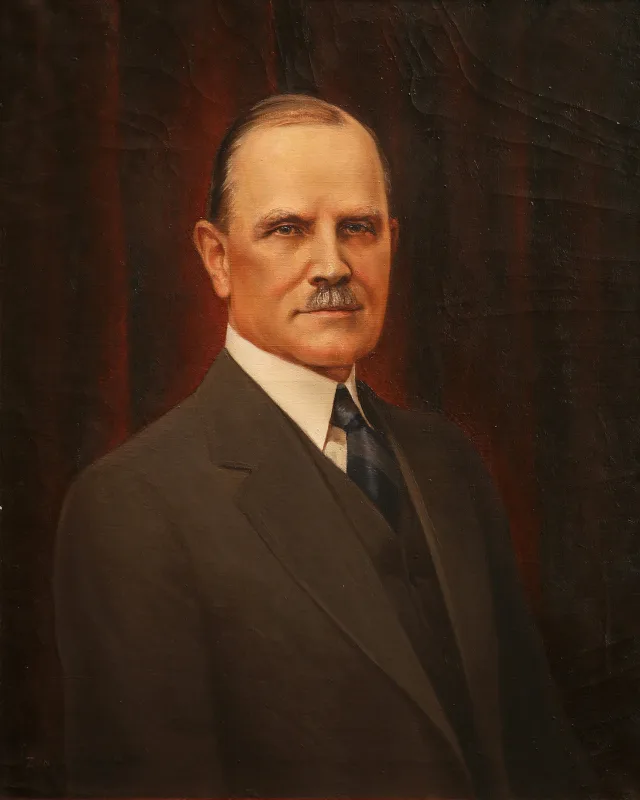
The case Buck v. Swanson was a suit by ASCAP and affiliated copyright owners seeking to enjoin enforcement of Nebraska Legislative Bill 478 (1937), a state law regulating combinations in restraint of trade and monopolistic practices in public performance licensing of music. The court framed the sole issue as the statute's constitutional validity, describing ASCAP's structure as a membership organization that controls licensing for the vast majority of popular and much standard music, collects blanket fees from users such as radio stations and theaters, and was formed to enable enforcement of copyrights that individual owners could not practically protect alone. Core reasoning focused on the background facts of market dominance, the practical barriers users and owners faced before such societies existed, and the statute's requirements for disclosure of data in litigation along with penalties for noncompliance, without addressing the underlying common-law validity of ASCAP's contracts.
The case concerned the constitutionality of Nebraska's Cedar Rust Law, which declared red cedar trees growing within two miles of large apple orchards to be a public nuisance because they harbor a communicable disease harmful to apple trees, and authorized the state to order their destruction. Landowners sued to enjoin the Department of Agriculture from cutting down their trees, arguing that the statute violated due process, constituted an uncompensated taking, and imposed improper costs. The court upheld the law as a valid exercise of the state's police power to protect the public interest in commercial apple production, relying on precedents from other states that had sustained similar cedar rust statutes and distinguishing the measure from unconstitutional taxation or arbitrary regulation. It therefore denied the requested injunction and dismissed the complaint.
The case involved a movie theater exhibitor in Madison, Nebraska, seeking an injunction against film distributors and the Omaha Film Board of Trade to prevent enforcement of a uniform zoning and protection plan. This plan required distributors to grant a rival exhibitor in nearby Norfolk a set period of exclusive first-run exhibition rights before licensing films to the plaintiff. The court held that the distributors' agreement among themselves to impose these protection periods was an unreasonable restraint of interstate trade. It violated the Sherman Antitrust Act by eliminating competition in licensing terms and preventing the plaintiff from bargaining freely with distributors unbound by the combination. The decision relied on Supreme Court precedents finding similar industry arrangements unlawful, emphasizing that public interest in preserving competition overrides any private motives or claimed benefits.
The case concerned an insurance company's suit in equity to cancel a life insurance policy on grounds that conditions in the application had been violated, specifically regarding policy delivery, full premium payment during the applicant's lifetime, and no post-examination medical consultations. The defendant moved to dismiss, arguing that the amount in controversy was insufficient for federal jurisdiction and that the complaint failed to state an equitable cause of action because an adequate remedy existed at law by defending a related state-court suit for disability benefits. The court overruled the motion, finding that the reserve amount of $10,974.29 satisfied the jurisdictional threshold exceeding $3,000 and that equity was available since a defense in the pending action would not fully protect the insurer if the policyholder delayed suit past the two-year incontestability period. It cited precedents affirming insurers' rights to seek cancellation in equity under similar circumstances. The decision allowed the cancellation claim to proceed.
This case involved the United States seeking to collect from the transferees of assets of the dissolved Updike Grain Company a tax assessed in 1920 under the retroactive provisions of the Revenue Act of 1917 for the company's fiscal year ending in 1917. The defendants raised challenges to the court's jurisdiction under sections 274 and 280 of the Revenue Act of 1926 and argued that the suit was barred by the statute of limitations in section 278(d) of that Act, which requires collection suits to be brought within six years of assessment. The court rejected the jurisdictional objections after considering the savings clause in section 1122(b) but found that the United States had delayed filing the suit beyond the applicable six-year limitations period following the assessment. As a result, the court dismissed the suit on statute-of-limitations grounds.
This case involved a disbarment proceeding against an attorney who had pleaded guilty in federal court to unlawfully manufacturing 700 quarts of beer without a permit, in violation of the National Prohibition Act. The court determined that the respondent should be disbarred from practicing law in the U.S. District Court for a period of three years. The core reasoning was that the deliberate violation constituted an offense involving moral turpitude because it was contrary to justice, honesty, and good morals, particularly when committed by an experienced attorney who had taken an oath to support the Constitution and laws of the United States and Nebraska. The court emphasized that continued good moral character is essential for bar membership and that such misconduct justified removal to protect the integrity of the courts.