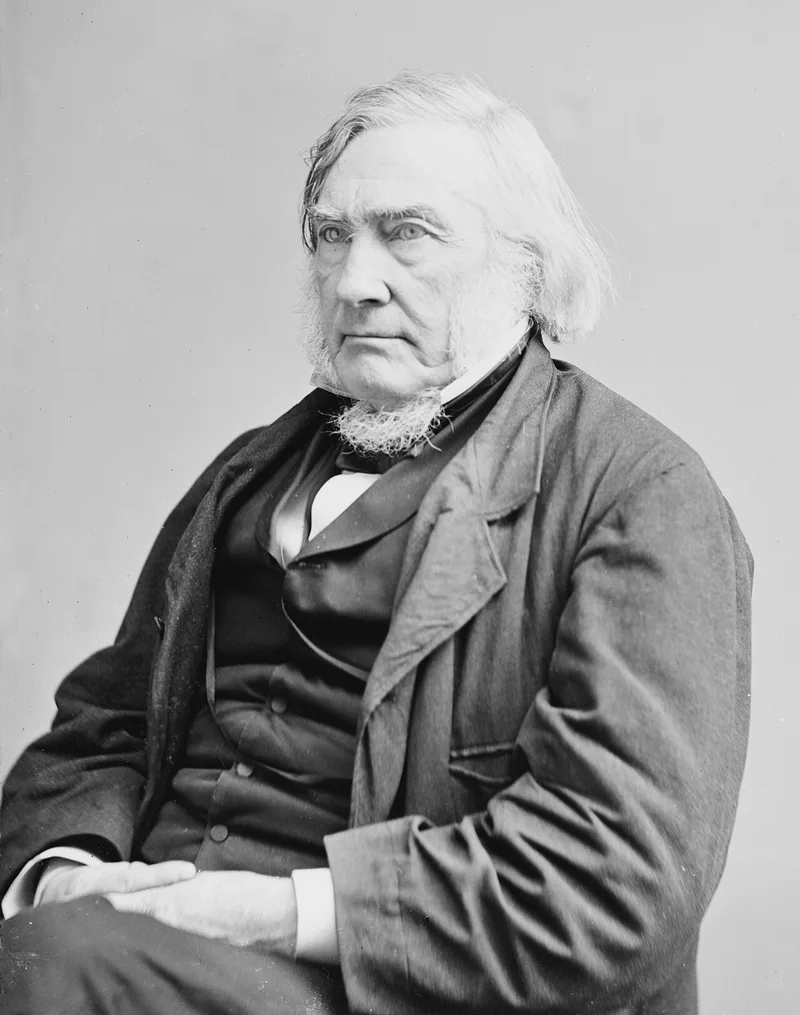
Collector v. Day
Supreme Court of the United States · 1871-04-18 · cited 318×
Collector v. Day concerned whether Congress could constitutionally impose a federal income tax on the salary of a state judge. The Supreme Court held that it could not, affirming a lower court judgment that exempted the state judicial salary from federal taxation. The Court reasoned that the federal and state governments are separate sovereigns, each immune from taxing the salaries or instrumentalities of the other under principles established in cases like Dobbins v. Commissioners of Erie County and McCulloch v. Maryland; such taxation would interfere with the reserved powers of the states under the Tenth Amendment. This intergovernmental immunity applies reciprocally to preserve the independent functioning of both levels of government within their respective spheres.
federal powertaxes
Miller v. McKenzie
Supreme Court of the United States · 1871-02-20 · cited 5×
The case Miller v. McKenzie involved a writ of error brought before the Supreme Court. The writ was defective because it recited the proceedings as being between Pitzer Miller and Larkin McKenzie and others, without properly naming all parties. The court determined that this defect was fatal to its jurisdiction based on multiple prior holdings. As a result, the motion was granted and the case was dismissed.
procedure
Bethell v. Demaret
Supreme Court of the United States · 1871-01-30 · cited 22×
This case concerned an attempt to bring a decision from the Louisiana Supreme Court before the U.S. Supreme Court for review. The underlying dispute involved promissory notes and a mortgage whose consideration consisted of Confederate currency, which the state court held invalid under Louisiana law at the time of the contracts. The petitioner argued that the state court's exercise of authority violated the U.S. Constitution and created a federal question under the 25th section of the Judiciary Act. The Court rejected this, explaining that a state court's general power to decide cases is not the type of state authority reviewable under that section and that the state decision itself was not repugnant to the Constitution. Finding no federal question in the record, the Court granted the motion to dismiss.
federal powerprocedure
Texas v. Chiles
Supreme Court of the United States · 1871-01-18 · cited 1×
The case involved a motion seeking to hold defendant Chiles accountable for twelve bonds and their proceeds in a suit originally filed by Texas in 1867. The court had previously declined to enter any decree against Chiles for bonds or proceeds based on the evidence then before it. The motion was denied because the bonds in question were received by Chiles only after the bill was filed, and the existing decree expressly limited any accounting to bonds already in the defendants' possession at the time process was served. The court also noted that evidence from a co-defendant was not competent against Chiles. The matter therefore fell outside the scope of the prior decree.
propertyprocedure
The Clinton Bridge
Supreme Court of the United States · 1870-12-19 · cited 35×
This case concerned a lawsuit challenging a bridge across the Mississippi River built by the Albany Bridge Company and the Chicago, Iowa, and Nebraska Railroad Company under state authority, on grounds that it obstructed navigation. Congress passed an act declaring the bridge a lawful structure and post route. The Supreme Court affirmed the lower court's ruling in favor of the bridge's legality, holding that the statute legalized the bridge as constructed and supplied the governing rule for the pending suit. The decision followed the precedent of the Wheeling Bridge case, recognizing Congress's authority under the commerce power to alter navigation rights and thereby end claims for abatement or injunction.
federal powerbusiness & regulatory
The Mabey
Supreme Court of the United States · 1870-12-19 · cited 17×
This case involved a motion in the U.S. Supreme Court, sitting in an admiralty appeal, seeking to examine new witnesses whose testimony had not been taken in the lower courts. The court denied the motion. The opinion explained that the moving papers provided no satisfactory excuse, such as late discovery of evidence or inability to compel attendance, for failing to obtain the testimony before the District Court or Circuit Court. It further reasoned that permitting such examinations as a matter of course would encourage parties to withhold evidence from the initial proceedings and risk abuse of the appellate process, while substantial amendments are not allowed at this stage and defective records may instead lead to reversal and remand.
procedure
United States v. Vigil
Supreme Court of the United States · 1870-12-12 · cited 17×
The case involved a motion to dismiss an appeal by the United States from a lower court judgment, where the appeal had not been properly entered on the record at the time of the original judgment due to an error by the court clerk. The Supreme Court denied the motion to dismiss. It held that the delay in perfecting the appeal was sufficiently explained by the clerk's failure to record the timely prayer for appeal and the district attorney's resulting mistaken belief that the appeal was already secured, following precedents that recognize exceptions to strict timeliness rules when such excuses exist. The Court further noted that an appeal taken in open court at the judgment term requires no separate citation, and the nunc pro tunc order properly allowed the appeal to proceed despite the lapse of time and communication challenges for government agents in remote districts.
procedurefederal power
Little v. Herndon
Supreme Court of the United States · 1870-04-30 · cited 18×
The case concerned the validity of a tax deed to real property in Illinois and whether the 1861 state statute allowed such a deed to be enforced without evidence of a prior court judgment and order of sale. The Supreme Court held that the statute did not alter prior Illinois law requiring proof of the underlying judgment and precept for the deed to be effective, and therefore affirmed the lower court's ruling that the deed could not be admitted without that foundation. The Court reasoned that the statutory phrase requiring the deed to be made "in pursuance of sales" necessarily incorporated the full statutory process of judgment, order, and precept, and that a contrary reading would permit enforcement of invalid deeds without the listed exceptions. A dissenting opinion argued that the statute conditioned challenges to the deed on payment of redemption amounts except for specifically enumerated defects, none of which included absence of a judgment.
propertytaxesprocedure
Stimpson v. Woodman
Supreme Court of the United States · 1870-04-25 · cited 34×
This 1869 Supreme Court case involved a patent infringement suit by Stimpson against Woodman concerning a machine for boarding and pebbling leather to produce a checkered or pebbled finish. The patented device combined a figured revolving metal roller with other mechanical elements for applying pressure to the leather. The Court held the patent invalid, reversing the lower court judgment, because the figured roller was already known and used for the same purpose, a prior similar machine with a smooth roller had anticipated the combination, and replacing the smooth roller with the old figured one required only ordinary mechanical skill rather than patentable invention. The decision turned on the evidence that the plaintiff's machine differed from existing ones solely in a non-inventive way.
business & regulatoryproperty
City v. Lamson
Supreme Court of the United States · 1870-04-18 · cited 56×
The case involved a suit to recover on interest coupons detached from municipal bonds issued by the City of Kenosha, where the defendant raised a statute of limitations defense after more than six years had passed since the interest accrued. The Court held that the action was founded on the coupons themselves rather than the bonds, that the coupons did not extinguish the interest obligation, and that because the coupons were issued contemporaneously with and as part of the bond security they partook of the bond's character, making them subject to the twenty-year limitations period rather than six years. The Court further ruled that the city's authority to issue the bonds was confirmed by subsequent legislative ratification and that any contrary state court decisions did not control. Pleading technicalities regarding recitals in the declaration were deemed surplusage and immaterial.
business & regulatoryprocedure
Reilly v. Golding
Supreme Court of the United States · 1870-03-21 · cited 7×
The case concerned a challenge to the jurisdiction of the U.S. Circuit Court in a proceeding against a surety on a forthcoming bond, where the court followed Louisiana practice by issuing a rule to show cause. This method was treated as incidental to the underlying suit rather than a separate action. The surety also answered on the merits, which were tried, leading the court to make the rule absolute and enter judgment against the surety for the full amount of the plaintiff's claim. With no findings of fact presented to distinguish the matter, the Supreme Court applied the general rule and affirmed the judgment.
procedure
Flanders v. Tweed
Supreme Court of the United States · 1870-03-21 · cited 38×
The case concerned whether a proper waiver of jury trial had occurred in a federal civil action under the Act of March 3, 1865, allowing the court below to try issues of fact, and whether the appellate court could review questions of law on that basis. The statement of facts had been filed nearly three months after judgment, and no written stipulation waiving the jury had been filed with the clerk as the statute required. The Supreme Court held that the late statement could not be considered part of the record and that the absence of the required stipulation prevented review of the lower court's legal rulings. Relying on prior decisions interpreting the 1865 act and contrasting it with earlier statutes for Louisiana and California, the Court reversed the judgment for a mistrial and remanded the case for a new trial.
procedure
Justices v. Murray
Supreme Court of the United States · 1870-03-14 · cited 66×
The case concerned whether a provision of the 1863 federal habeas corpus act, allowing removal of a state court judgment tried by jury to a U.S. Circuit Court for retrial on facts and law, violated the Seventh Amendment. The Supreme Court held that the provision was not in pursuance of the Constitution and was therefore void, requiring reversal of the lower court's judgment and dismissal of the writ of error. The Court reasoned that the Amendment's clause prohibiting re-examination of facts tried by a jury in any U.S. court except according to common law applies to federal appellate jurisdiction over state court cases involving federal questions, as confirmed by precedent like Parsons v. Bedford, the Amendment's history, and the Federalist Papers.
federal powerprocedure
Ex Parte Zellner
Supreme Court of the United States · 1870-02-28 · cited 15×
This case concerned whether the United States could appeal a final judgment of the Court of Claims in a proceeding brought by a claimant seeking proceeds from abandoned or captured property under the 1863 act reorganizing that court. The Supreme Court granted the motion, holding that the general appeal provision in section 5 of the 1863 act applies to all final judgments rendered under the court's general jurisdiction. The Court reasoned that, like enlargements of jurisdiction in the circuit and district courts under the Judiciary Act of 1789, new subjects of jurisdiction in the Court of Claims do not displace the existing statutory framework for appeals unless Congress prescribes a special procedure. It distinguished cases involving commissioners or specially limited proceedings, noting that the 1868 act's additional appeal language did not alter the claimant's rights under the general provisions.
procedurefederal powerproperty
Chicago v. Sheldon
Supreme Court of the United States · 1870-02-21 · cited 192×
The case concerned a dispute over special assessments imposed by the City of Chicago on a railway company's property for street improvements, with the company claiming exemption under its 1859 contract with the city. The Supreme Court affirmed the judgment in favor of the company, holding that the contract exempted it from such assessments beyond specified repair obligations. The Court reasoned that the contract language, which addressed grading, paving, and repairs along the tracks, was intended to fix the company's full liability for street improvements, a view supported by the parties' practical conduct for years afterward and a related 1864 ordinance. It further noted that state constitutional provisions on uniform taxation did not invalidate such contractual commutations of assessments, as established by prior state precedents.
business & regulatorytaxesproperty
Wilkins v. Ellett
Supreme Court of the United States · 1870-02-14 · cited 77×
The case Wilkins v. Ellett concerned whether a debtor in one jurisdiction could validly make a voluntary payment to the administrator appointed in the deceased's domicile state, without the administrator obtaining ancillary letters of administration in the debtor's state. The court decided in favor of the validity of such payments, reversing the lower court's judgment. The reasoning is that personal property is governed by the law of the domicile for succession purposes, and while ancillary administration may be required for suits due to local creditor protections, it does not invalidate voluntary payments to the domiciliary administrator. The principle of comity supports transmitting the residuum to the domicile court for final distribution.
propertyprocedure
Aldrich v. Aetna Co.
Supreme Court of the United States · 1869-12-13 · cited 16×
This case involved a dispute over priority of liens on a vessel between a mortgagee who recorded the mortgage in a federal collector's office under an act of Congress and a creditor who obtained an attachment under state law in New York. The court held that the federal recording protected the mortgagee's lien against subsequent state attachments, reversing the lower court's judgment. The reasoning was based on a prior decision in White’s Bank v. Smith, where the Court determined that the federal act acts as a registration statute that excludes conflicting state legislation regarding the security of such maritime property. Objections to jurisdiction and the writ of error were overruled as the case properly raised federal questions under the Judiciary Act.
federal powerpropertyprocedure
Chicopee Bank v. Philadelphia Bank
Supreme Court of the United States · 1869-11-29 · cited 7×
The case involved a lost bill of exchange that Chicopee Bank was handling for collection on behalf of Philadelphia Bank, leading to a failure to properly present the bill to the acceptors at maturity and resulting in the discharge of the drawer and indorser. The court affirmed the judgment for the plaintiffs, holding Chicopee Bank responsible based on the jury's finding that the loss was due to the bank's negligence and lack of care. The core reasoning was that the physical absence of the bill at the collecting bank meant no valid presentment or demand occurred under the law merchant, the loss itself created a presumption of negligence that the bank failed to rebut, and the post-maturity notice was defective as it confirmed the prior parties' discharge.
business & regulatorytorts & liability
Bennet v. Fowler
Supreme Court of the United States · 1869-11-29 · cited 19×
The case Bennet v. Fowler concerned the validity and alleged infringement of two patents (Nos. 1869 and 1870) for machines used to lift and deposit loads of hay in barns, ricks, or sheds. The court affirmed the validity of both patents, observing that the Patent Office has discretion to divide related improvements into separate patents, particularly when one design is adapted specifically for stacking hay. Regarding infringement, the court held that evidence of substantial similarity between the defendants' machines and the patented devices was sufficient and unrebutted, with models further confirming the overlap. The decree was therefore affirmed.
business & regulatory
The Eagle
Supreme Court of the United States · 1869-11-18 · cited 70×
The case concerned a maritime collision tort on the Great Lakes and connecting waters involving an American vessel, raising questions of whether U.S. admiralty courts had jurisdiction over incidents partly occurring in Canadian territory and what law should apply. The Supreme Court affirmed the lower courts' decree in favor of exercising jurisdiction. The Court reasoned that its prior decision in The Genesee Chief extended admiralty jurisdiction under the Constitution and Judiciary Act of 1789 to all public navigable waters, including the lakes, without regard to tidewaters or foreign territorial limits for U.S. vessels. It further held that U.S. admiralty principles, rather than Canadian local law, governed the resolution of the claim, and that older statutory restrictions like the Act of 1845 were no longer limiting.
federal powertorts & liabilityprocedure