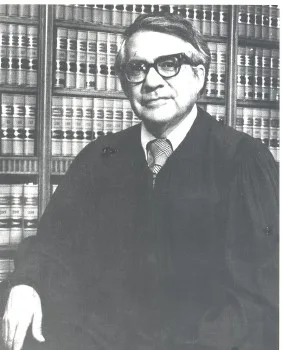
This case involved consolidated actions by female AFDC welfare recipients and related organizations against the director of Michigan's Department of Social Services, seeking declaratory and injunctive relief to block the state's practice of publicly disclosing recipients' names, addresses, and benefit amounts upon request via a standard form. The disclosures had enabled abusive former partners to locate and harm some plaintiffs, prompting fears of recurrence. After consolidating the cases, addressing jurisdiction, and reviewing stipulated facts, the court certified a class of similarly situated recipients and granted summary judgment to the plaintiffs. The core reasoning was that the Michigan statute and policy were inconsistent with federal confidentiality mandates in the Social Security Act's AFDC provisions, as limited by the Jenner Amendment.
This case involved trust funds established for laborers seeking to recover unpaid pension, vacation, and health contributions from a surety company under the Miller Act for work performed by a subcontractor on a federal Coast Guard repair project. The defendant moved to dismiss the claims, which the court treated as a summary judgment motion after considering materials outside the pleadings. The court granted the motion in part and denied it in part, allowing recovery only for $14,219.31 in contributions owed for work through May 31, 1987, while dismissing claims for later work. The core reasoning centered on the Miller Act's notice requirements, which mandate that claimants provide timely written notice to the prime contractor within 90 days of the last labor performed for each claim, with the Act to be liberally construed to protect workers but with strict adherence to the notice proviso.
labor & employmentbusiness & regulatoryfederal power
Michigan Bell Telephone Company sued the Drug Enforcement Administration to recover approximately $24,800 in costs incurred from complying with subpoenas for subscriber and toll records issued in 1986 and 1987, and to establish a fee schedule for future requests. The court considered the defendant's motion to dismiss, treated as one for summary judgment due to evidence outside the pleadings. The court granted summary judgment to the DEA, holding that the Electronic Communications Privacy Act does not provide a cause of action allowing recovery of aggregate compliance costs from multiple requests, but instead requires challenges to individual subpoenas on a piecemeal basis. The decision was based on the statutory language and intent of 18 U.S.C. § 2706, which limits judicial review to specific disputes rather than overall burdensomeness of agency requests.
The case concerned a Chapter 11 bankruptcy reorganization of U.S. Truck Co., a trucking company, in which the debtor rejected its collective bargaining agreement with the Teamsters union after the bankruptcy court found rejection necessary to prevent collapse due to unsustainable losses. The union's negotiating committee filed claims for rejection damages exceeding $5 million, which the bankruptcy court largely awarded after trial, calculating lost wages as the difference between the original contract rates and post-rejection pay for affected employees. On appeal, the district court affirmed the standing of the committee to represent union members under labor laws such as the LMRA and NLRA, upheld damages for individual employees' lost wages including post-rejection amounts, but reversed any recovery of union dues. The court also disallowed claims for employees not properly listed or whose positions were eliminated without replacement by contractors.
The South Macomb Disposal Authority, a municipal body operating landfills, sued the EPA to challenge the constitutionality of CERCLA (as amended by SARA) after the EPA notified it of potential liability for hazardous waste contamination and sought a remedial investigation and feasibility study. The EPA moved to dismiss, arguing lack of subject matter jurisdiction, no case or controversy, and meritless claims. The court held that it lacked jurisdiction because CERCLA's review provisions, particularly section 113(h), bar pre-enforcement challenges to the statute's overall scheme, allowing constitutional issues to be raised only later if the EPA brings an enforcement or reimbursement action. It reasoned that Congress validly limited federal court jurisdiction by providing an adequate opportunity for review in subsequent proceedings, dismissing the suit without reaching the merits.
The case involves MGA, Inc.'s patent infringement lawsuit against Centri-Spray Corp. alleging that two of its mechanical accumulator products infringe U.S. Patent No. 3,570,656. Following a trial on Centri-Spray's defenses of laches and estoppel, the court determined that while the Rudlaff design was barred by these defenses, the Plumridge design was not, because the accumulation control feature central to the infringement claim differed substantially between the two devices. The court reasoned that laches could not be tacked from the earlier design to the later one without substantial similarity in the infringing activity, and since the control mechanisms operated differently, the claim against the Plumridge device could proceed.