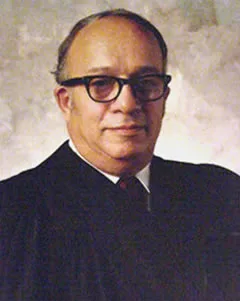
The case involved a pension fund suing DeBolt Transfer, Inc. and four affiliated companies to collect $355,108 in withdrawal liability under the Multiemployer Pension Plan Amendments Act of 1980 after Transfer stopped contributing to the fund in 1982. Transfer had received a demand letter but did not respond or request arbitration, fixing its liability under ERISA. The court concluded that the five companies formed a controlled group due to common ownership by Sara DeBolt, making all defendants jointly and severally liable for the assessed amount.
This case involved trustees of United Mine Workers pension plans suing the individual shareholders of Pelbro Fuel, Inc., a Pennsylvania coal mining company, to recover withdrawal liability under ERISA after Pelbro ceased contributions following the expiration of its collective bargaining agreement in 1981. The plaintiffs sought to hold the defendants personally liable by piercing the corporate veil, alleging the company was operated as an alter ego or used to evade obligations. The court concluded that the defendants were not personally liable, finding that Pelbro was a legitimate corporation formed for valid business reasons, maintained separate books and operations, and that shareholder loans and other transactions did not constitute fraud or abuse warranting disregard of the corporate form. The decision rested on detailed findings that Pelbro respected corporate formalities, engaged in actual mining activities, and had no intent to evade pension liabilities through asset transfers or undercapitalization.
This case involved multiple employee plaintiffs and their spouses suing Crown Controls Corp. for foot injuries sustained when Crown pallet trucks ran over their feet while the plaintiffs worked as warehouse pickers at Fox Grocery, with claims proceeding solely under strict products liability per Restatement (Second) of Torts § 402A. The court conducted a threshold judicial determination, as required under Pennsylvania law from Azzarello v. Black Brothers, on whether the product was in a defective condition that was unreasonably dangerous as a matter of social policy before any jury submission. The analysis weighed risk-utility factors, product design and usage evidence, accident statistics from Fox Grocery, and epidemiological data to decide if strict liability should apply.
This case involves a dispute in the Wheeling-Pittsburgh Steel bankruptcy between the United Steelworkers union, the debtor company, and the Pension Benefit Guaranty Corporation over whether the company could implement supplemental "follow-on" defined contribution pension plans after terminating its underfunded defined benefit plans without allowing the PBGC to restore the terminated plans. The court denied the plaintiffs' motion for a preliminary injunction against PBGC restoration actions but granted temporary declaratory and injunctive relief permitting immediate implementation of the follow-on plans. It held that the PBGC lacked statutory authority under Title IV of ERISA to restore the terminated plans solely on the basis of the follow-on plans, which were consistent with the parties' termination agreements. The court also approved a settlement resolving PBGC proofs of claim and dismissed IRS excise tax claims arising from the pension underfunding.
The case concerned a motion to convert the Chapter 11 reorganization proceeding of Jeannette Corporation, originally initiated by an involuntary petition in 1982, into a Chapter 7 liquidation. After reviewing five years of voluminous procedural history involving creditor committees, counsel appointments, fraudulent conveyance litigation transferred to district court, and repeated delays, the district court found that the matter had reached an impasse where successful resolution was impossible without intervention. The court incorporated extensive docket records as findings of fact, determined that late claims and related disputes should be addressed on a case-by-case basis, and indicated that the bankruptcy and fraudulent conveyance actions should proceed as a class action under Bankruptcy Rule 7023 and Federal Rule of Civil Procedure 23. Core reasoning centered on the need for affirmative judicial action to break the procedural deadlock and enable final disposition of the estate and claims.
This case involved a contract dispute in a bankruptcy proceeding where debtor Spagnol Enterprises, Inc. (SEI) sued Penn Lear Development Corporation for breach of a lease agreement related to a commercial property subleased to Westinghouse, claiming unpaid rent and various unreimbursed costs for modifications and services. Penn Lear counterclaimed for its own breach damages, including buyout costs, work performed, roof repairs, and lost revenues from the tenant's non-renewal. After hearing extensive testimony, the bankruptcy court determined that SEI had proven $227,023.69 in damages while Penn Lear had proven $47,653.33, with both parties' unsupported or lump-sum claims disallowed under contract principles requiring specific evidence and proper allocation of burdens of proof. The court directed the parties to share an escrow fund proportionately based on these awards and submitted its proposed findings to the district court as a related proceeding.