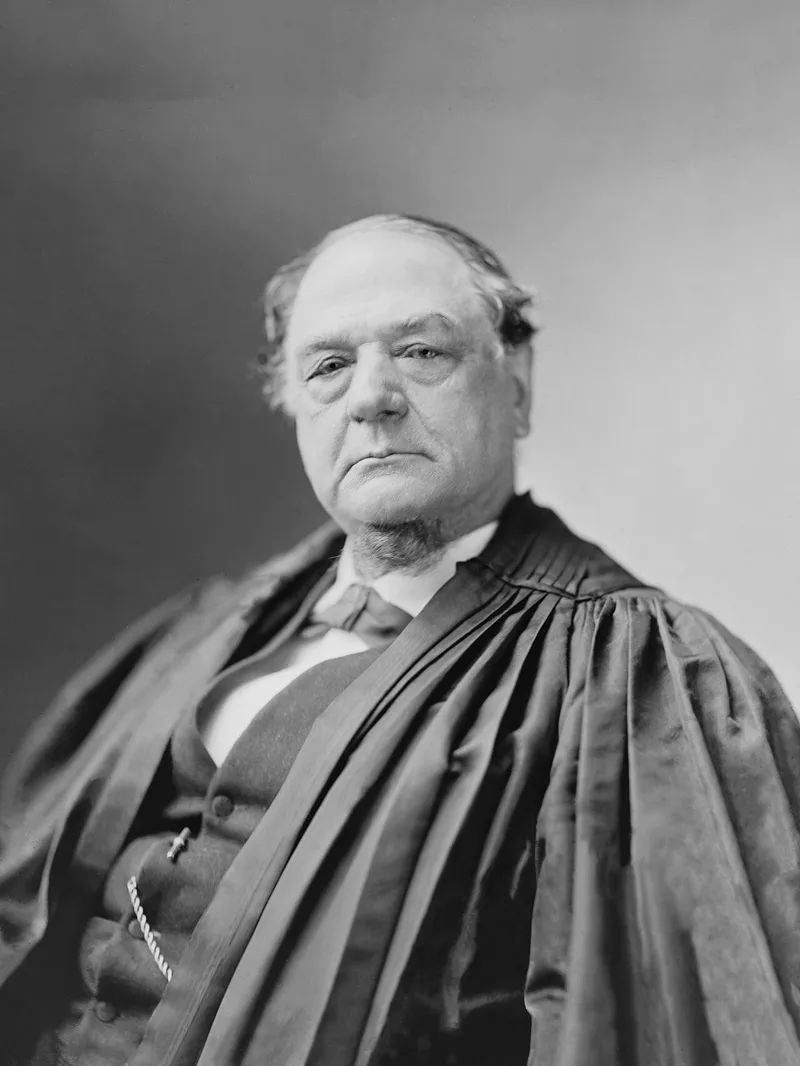
The case concerned whether a federal income tax on the plaintiff's gains and profits, imposed under acts of Congress from 1864 and 1865, constituted a direct tax requiring apportionment under the Constitution. The Supreme Court held that the tax was not direct but instead an excise or duty, making it constitutional as levied. The reasoning was that direct taxes under the Constitution include only capitation taxes and taxes on real estate, while income taxes fall into the category of excises, supported by prior decisions such as Hylton v. United States and others. The Court also rejected challenges to the collection procedures as violating due process, noting the long-standing authority to distrain property for tax payment.
The case concerned the validity under the U.S. Constitution of New York's pilot law, which required vessels entering the port to accept a licensed pilot or pay a fee. The Supreme Court affirmed the judgment below, upholding the law. The Court declined to consider a new argument that the tender of pilot services occurred outside state jurisdiction because it had not been raised in the circuit court. On the merits, the Court reasoned that a vessel at sea carries the legal jurisdiction of its home state, that pilot laws are regulations of commerce that Congress had long adopted and ratified through silence and specific statutes, and that prior decisions such as Cooley v. Board of Wardens had already resolved the constitutional questions.
The case concerned a dispute over a bond executed by George & Brothers to secure payment of any judgment that might be recovered against them by Myers & Green in a pending suit. Tate had received an assignment of the claim from Myers & Green in exchange for surrendered notes, and the lower court allowed recovery on the bond in Tate's favor. The Supreme Court affirmed, holding that the assignment of the claim or judgment also transferred the bond despite imperfect drafting, that evidence of fraud in procuring the bond was properly excluded because only fraud touching its execution could be shown at law, and that the jury instructions on the claimed set-off were not erroneous.
This case involved an appeal from a decree dismissing a bill alleging infringement of a reissued patent for combining two large tanks with an ordinary railway car to transport substances like petroleum in bulk rather than in barrels or other containers. The Supreme Court affirmed the dismissal. The Court found the patent invalid for lack of novelty and utility, based on undisputed testimony showing prior widespread use of casks on rail cars, the common practice of loading weight over trucks, and the later adoption of iron tank cars. The claims were deemed frivolous, with no evidence of inventive faculty or a flash of thought producing anything patentable.
This case involved a petition for a writ of mandamus to compel the Comptroller of the Currency to order an additional assessment on shareholders of an insolvent national bank to cover remaining debts after an initial assessment fell short due to some shareholders' insolvency. The court held that the Comptroller correctly refused the request, as the relevant statute imposes liability on shareholders equally and ratably, not one for another. The reasoning centered on the plain language of the 1864 banking law, which amended the earlier version to clarify this several liability, and established a proportional contribution method based on stock holdings after accounting for the bank's assets and deficits, with the total not exceeding the par value of all stock. The decision affirmed the lower court's judgment denying the writ.
In Finch v. United States, distillers who operated two facilities in Pittsburgh sued the federal government to recover payments they made in 1868-1869 for Tice meters that Internal Revenue regulations required them to purchase and install to measure spirits production and prevent fraud. The meters were either never used or failed to function properly, and Congress repealed the metering requirements in 1872, after which the distillers sought reimbursement on theories of implied warranty, money had and received, or unjust enrichment. The Supreme Court affirmed the Court of Claims' judgment denying recovery, reasoning that the meters served only the government's enforcement interests with no corresponding benefit or contractual obligation to the distillers, that purchasing the meters was a lawful condition of engaging in the regulated business, and that the distillers retained ownership of the meters with no funds ever reaching the Treasury. The Court found no basis for liability under any of the asserted claims.