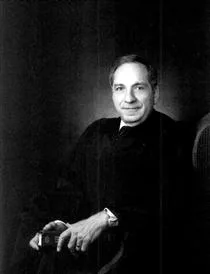
In this diversity jurisdiction case, plaintiff Phillip G. Cline sued Southern Star Central Gas Pipeline over his long-standing attempts to obtain free gas under a gas storage lease and acknowledgment of payment agreement, while the defendant asserted counterclaims seeking declaratory relief and to quiet title. The court had previously granted summary judgment to the defendant on the plaintiff's claims and its declaratory judgment counterclaim, finding them barred by the statute of limitations and interpreting the lease terms to require the plaintiff to bear connection costs. On the parties' Rule 59(e) motions, the court denied the plaintiff's request to reconsider the limitations ruling or the fee interpretation but granted the defendant's motion, holding that the leases remained valid and quieting title in the defendant's favor to injected gas, other minerals, and related property on the land. The decision rested on the plain language of the agreements, the exclusivity of the defendant's production rights, and the preservation of limited royalty interests for the plaintiff outside storage zones.
This ERISA case concerns Valerie Panther's challenge to Sun Life's denial of long-term disability benefits under her employer's plan after she claimed she could no longer perform her sales consultant duties due to injury or sickness. The court addressed multiple pending motions, ruling that the plan's grant of discretionary authority to Sun Life triggers arbitrary and capricious review rather than de novo, that discovery is generally limited to the administrative record, and that the policy term 'own occupation' refers to the general duties of the job as performed in the labor market. It denied the plaintiff's motions to compel documents, amend by interlineation, and for partial summary judgment; granted Sun Life's protective order; denied the plan's motion to dismiss; dismissed a preempted state-law claim; and deferred decision on Sun Life's summary judgment motion for supplemental briefing.
This case involves a § 1983 lawsuit brought by the administrator of James McNeal, Jr.'s estate against Kansas City police officers and members of the Board of Police Commissioners. The claims allege that officers used excessive force and caused an unreasonable seizure during a vehicle pursuit, resulting in McNeal's death, and that the Board members failed to properly supervise, train, or discipline the officers pursuant to official policy or custom. The Board members moved to dismiss for lack of personal jurisdiction under Rule 12(b)(2) and failure to state a claim under Rule 12(b)(6). The court denied the motion, finding that the plaintiff made a prima facie showing of jurisdiction and that the allegations sufficiently stated a claim against the Board members based on their alleged policies or customs. The court also allowed amendment to add an outrage claim after updating its statute of limitations analysis.
In Brown v. Barnhart, plaintiff Marilyn Brown sought judicial review under 42 U.S.C. § 405(g) of the Social Security Commissioner's denial of her applications for disability insurance benefits and supplemental security income, alleging disability due to breast cancer and mastectomy residuals, mild degenerative joint disease with myofascial pain, and related conditions. The ALJ had found her impairments non-disabling at step five, determining she retained capacity for light and sedentary work and could perform past cashier duties, after partially discrediting her testimony based on work history, medical evidence, and treatment gaps. The district court identified deficiencies in the ALJ's analysis, including inadequate explanation at step three, failure to properly weigh treating physician opinions and a medical source statement, insufficient linkage of the residual functional capacity finding to evidence, and inconsistent or incomplete credibility findings that overlooked affordability issues and hospital records. The court therefore remanded the matter for further administrative proceedings to address these issues.
This case involves a lawsuit by the estate and mother of Lewis Kelly Reindl against the City of Leavenworth and several police officers, alleging that officers used excessive force during a 2002 traffic stop, including pepper spray and baton strikes, which led to infections and Reindl's death in 2003. The complaint asserted federal claims under 42 U.S.C. § 1983 for constitutional violations along with numerous state-law tort claims such as assault, battery, wrongful death, and others. On defendants' motion to dismiss, the court granted the motion in part by dismissing the assault, battery, false imprisonment, libel, and slander claims as time-barred under Kansas's one-year statute of limitations and by dismissing claims against officers in their official capacities; it denied the motion as to malicious prosecution, outrage, emotional distress, privacy, and wrongful death claims, while also ordering plaintiffs to amend the complaint to allege compliance with statutory notice requirements under K.S.A. § 12-105b, to consolidate duplicative claims, and to specify the proper party for each claim.
Darren Wright brought this action under the Social Security Act seeking judicial review of the Commissioner's denial of his applications for disability insurance benefits and supplemental security income, based on claimed impairments including a 1979 gunshot wound, a 1994 heart attack, and a 2000 back injury from a falling tree limb. The district court affirmed the Commissioner's final decision that Wright was not disabled. The ALJ determined at step five of the five-step sequential evaluation process that Wright could not perform his past work but retained the residual functional capacity to perform other sedentary unskilled jobs, such as surveillance systems monitor, that exist in significant numbers in the national economy, a conclusion supported by vocational expert testimony and substantial evidence in the record.