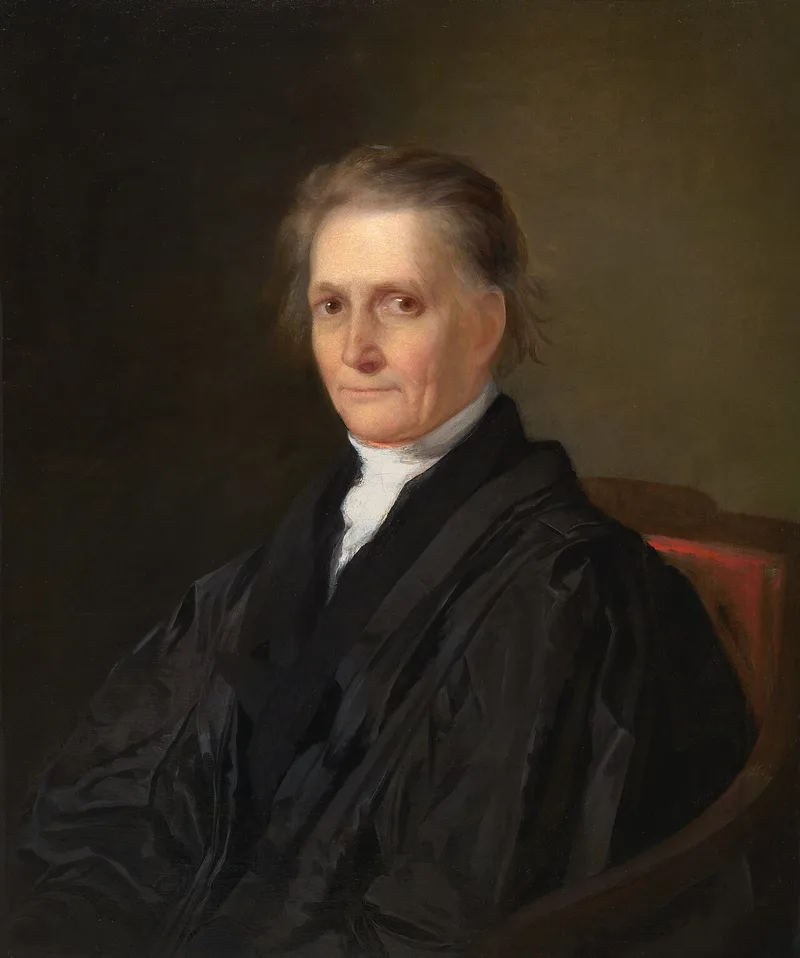
This case involved a suit on a bill of exchange drawn in Maryland on a drawee in New Orleans, endorsed to a New York plaintiff, and brought in federal circuit court in Maryland; the question was whether the court had jurisdiction under the Judiciary Act of 1789, which generally bars assignees from suing in federal court unless the assignor could have done so, with an exception for foreign bills of exchange. The Supreme Court held that the bill qualified as a foreign bill, so the circuit court could exercise jurisdiction. The Court reasoned that, for purposes outside the federal constitution, the states are independent and foreign to one another, with distinct laws and institutions; bills drawn between states therefore share the character and commercial function of foreign bills, consistent with the statute's exception and the policy of facilitating interstate commerce without encouraging jurisdictional fraud.
This case involved an in rem forfeiture action by the United States against goods seized after an Indian trader licensed to deal with tribes carried whiskey and shrub into Indian country north or west of the Tippecanoe River, allegedly for sale or distribution in violation of the Trade and Intercourse Acts of 1802 and 1822. The district court, after a jury verdict for the government, ordered forfeiture of the trader's goods. On appeal, the Supreme Court reversed, holding that the trial court's jury instructions were erroneous because they permitted forfeiture of goods seized outside the statutorily defined Indian country and failed to limit the acts' application to the boundaries set by Congress. The Court reasoned that the statutes expressly confined their prohibitions and penalties to Indian country as delineated in 1802 (or later adjusted boundaries), so any instruction allowing seizure elsewhere or broadening forfeiture beyond that territory misstated the law and required a new trial.
This case was an ejectment action in Pennsylvania courts over disputed land titles, where the plaintiff claimed under a 1812 warrant and 1813 patent based on a 1785 Connecticut improvement, while the defendant claimed under an earlier 1791 Pennsylvania patent. The core dispute centered on whether the defendant, who had initially possessed the land as the plaintiff's tenant, could challenge her title, and whether a 1826 Pennsylvania statute retroactively validating landlord-tenant relations between Connecticut settlers and Pennsylvania claimants was constitutional. The state courts ultimately upheld the statute and ruled for the plaintiff. The U.S. Supreme Court affirmed, holding that it had jurisdiction under the Judiciary Act and that the statute did not violate the Constitution because it merely declared the law on a point that remained unsettled at the time of enactment, without impairing any vested rights.
This case involved a suit by the Bank of the United States against Corcoran as endorser on a promissory note made by Daniel Reintzel, turning on whether the bank had provided legally sufficient notice of the note's protest and dishonor to hold the endorser liable. The circuit court had ruled that leaving the notice at the separate store of the defendant's son was inadequate under the circumstances, and the Supreme Court affirmed that judgment. The Court reasoned that the store was not the defendant's place of business or residence, that evidence did not support a presumption the notice reached him, and that commercial law requires a clear and stable rule for the sufficiency of such notices rather than case-by-case presumptions. It rejected arguments that occasional prior deliveries or the defendant's proximity to the store could cure the defect.
The case involved plaintiffs suing George Johnson on a bill of exchange drawn by his former partner Jacob Hoffman after their short-lived partnership in the pork business had dissolved. The circuit court ruled against the plaintiffs, and the Supreme Court affirmed, holding that Johnson was not liable because the bill was drawn solely in Hoffman's name on his individual credit, without reference to the partnership or Johnson. The core reasoning was that even if the partnership existed or the dissolution was not publicized, the transaction was with Hoffman personally, not the firm, so notice of dissolution was irrelevant and the jury could find the bill was not drawn in the firm name. The court rejected requested jury instructions that would have allowed recovery based on occasional use of Hoffman's name for firm business or other facts.
This case was an action of assumpsit brought by the Bank of the United States against the maker and endorsers of promissory notes to recover money lent. The circuit court entered judgment for the Bank after finding that notice of non-payment had been properly attempted, and certified that one defendant was principal and the others sureties. On writ of error, the Supreme Court addressed whether the notary's efforts—visiting the locked home of endorser Williams, learning he was away on a visit, and leaving notice with a neighbor—constituted due diligence sufficient to charge the endorser. The Court held that when the party entitled to notice is absent and has left no known agent, the law excuses strict compliance with the requirement of personal or residential notice, and affirmed the judgment below.