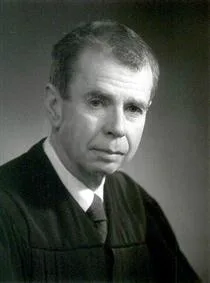
The case involved a defendant indicted on multiple counts who faced trial on a single obstruction of justice charge after a grand jury investigation led by IRS agents and Tax Division attorneys from the Department of Justice. Following a guilty verdict, the defendant sought dismissal or a new trial based on alleged misconduct by the IRS and prosecutors during the grand jury and trial proceedings. The court reviewed the record and identified irregularities in the grand jury process, including improper appointments of agents and prosecutorial actions that violated standards of impartiality, while noting no issues with the local U.S. Attorney's office. It granted the motion for a new trial due to these problems but denied the motion for judgment of acquittal, leaving that issue open for another judge. The opinion also addressed grand jury secrecy under Rule 6 and ordered limited disclosures.
The case involved attorney Joel Mallin's assigned claim against bankrupt King Resources Company for $115,390.21 in unpaid legal fees and disbursements arising from work performed in 1970 during an attempted takeover of Investor's Overseas Services. After rejecting a Special Master's $50,000 award for lack of supporting analysis, the court conducted further hearings and allowed $34,654.60 based on evidence of services rendered. The court reduced the hours claimed to a maximum of 10 per day, limited compensation to specific time periods tied to the transaction, disallowed some unapproved or excessive expenses such as air conditioning, and accounted for conflicts of interest and overstated billing.
This case involved a postal worker charged under a City of Aurora ordinance with assault for spraying a person with dog repellent while chasing a loose puppy. After removal to federal court due to the defendant's federal employment, a magistrate convicted him following a trial and imposed a fine or community service. On appeal, the district court affirmed the conviction in full. The court reasoned that removal requires application of state substantive criminal law but federal procedural rules, and the evidence clearly supported the magistrate's credibility findings and guilty verdict.
The case concerned a defendant's motion to dismiss an indictment under the Speedy Trial Act after the court had ordered a new trial in a severed criminal prosecution due to the government's failure to disclose required evidence under 18 U.S.C. § 3500 and Brady, as well as other fairness concerns arising from related cases. The court held that the Speedy Trial Act's time limits applied to the retrial and that unreasonable delay had occurred, even though the Act's dismissal sanctions under § 3162 were not expressly applicable because of statutory effective dates. Relying on the Act's goals and Rule 48(b), the court dismissed the indictment without prejudice after weighing factors such as the seriousness of the offense, the circumstances leading to delay, and the limited impact on the administration of justice. The opinion emphasized that Congress could not have intended violations of the Act to leave a defendant without remedy and noted that new trial orders are interlocutory and generally not appealable.
This Title VII case concerned whether Trailways, Inc.'s "no beard" policy for drivers and other public-contact employees violated federal law by discriminating against black workers. The court determined that the policy created an unlawful disparate impact because pseudofolliculitis barbae (PFB), a medical condition requiring abstinence from shaving, affects roughly 25% of black males and is essentially unique to them, while Trailways offered no evidence of business necessity to justify the rule. The opinion explained that the policy resulted in the exclusion of qualified black applicants without any articulated nondiscriminatory reason, relying on statistical medical evidence and disparate-impact precedents. The court allowed the company to retain a no-beard rule if it made an exception for employees providing medical certification of PFB, with requirements that beards remain neatly trimmed.
This case was a declaratory judgment action brought by Republic Insurance to determine whether its homeowners policy issued to the Pipers covered injuries suffered by a one-year-old child, Krystal Ervin, while under the care of Ina Piper. The policy excluded coverage for injuries intended by the insured or arising out of business pursuits, with a carve-out for activities ordinarily incident to non-business pursuits. The court held there was no coverage, finding that the injuries arose from Ina Piper's operation of a licensed day-care business at her home, that the Pipers had been repeatedly informed homeowners policies do not cover such activities, and that the child-care activity was not one ordinarily incident to non-business pursuits. The court further held that the insurer had not waived or become estopped from denying coverage by defending the underlying state-court tort suit under a reservation of rights, because the reservation was timely and no prejudice resulted. The opinion concludes that the policy affords no coverage for Krystal Ervin's injuries.