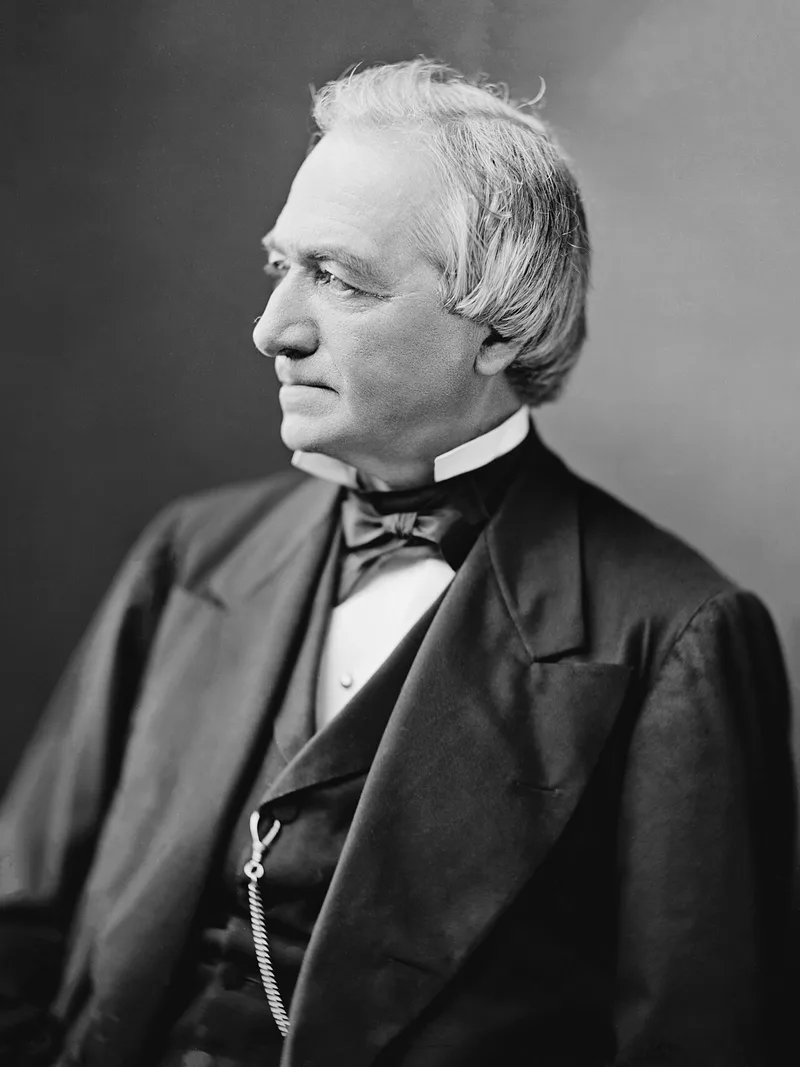
The case concerned whether Mary J. Eaton, a shareholder in the Pacific National Bank, could recover the $4,000 she paid in September 1881 for new shares after the bank reduced its proposed capital increase from $500,000 to $161,300 with the comptroller's approval, and after an assessment was later levied on shareholders. Eaton had subscribed for and paid for her proportionate share of the new stock but never received or requested the certificate, and she demanded repayment before the assessment vote. The Supreme Court reversed the Massachusetts court's judgment in her favor, holding that her payment and entry on the stock register made her a stockholder whose rights and obligations were fixed regardless of whether she obtained the certificate. The Court reasoned that the original proposal's full subscription amount was not a condition of liability, as the bank and comptroller retained authority to adjust the increase, and that a certificate is merely evidence of stock ownership rather than a prerequisite to it.
The case involved a Kentucky statute requiring agents of out-of-state express companies to obtain a state license and file proof of $150,000 in capital before conducting any business in the state, including interstate shipments. The Supreme Court held the law unconstitutional as applied to interstate commerce. The Court reasoned that the power to regulate interstate commerce belongs exclusively to Congress under the Constitution, not to the states, and that a state cannot impose licensing or capital requirements on entities engaged in such commerce, as this would improperly burden a federal domain; the opinion distinguished permissible local police regulations from impermissible commercial regulations and cited prior decisions invalidating similar state taxes or licenses on interstate activities.
This case was a patent infringement suit brought by Willimantic Linen Co. against Clark Thread Co. over U.S. Patent No. 26,415 (issued to Hezekiah Conant in 1859, extended, and expiring in 1880) for improvements in thread-winding machines on spools. The lower court had upheld the patent's validity, found infringement of the first and third claims, awarded over $159,000 in damages, and issued an injunction. The Supreme Court reversed, holding that the plaintiffs failed to prove Conant's invention predated the July 1858 publication of a similar British patent to William Weild, and that Conant was not a pioneer inventor entitled to a broad construction; the defendants' machines, purchased under Weild's U.S. patent, did not infringe the specific combinations claimed. The Court remanded with instructions to dismiss the bill.
This case involved a receiver of the Pacific National Bank suing stockholder George L. Thayer, trustee, to recover a 100% assessment on his shares under the federal banking statute (Rev. Stat. § 5151). Thayer conceded liability for his original 40 shares but denied it for 40 shares of new stock issued in a 1881 capital increase, claiming the full proposed increase to $1 million was never completed and that his payment was conditional. The court held Thayer liable for the assessment on both the original and new shares, entering judgment for the receiver. It reasoned that the bank's stock increase to $961,300 was lawfully accomplished through valid proceedings, that Thayer's payment and registration as owner on the stock ledger made him a shareholder in the new stock, and that the facts were materially identical to those in the related case of Pacific National Bank v. Eaton.
This case, a sequel to Pacific National Bank v. Eaton, involved an action by the receiver of a national bank against stockholder Mary J. Eaton to recover a 100% assessment on her shares under Revised Statutes section 5151, including both her original stock and new stock. The Circuit Court entered judgment for the receiver on the original shares but denied recovery on the new shares based on a prior Massachusetts state court judgment in Eaton's favor that was admitted as a bar. The Supreme Court reversed that state judgment in the related case, rendering it invalid as a defense. The Court held that because the Circuit Court's ruling rested entirely on the now-reversed judgment, it could reverse the judgment here and direct entry of a full award for the receiver on all shares without remanding for additional proceedings.
This case involved the Chicago Distilling Company suing to recover $57.83 in taxes assessed by a revenue collector for allegedly using 294 bushels of grain in excess of the distillery's rated capacity during September 1885. The company had properly notified officials of changes in fermenting tub usage and followed all procedures, but the assessment was based on a daily capacity calculation under Treasury regulations that did not account for the three-day fermentation period. The Supreme Court reversed the lower court's judgment for the defendant, holding that the relevant statute (Rev. Stat. § 3309) requires assessment based on the distillery's actual estimated capacity rather than a fictitious per-day figure, and that any monthly excess would be offset by later deficiencies without credit to the distiller. The Court reasoned that the law's reference to capacity for a twenty-four-hour period was intended only to establish an average, not to impose liability for temporary overages in a multi-day production cycle.